


Jumeau Numérique Européen de l'Océan
Home ⟩ Intelligence océanique ⟩ Jumeau Numérique de l’Océan ⟩ Le jumeau numérique européen de l’Océan
Une représentation numérique interactive et dynamique de l’Océan pour une meilleure prise de décision et une action durable en Europe
Qu'est-ce que le Jumeau Numérique Européen de l'Océan ?
Le Jumeau Numérique Européen de l’Océan crée une réplique numérique interactive et scientifique de l’Océan pour aider les décideurs politiques, chercheurs, entreprises et citoyens à mieux comprendre, protéger et gérer durablement les environnements marins. Il rassemble les actifs numériques océaniques de l’Europe, notamment les jumeaux numériques nationaux et les projets de recherche européens, dans un système opérationnel unique piloté par la communauté.
Dans le cadre de la Mission UE « Régénérer notre Océan et nos Eaux », le Jumeau Numérique Européen de l’Océan soutient le Pacte vert pour l’Europe et la Stratégie numérique de l’UE en rendant les connaissances océaniques ouvertes, exploitables et impactantes. Il a été mis en avant lors de la Conférence des Nations Unies sur l’Océan 2025 comme un résultat majeur du nouveau Pacte Européen pour l’Océan.
Comment l'Europe construit-elle un Jumeau Numérique de l'Océan ?
Lors de la Conférence des Nations Unies sur l’Océan (UNOC) 2025 à Nice, la Commission européenne a annoncé le Jumeau Numérique Européen de l’Océan comme un pilier clé du nouveau Pacte Européen pour l’Océan.
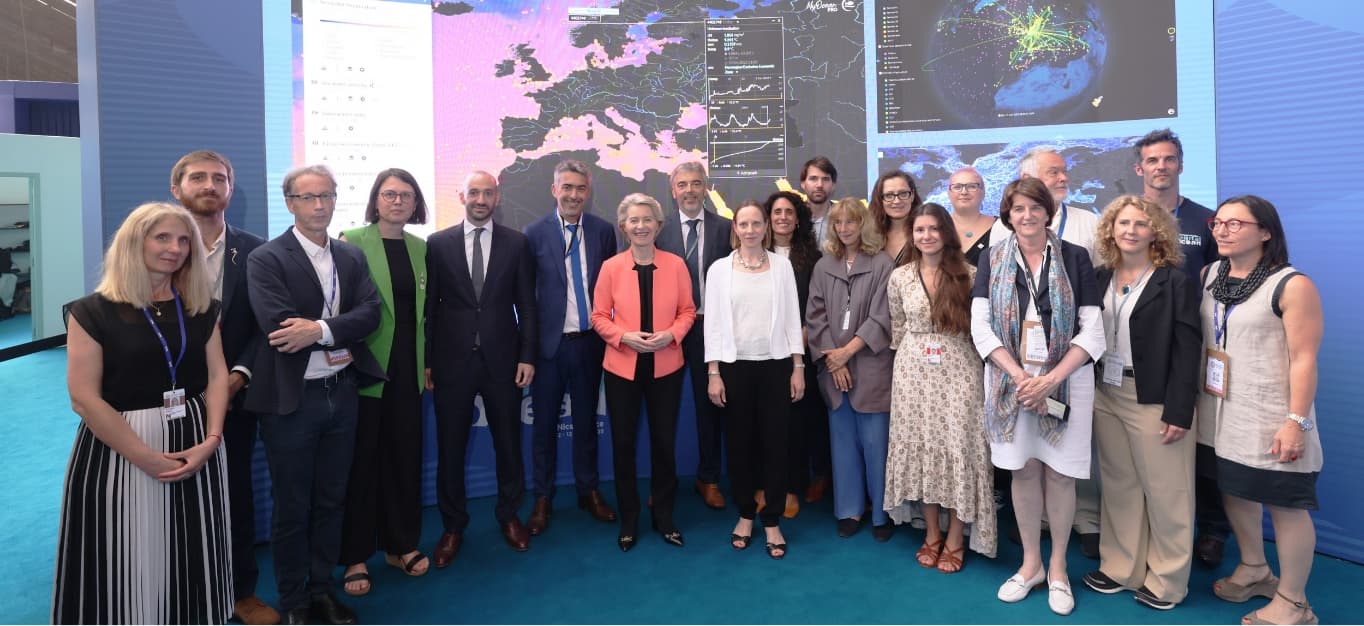
Un outil formidable qui nous aide à comprendre l'Océan
La deuxième annonce de l’Europe aujourd’hui est l’incroyable Jumeau Numérique de l’Océan. Je l’ai annoncé il y a trois ans à Brest. Aujourd’hui à Nice lors de l’UNOC3, nous présentons fièrement la première version de démonstration. C’est un outil formidable qui nous aide à mieux comprendre l’Océan, de la pollution à la navigation, des risques pour nos côtes à la biodiversité, et bien plus encore. Et nous ne nous arrêterons pas là.
URSULA VON DER LEYEN
Présidente de la Commission européenne
Lancé par la Commission européenne en 2022, le Jumeau numérique européen de l’Océan est une initiative phare du Système européen de connaissances numériques de l’Océan, construit sur des décennies de leadership européen en océanographie opérationnelle.
L’Europe entre maintenant dans une nouvelle ère numérique où l’océanographie opérationnelle est alimentée par le calcul haute performance, les technologies cloud et l’intelligence artificielle. Le Jumeau Numérique Européen de l’Océan incarne cette évolution en transformant les données et les modèles en un Océan virtuel vivant capable de simuler des conditions, tester des scénarios et éclairer les décisions.
Entre 2022 et 2025, les deux projets Horizon Europe EDITO-Infra et EDITO-Model Lab ont développé le premier environnement numérique intégré, combinant les données du Service marin de Copernicus, d’EMODnet et d’autres systèmes d’observation européens. La nouvelle phase EDITO (2025–2028) transforme maintenant cette plateforme en un Jumeau Numérique Européen de l’Océan pleinement opérationnel et centré sur les utilisateurs.
Le Jumeau Numérique Européen de l’Océan est conçu pour être pleinement compatible avec Destination Earth (DestinE), permettant une synergie avec les jumeaux numériques planétaires de l’Europe et soutenant les principales priorités de l’UE, notamment le Pacte Européen pour l’Océan, la Stratégie numérique de l’UE et la stratégie Global Gateway.
Participez à la communauté
Événements 2025–2026
Digital Ocean Week 2026
8 - 12 June 2026, Brussels
A week to explore how AI and the European DTO are transforming Copernicus Marine.
European Ocean Days 2026
2-6 March 2026, Brussels
Discover how the EU Digital Twin Ocean supports European ocean policies by demonstrating decision-making scenarios
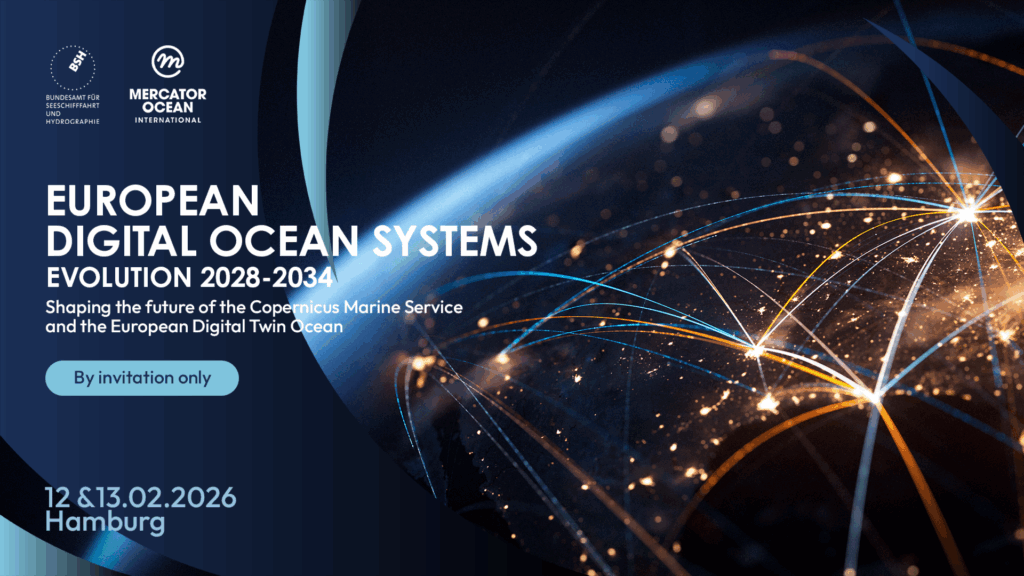
EU Digital Ocean Systems 2028-2034
12-13 February 2026, Hamburg
A community-driven forum to co-design the evolution of the Copernicus Marine Service and the EU Digital Twin Ocean.
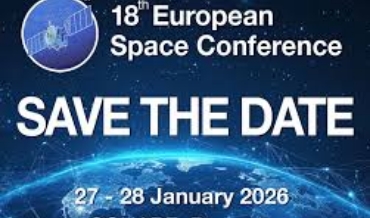
18th European Space Conference
27 & 28 January 2026, Brussels
How the EU Digital Twin Ocean can strengthens Europe’s Space and Security strategies.
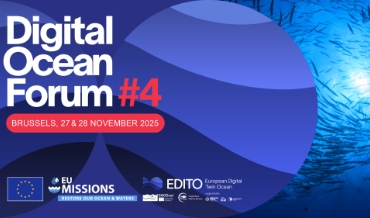
Digital Ocean Forum 2025
27 & 28 November 2025 , Brussels
The European Commission’s flagship co-design event shaping the EU Digital Twin Ocean.
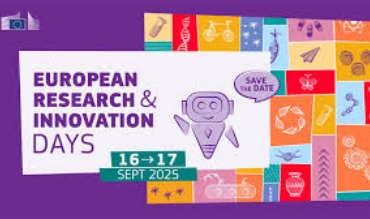
Research & Innovation Days 2025
16 & 17 September 2025, Nice
The European Digital Twin Ocean highlighted at the Commission’s annual event uniting Europe’s research and innovation.
Appels à projets et subventions
Nous offrons à notre communauté des opportunités de contribuer au Jumeau Numérique de l’Océan de l’UE à travers des appels à projets et des subventions EDITO, en coordination avec les projets de collaboration nationaux.
Le leadership de Mercator Ocean dans le développement du Jumeau Numérique Européen de l'Océan
Mission
Depuis plus de deux décennies, Mercator Ocean International est une force motrice de l'océanographie opérationnelle, développant des systèmes océaniques numériques mondiaux et la capacité scientifique pour modéliser et prédire l'environnement marin. Sous la direction de la Commission européenne et en collaboration avec des partenaires tels que L'Institut Flamand de la mer (VLIZ), Mercator Ocean met maintenant en œuvre le Jumeau Numérique Européen de l'Océan (JNO) de nouvelle génération, alimenté par l'IA. S'appuyant sur des réseaux de coordination matures et une infrastructure océanique numérique pleinement opérationnelle, Mercator Ocean est prêt à livrer le JNO européen comme un système entièrement opérationnel en étroite collaboration avec des partenaires à travers l'Europe. À l'avenir, il continuera d'améliorer les capacités de la plateforme et de favoriser la co-création avec la communauté marine européenne, garantissant que le JNO européen reste un outil collaboratif et centré sur les utilisateurs pour comprendre et protéger l'océan.
Futur mandat d'organisation intergouvernementale
La mission de Mercator Ocean est pleinement alignée avec le mandat de la future organisation intergouvernementale (OIG) vers laquelle il évolue. L'objectif de l'OIG est de concevoir, développer et exploiter des Systèmes océaniques numériques de classe mondiale et des contributions à un Jumeau Numérique de l'Océan, englobant la physique marine, la biogéochimie et les sciences des écosystèmes, et de fournir des Services d'information océanique numérique faisant autorité et d'intérêt général aux États membres et à la gouvernance océanique internationale.

Le Projet EDITO
Le projet EDITO est une initiative phare de l’UE, dirigée par Mercator Ocean International et L’Institut flamand de la Mer (VLIZ) pour le compte de la Commission européenne. Il construit l’infrastructure technologique du Jumeau Numérique Européen de l’Océan et favorise la co-création avec la communauté marine européenne. Le projet entre maintenant dans sa deuxième phase de développement (2025–2028).
Le Jumeau Numérique Européen de l'Océan
Le Forum de l'Océan Numérique
Le Forum de l’Océan numérique (Digital Ocean Forum – DOF) rassemble experts, parties prenantes, décideurs politiques et citoyens pour co-concevoir et co-créer le Jumeau Numérique Européen de l’Océan. Initié par Mercator Ocean, le premier Forum s’est tenu à Paris en 2022, sous les auspices de la Commission européenne et pendant la Présidence française du Conseil de l’UE.
Le Forum de l’Océan numérique est maintenant organisé par la Direction générale de la recherche et de l’innovation (DG RTD), la Direction générale des affaires maritimes et de la pêche (DG MARE), la Direction générale de l’industrie de la défense et de l’espace (DG DEFIS) et la Direction générale des partenariats internationaux (DG INTPA) de la Commission européenne, avec Mercator Ocean International, L’Institut flamand de la Mer (VLIZ) et SeaScape Belgium comme partenaires de mise en œuvre dans le cadre du programme EDITO.
Deux projets Horizon pionniers
La nouvelle phase du projet EDITO (2025–2028) s’appuie sur les réalisations de deux projets UE achevés, EDITO-Infra et EDITO-Model Lab (2022–2025), qui ont intégré les données du Service marin Copernicus et d’EMODnet dans un cadre numérique unifié pour le Jumeau Numérique Européen de l’Océan.
EDITO-Infra a établi l’épine dorsale de l’infrastructure publique du JNO européen en modernisant, combinant et intégrant les composants clés des programmes européens d’observation, de surveillance et de données océaniques dans un cadre numérique unique.
EDITO-Model Lab était un projet de trois ans développant la prochaine génération de modèles océaniques, complémentaires au Service marin Copernicus et pleinement intégrés dans l’infrastructure publique du JNO UE via EDITO-Infra.