

A monthly reporting on mean sea surface temperatures and marine heatwave conditions.
Key takeaways
- April 2025 was the 2nd warmest April on record (after 2024) in the global ocean and in the Mediterranean Sea.
- Mean sea surface temperatures were above average for 75% of the global ocean (between 60°S and 60°N) with more than 10% exceeding the average by at least 1°C.
- April 2025 was the 5th most extreme April in terms of Marine heatwaves duration, intensity and extent in the global ocean.
SEA SURFACE TEMPERATURE
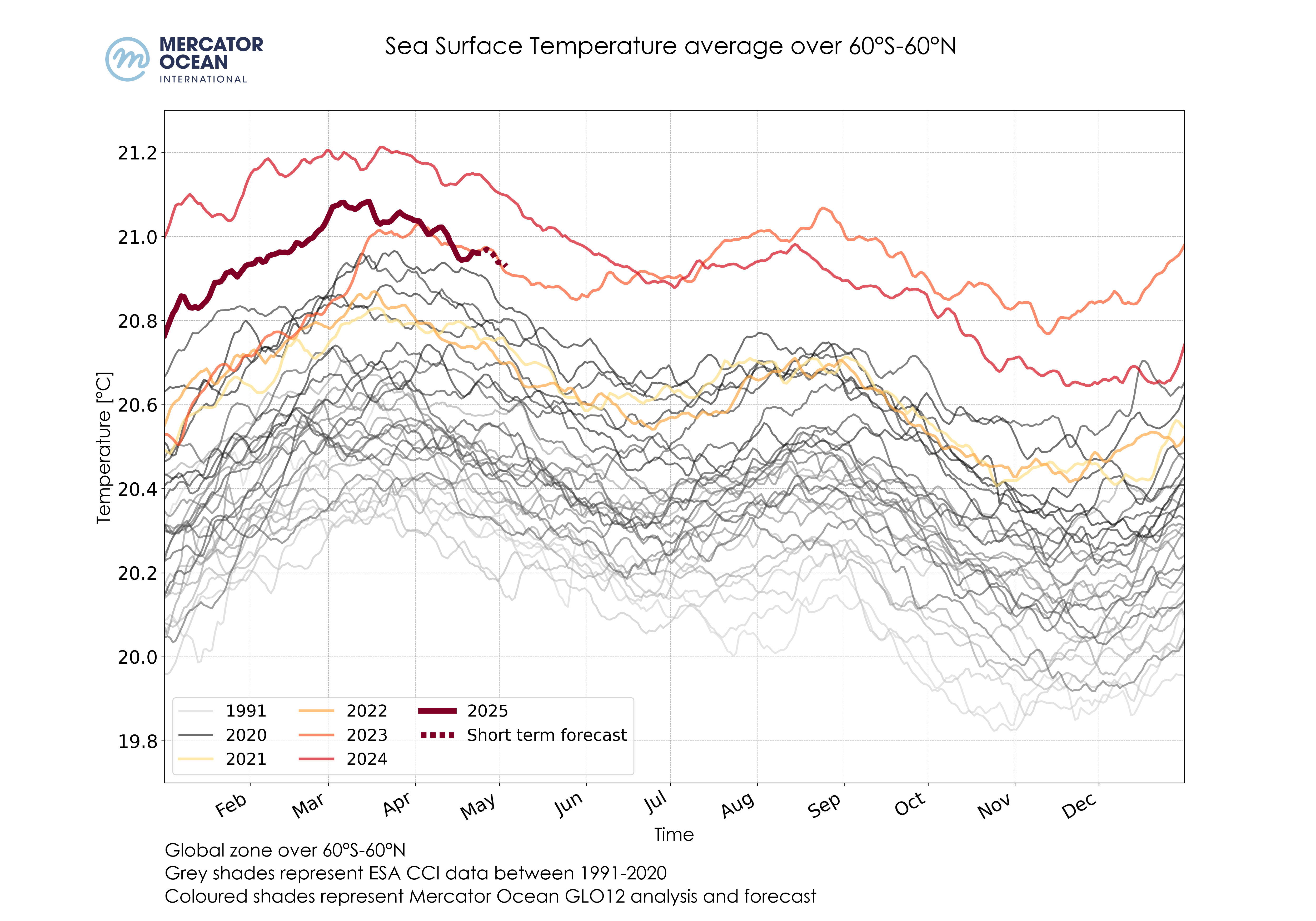
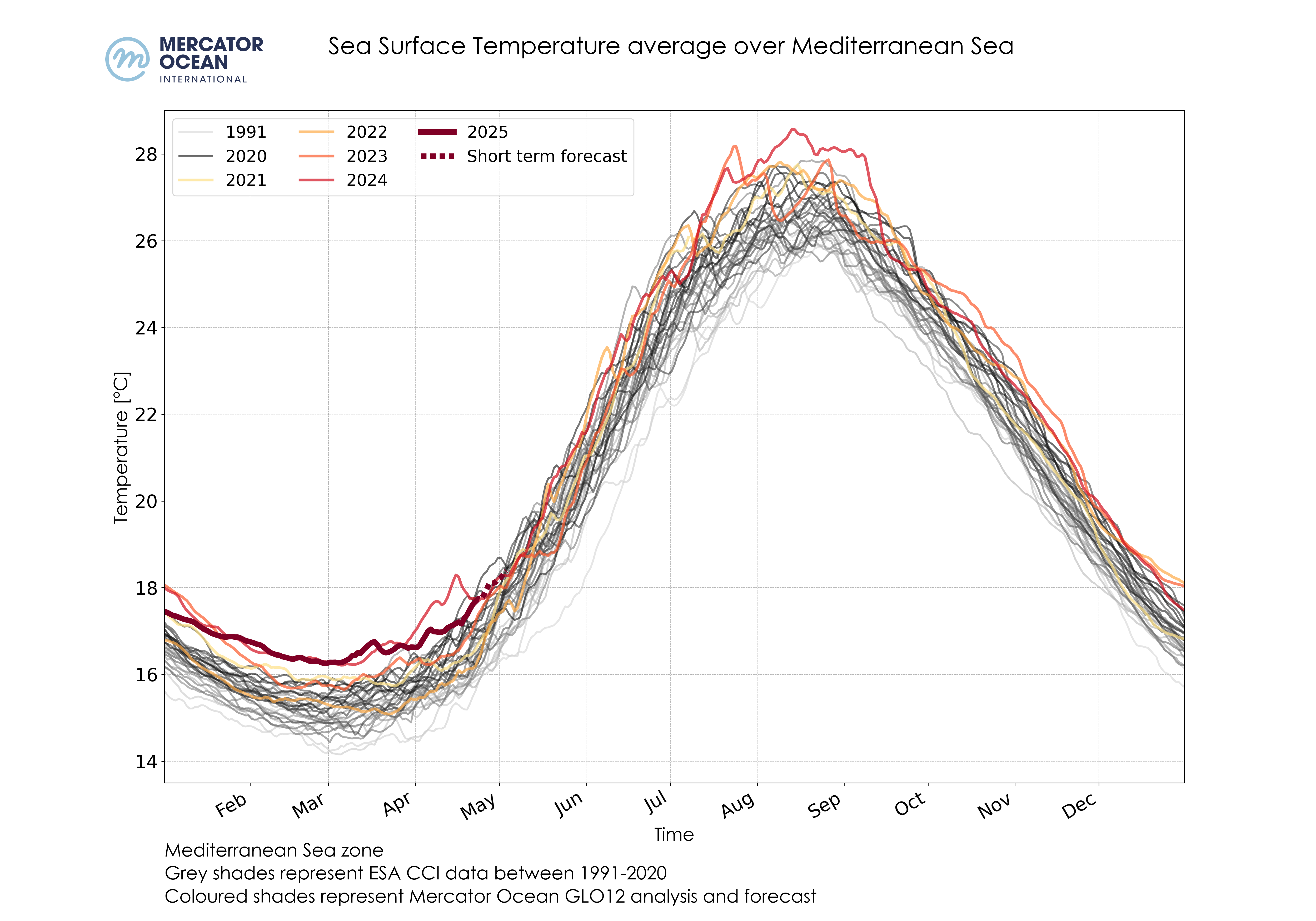
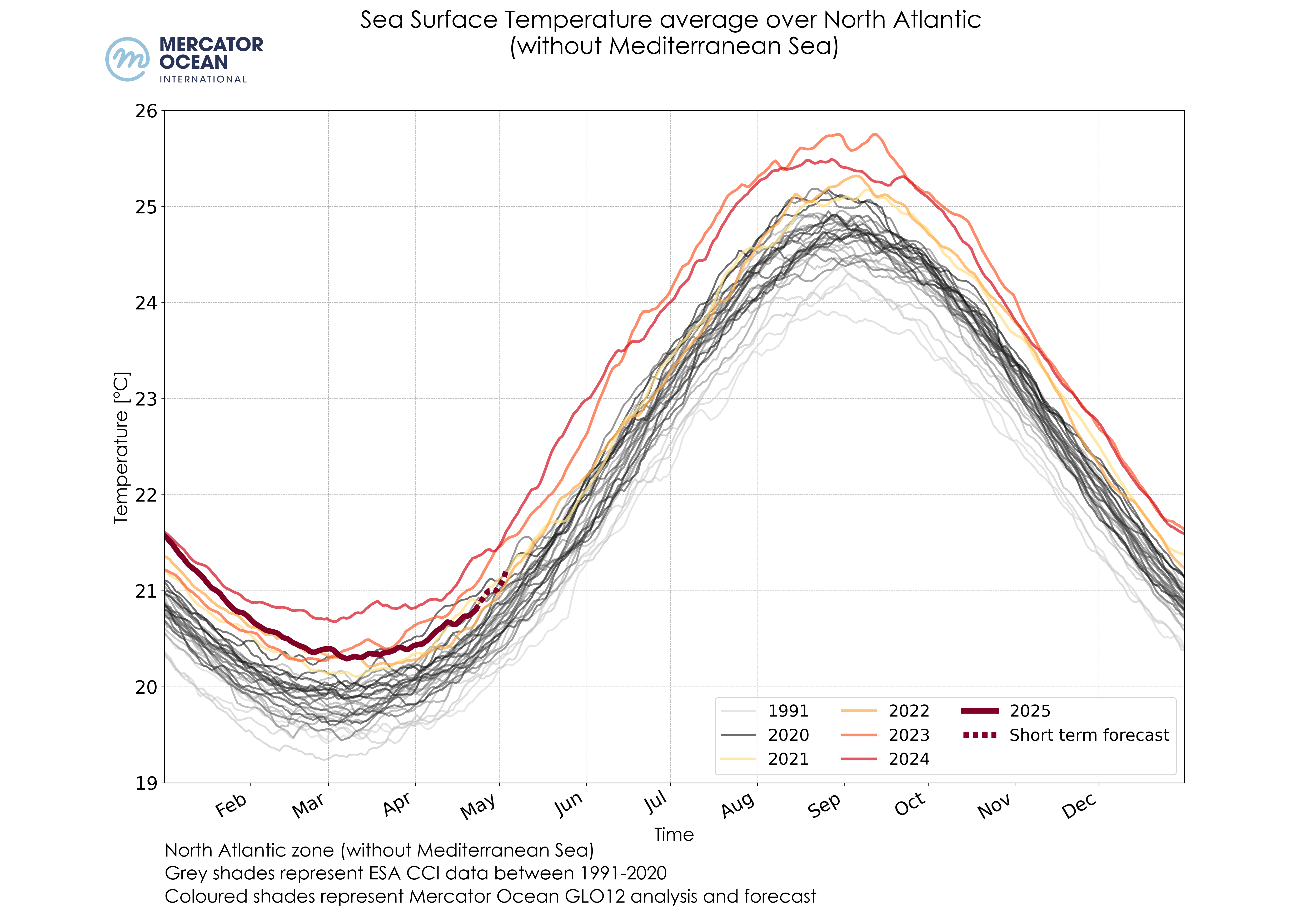
Figure 1: Daily sea surface temperatures (SST) averaged for the global ocean (top), the Mediterranean Sea (left) and the North Atlantic Ocean (right) between 1991-2020 using ESA’s Climate Change Initiative (grey shades), and between 2021-2025 (colored shades) using Mercator Ocean International’s GLO12 analysis and forecast.
- April 2025, at global level (between 60°S and 60°N), was the 2nd warmest April on record (after 2024), with a mean Sea Surface Temperature (SST) of 20.95 ± 0.05 °C (against 21.11 ± 0.07 °C for 2024).
- In the Mediterranean Sea, last month was also the 2nd warmest April month with a mean SST of 17.11 ± 0.31°C (after 2024).
- In the North Atlantic, the past month was the 4th warmest April month (after 2020, 2023 and 2024) with mean SST of 20.62 ± 0.12 °C.
Sea Surface Temperature Anomalies
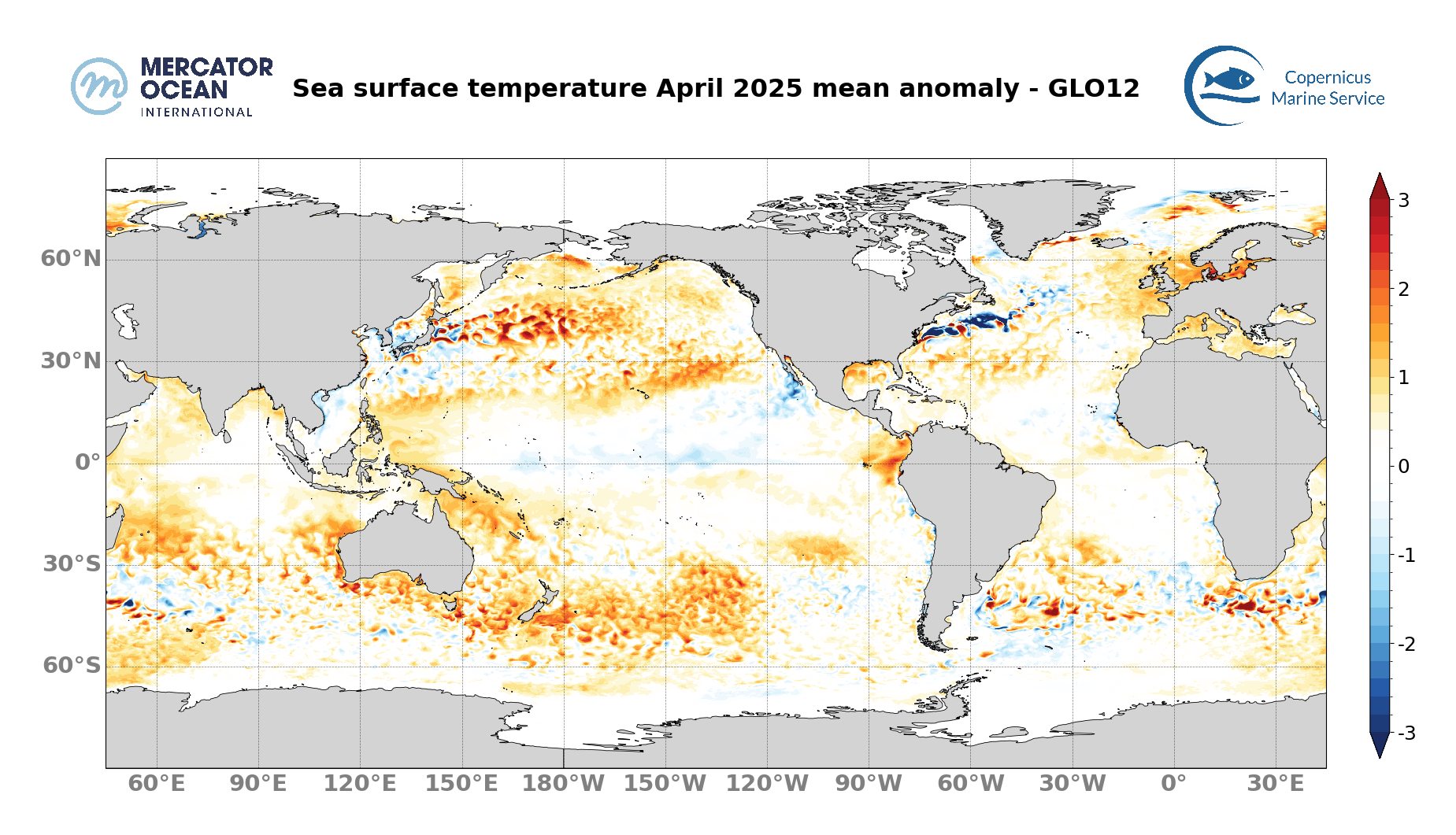
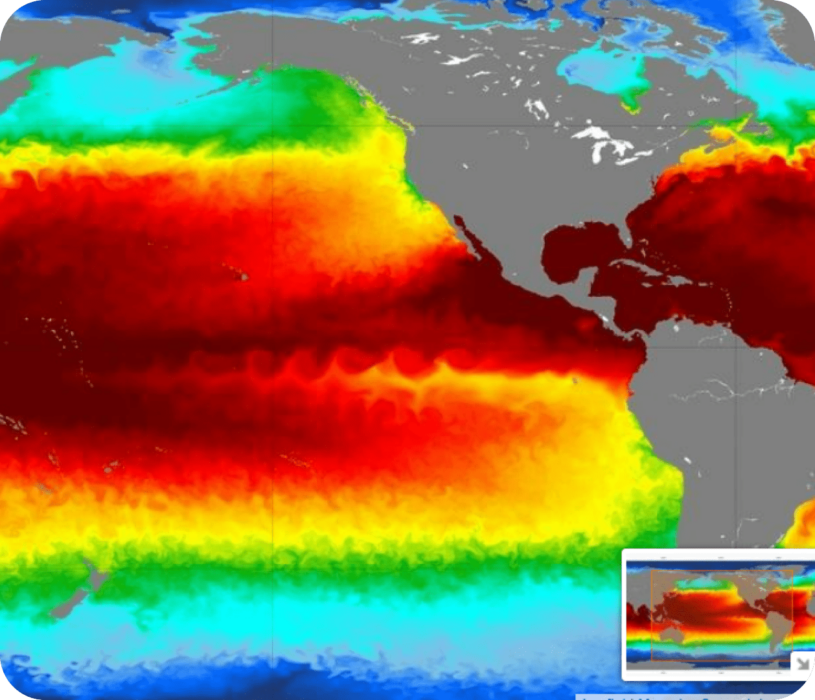
Sea surface temperatures (SSTs) were above average (1993-2022) in large parts of the ocean (Figure 2):
April 2025 mean SSTs were above average (see figure below) for 75% of the global ocean (between 60°S and 60°N), with more than 10% exceeding the average by at least 1°C. The monthly mean SSTs for the entire Mediterranean Sea are above average. The Pacific Ocean shows strong SSTs at midlatitude in both hemispheres, reaching 2°C above average. In the North Atlantic, SSTs are predominantly above average, with higher values in the European region (reaching 1 to 2°C above average). The same is observed for SSTs in the Indian Ocean with largest values near Australia and east of Madagascar.
Note: In the central Pacific, along the equator, we still observe a large area of below-average SSTs (reaching -1°C).
MARINE HEATWAVES
Ongoing marine heatwaves: 30 April 2025
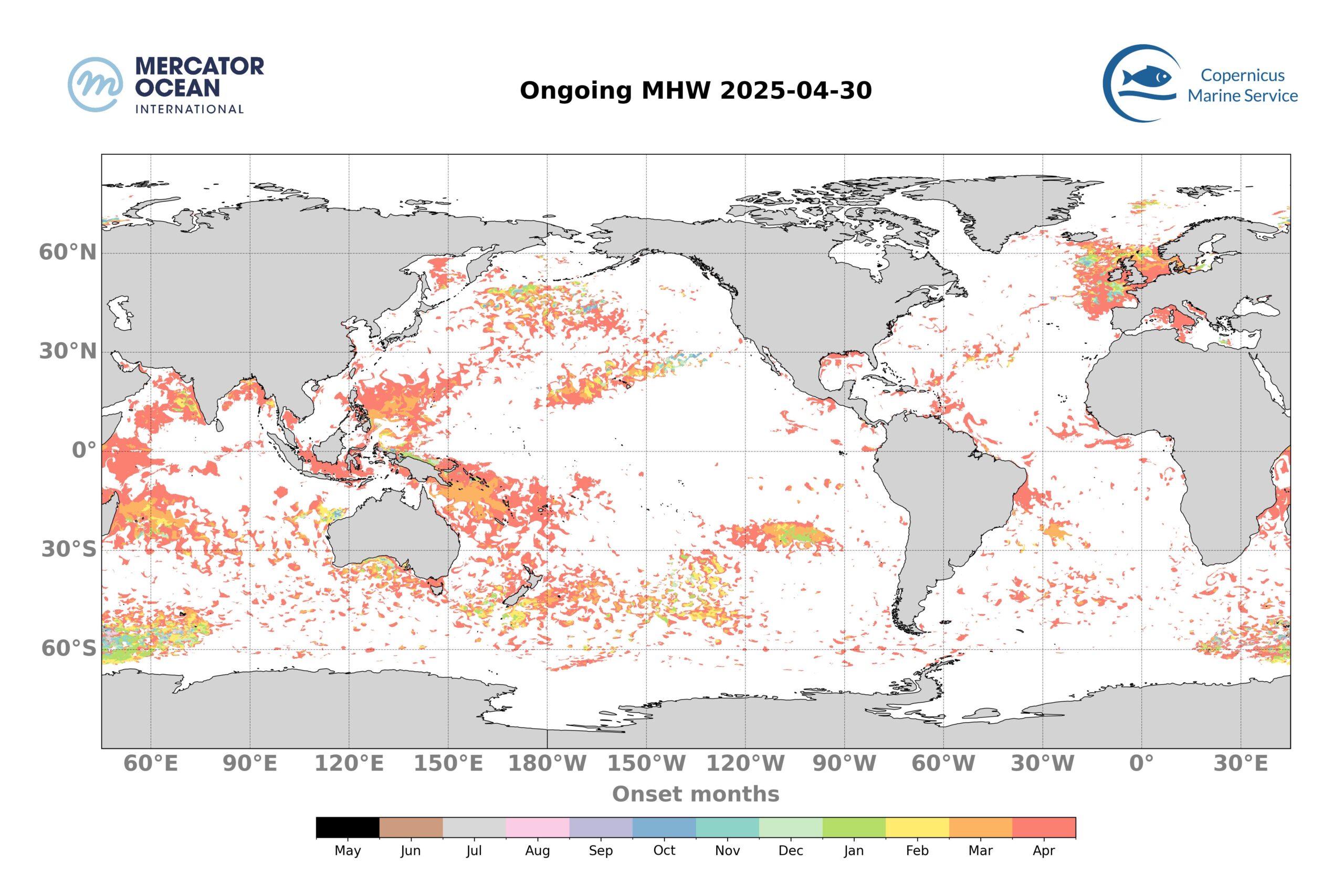
Long warming events may induce important stress on marine ecosystems *. Here is represented the ongoing marine heatwave (MHW) events at 30 April, and their onset time.
- 20% of the global ocean (between 60°S and 60°N) was affected by MHWs on the 30th of April.
- The majority of these MHWs developed recently, with 15% of the global Ocean (between 60°S and 60°N) affected by MHWs less than 1 month old and 5% by events between 1- and 2-month-old.
*Marine heatwaves (MHW) are extreme rises in ocean temperature for an extended period of time. They can occur at different locations in the ocean, and their magnitude and frequency have increased over the last couple of decades, with harmful impacts on ecosystems, and human activities. According to the latest report released by the Intergovernmental Panel on Climate Change (IPCC AR6 SYR), it is found with high confidence that in the near-term at 1.5°C global warming, the increasing frequency of marine heatwaves will increase risks of biodiversity loss in the oceans, including from mass mortality events (IPCC AR6 SYR).
Total surface exposed to marine heatwaves: May 2024 – April 2025
We monitor daily the surface occupied by MHWs and show for the past year (since May 2024) the proportion of the global Ocean (between 60°S and 60°N) exposed to MHWs. We focus on the evolution over the past April 2025 (grey bar).
Global Ocean
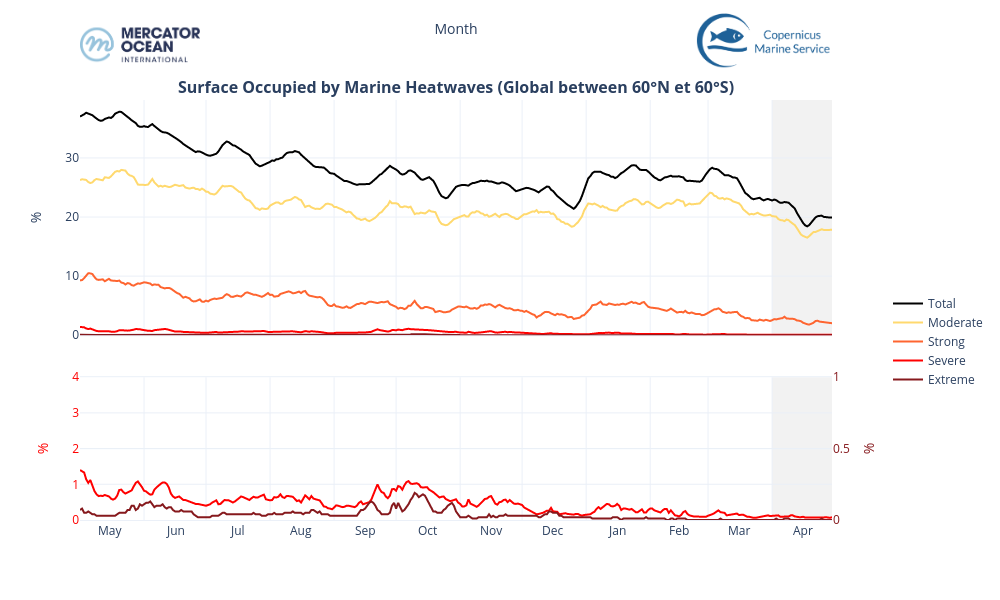
- In April the total surface of MHW (black line) decreased from 23% to 20% of the global ocean (between 60°S and 60°N). These MHWs consist mainly of moderate and strong events (18% and 2%, respectively, by the end of the month). For comparison, in April 2024, MHW total extent represented ~36% of the global ocean (between 60°S and 60°N), with ~10% of strong category (not shown).
European Zone
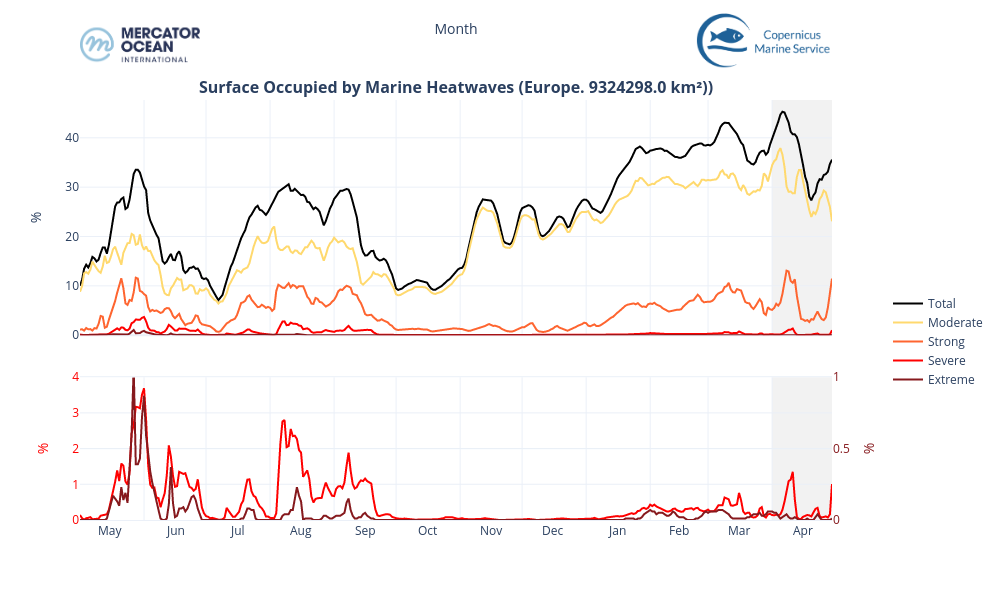
For the ocean region of Europe including the Mediterranean Sea and the North Atlantic eastern coast (see figure 3) :
- The total MHW surface shows a peak reaching 45% in the first half of April – the largest daily extent for 2025 so far – followed by a drop to 27% in the second half of the month.
- By the end of April, ~34% of the region of Europe is affected by MHWs. These events consist mostly of moderate and strong categories, with a peak of strong categories of more than 10% in the first half and et the end of the month.
- For comparison, in April 2024, the total MHW extent dropped from ~25% to 10%, with a peak of severe and extreme categories mid-month (to 4% and 3,5%, respectively) (not shown).
Total number of marine heatwave days in April 2025
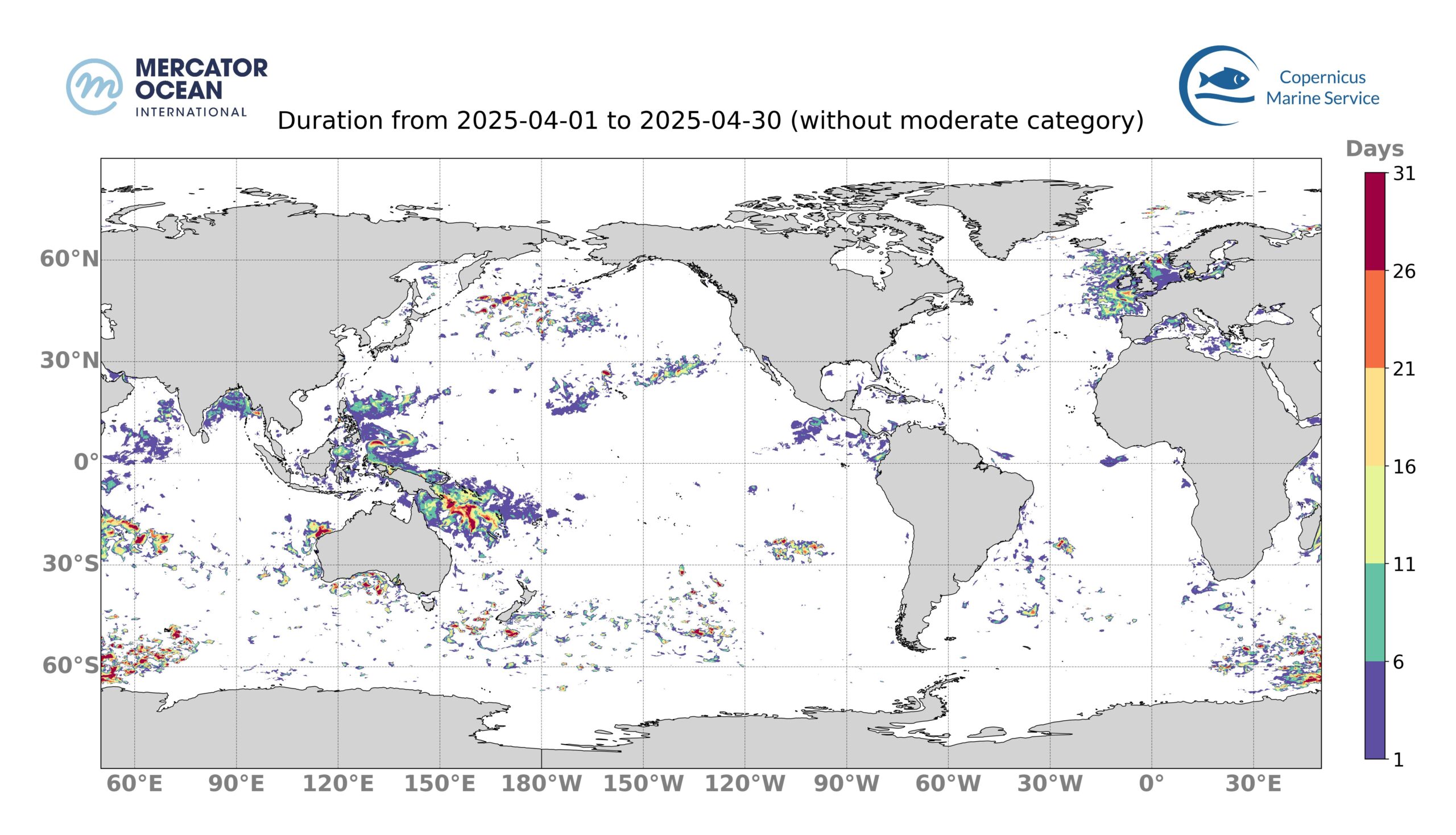
11% of the surface of the ocean is impacted by strong, or higher, MHW conditions for at least 1 day. The southeast Asia region and the European region around the United Kingdom are the most affected.
Figure 6: Number of days during which a MHW of category strong, severe or extreme occurred in April 2025. Blank areas mean that no MHW of strong or higher category happened during the month.
Marine heatwave April statistics
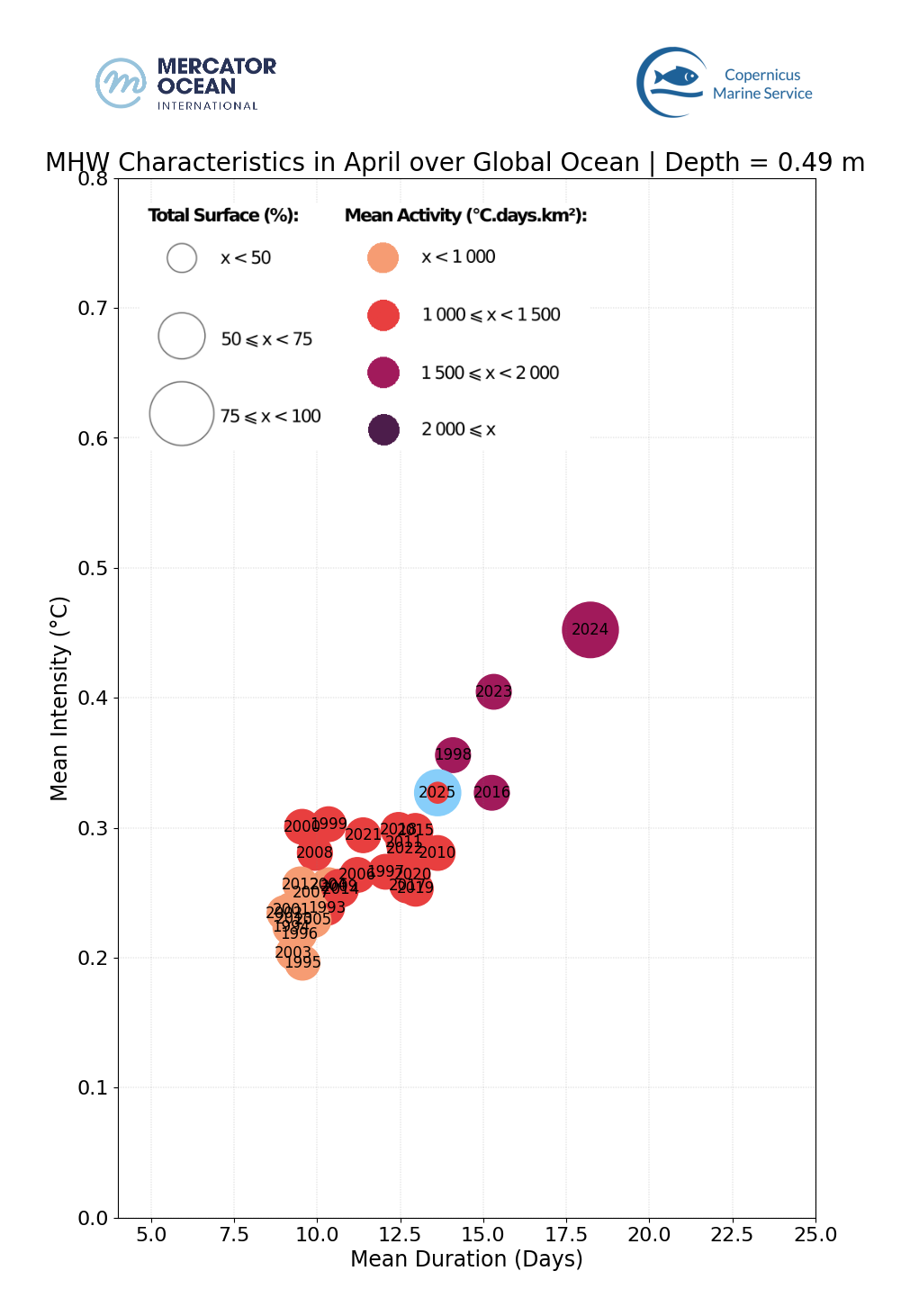
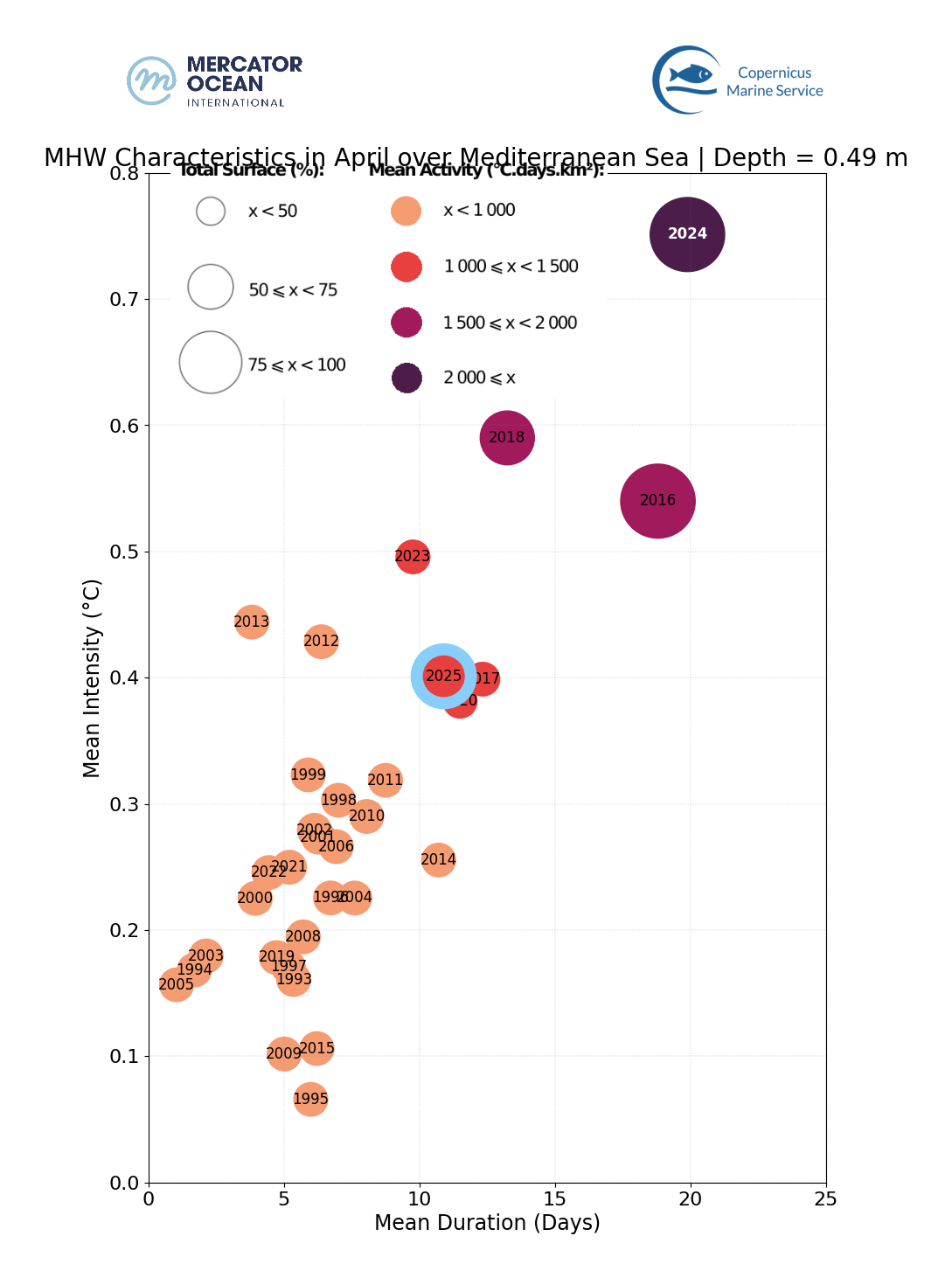
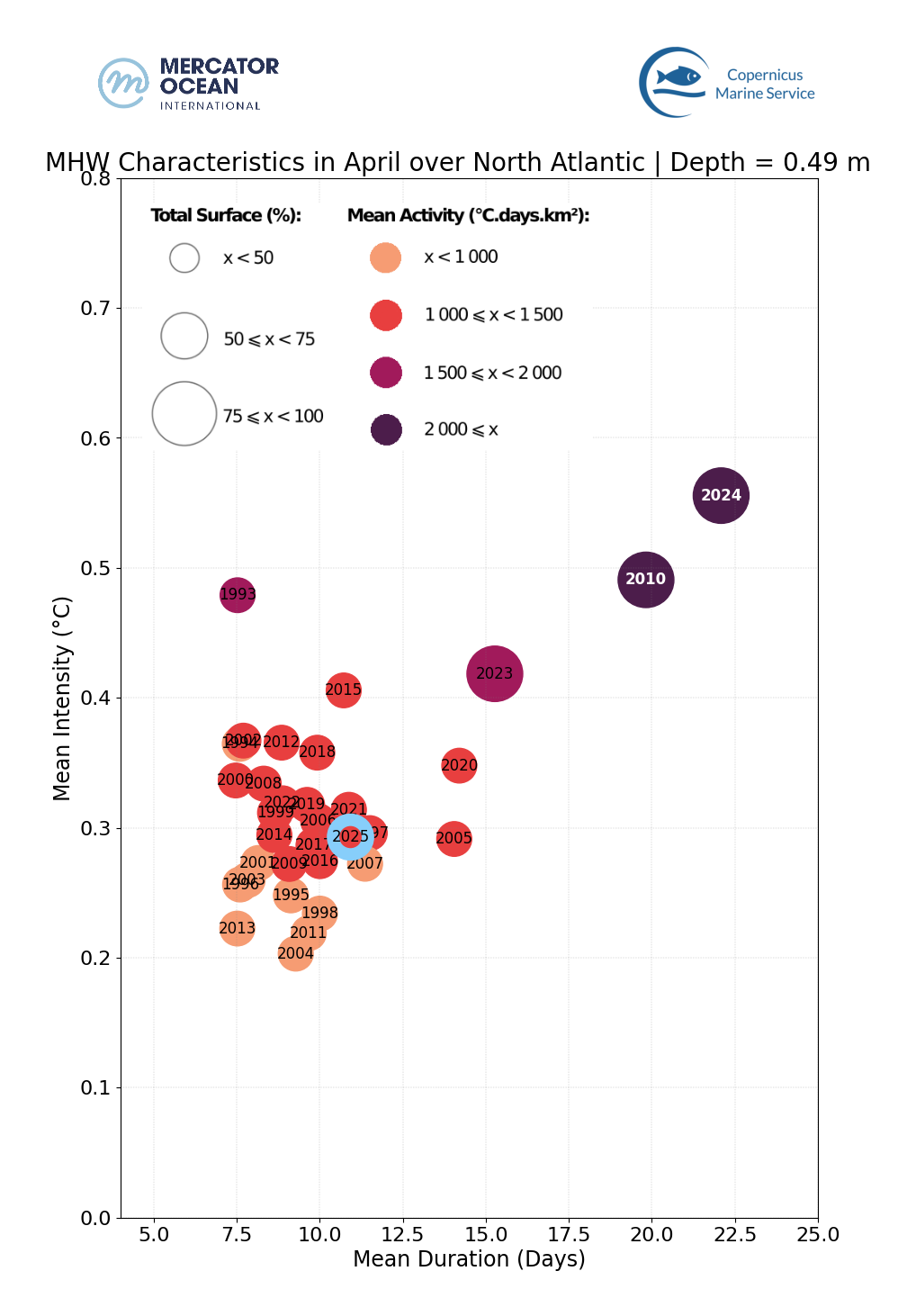
Figure 7: MHW characteristics for all April months between 1993 and 2025. Duration, intensity, extent and activity averaged for each April month between 1993 and 2025 for the global ocean (left), for the Mediterranean Sea (centre) and the North Atlantic Ocean (right). April 2025 is highlighted with a blue edge.
The MHW statistics (duration, intensity, surface occupied and activity) for April 2025 are compared to those for April months from previous years since 1993.
- On a global scale, April 2025 is the 5th most extreme April month in terms of MHWs (after 2024, 2016, 1998 and 2023).
- In the Mediterranean Sea, April 2025 is the 5th most extreme April month in terms of MHWs (after 2023, 2018, 2016 and 2024), with values similar to 2017 and 2020.
- In the North Atlantic, April 2025 was moderate in terms of MHWs compared to previous years.
About the bulletin
Mercator Ocean International (MOi) publishes a monthly sea surface temperature bulletin reporting on mean temperature and marine heatwave conditions for the month just passed. It includes:
- Regions where MHWs are present and the time these events started,
- Timeseries showing the total surface occupied by MHWs globally and for the European region,
- The total number of days of exposure to MHW during the month (including only strong and higher intensity categories).
Image citation: European Union, Copernicus Marine Service Data 2025 I © Mercator Ocean
All images in this article can be used freely and should be cited with the information above.
Datasets and Products
Sea Surface Temperature
The results are obtained using the Copernicus Marine Service global analysis and forecasting system together with observation-based products.
- GLOBAL_ANALYSISFORECAST_PHY_001_024 Global Ocean Physics Analysis and Forecast sea surface temperature. E.U. Copernicus Marine Service Information. Marine Data Store (MDS). DOI: https://doi.org/10.48670/moi-00016
- ESA SST CCI reprocessed sea surface temperature analyses. E.U. Copernicus Marine Service Information. Marine Data Store (MDS). DOI: https://doi.org/10.48670/moi-00169
- NOAA OI SST V2 High Resolution Dataset data provided by the NOAA PSL, Boulder, Colorado, USA, from their website at https://psl.noaa.gov, Huang, B., C. Liu, V. Banzon, E. Freeman, G. Graham, B. Hankins, T. Smith, and H.-M. Zhang, 2021:
- Improvements of the Daily Optimum Interpolation Sea Surface Temperature (DOISST) Version 2.1, Journal of Climate, 34, 2923-2939. doi: 10.1175/JCLI-D-20-0166.1
- Global Ocean OSTIA Sea Surface Temperature and Sea Ice Analysis. E.U. Copernicus Marine Service Information. Marine Data Store (MDS). DOI: https://doi.org/10.48670/moi-00165
- ODYSSEA Global Sea Surface Temperature Gridded Level 4 Daily Multi-Sensor Observations. E.U. Copernicus Marine Service Information. Marine Data Store (MDS). DOI: https://doi.org/10.48670/moi-00016
Notes: The global analysis system was used to study the ocean surface temperature from 2021 and 2025. To study surface temperature for previous years (1991 to 2020), it was used the ESA CCI data. The other observation-based sea surface temperature products (OSTIA, OI SST and Odyssea) were used for calculating monthly mean and uncertainty values for February 2025.
Marine Heatwaves
The results are obtained using the Copernicus Marine Service global systems including the analysis and forecasting system together with the reanalysis product.
- GLOBAL_ANALYSISFORECAST_PHY_001_024 Global Ocean Physics Analysis and Forecast sea surface temperature. E.U. Copernicus Marine Service Information (CMEMS). Marine Data Store (MDS). DOI: https://doi.org/10.48670/moi-00016
- GLOBAL_MULTIYEAR_PHY_001_030 Global Ocean Physics Reanalysis sea surface temperature. E.U. Copernicus Marine Service Information (CMEMS). Marine Data Store (MDS). DOI: https://doi.org/10.48670/moi-00021
Notes: The global analysis system was used to study MHWs for 2024 and 2025. To study MHWs for previous Februarys (1993 to 2023), it was used the reanalysis system. The reanalysis product was used for generating a daily climatology using the 30-year period from 1993 to 2022.