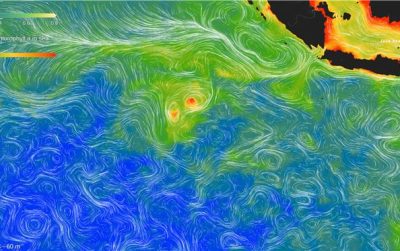
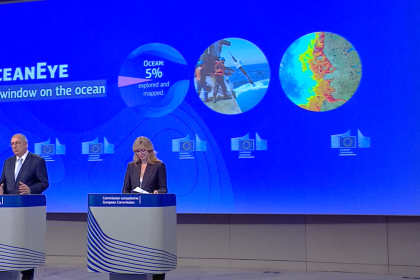
The European Digital Twin of the Ocean is a flagship EU initiative, integrating AI and advanced simulations to create a virtual replica of marine environments, enabling the simulation of future scenarios for decision-making.
A new Intergovernmental Organization for digital Ocean systems and information services
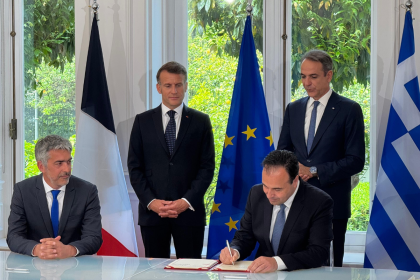
At the UN Ocean Conference in Nice, France in June 2025, 12 European countries endorsed a joint Declaration expressing their commitment to continue working together towards the creation of the Mercator International Centre for the Ocean, led by the governments of France and Norway, which were the first to sign its international Convention. The signature event was co-organized by the governments of France, Greece, Italy, Malta, Norway, Portugal, and Spain.
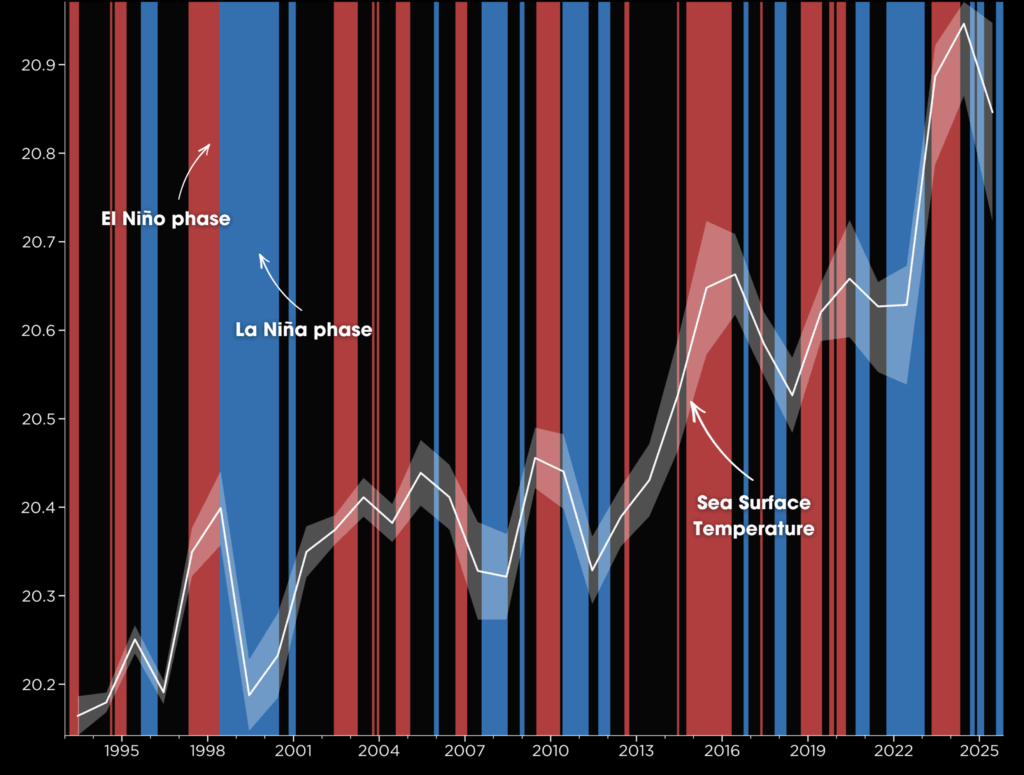
Despite the start of La Niña, 2025 ranks among the three warmest Ocean years since 1993
Global sea surface temperatures in 2025 ranked third since 1993. In many regions sea surface temperatures hit records, including the eastern North Atlantic, parts of the Southern Ocean (between South Africa and Australia) and the western Pacific. European coasts were greatly impacted by intense and long-lasting marine heatwaves.
Explore the state of our Ocean through key indicators featured in the Ocean Climate Portal, powered by the Copernicus Marine Service. Implemented by Mercator Ocean, the Copernicus Marine Service delivers state-of-the-art data and information across the Blue (physical), Green (biogeochemical), and White (sea ice) Ocean, capturing the effects of global warming and human-driven stressors alongside natural variations.