



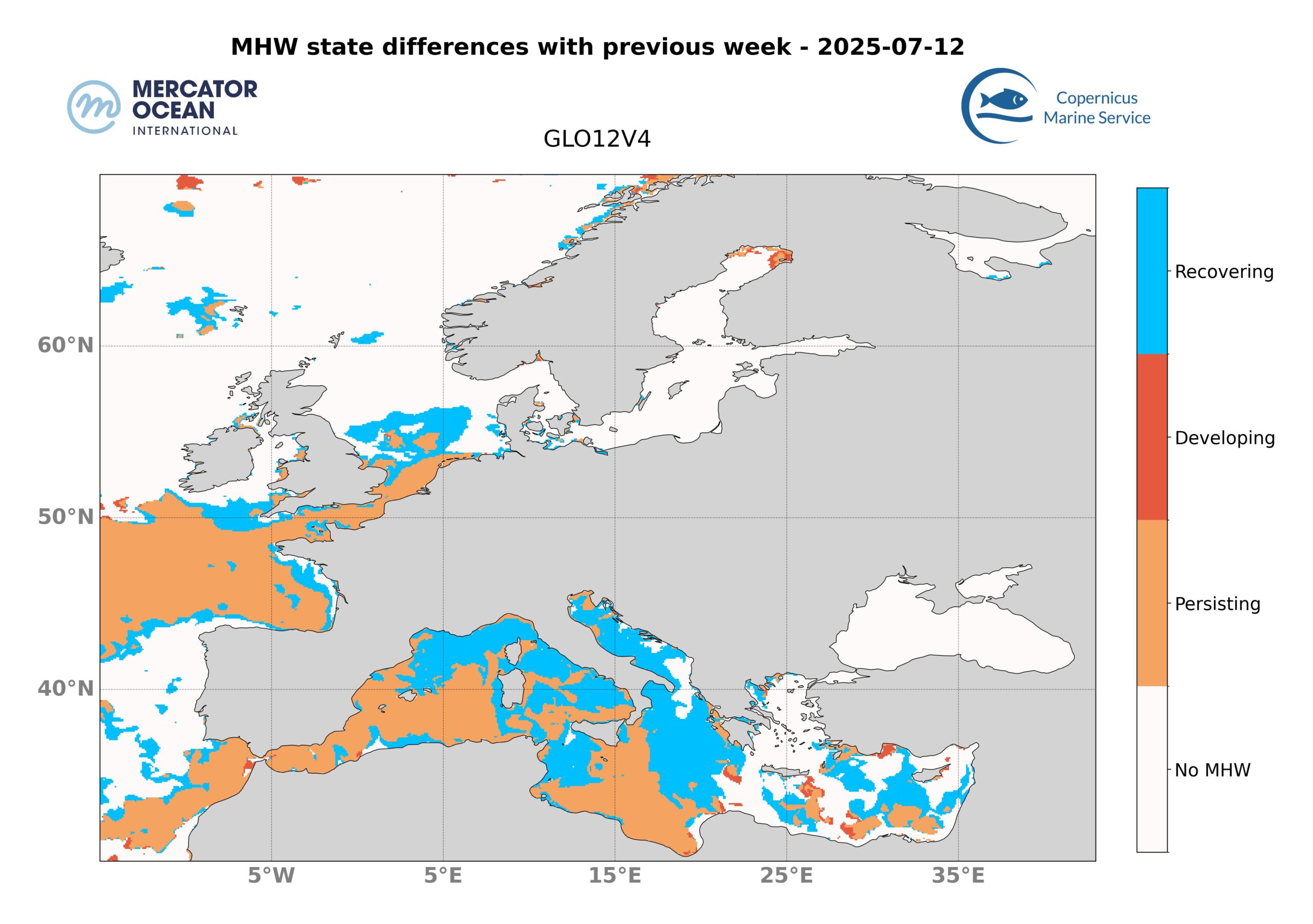
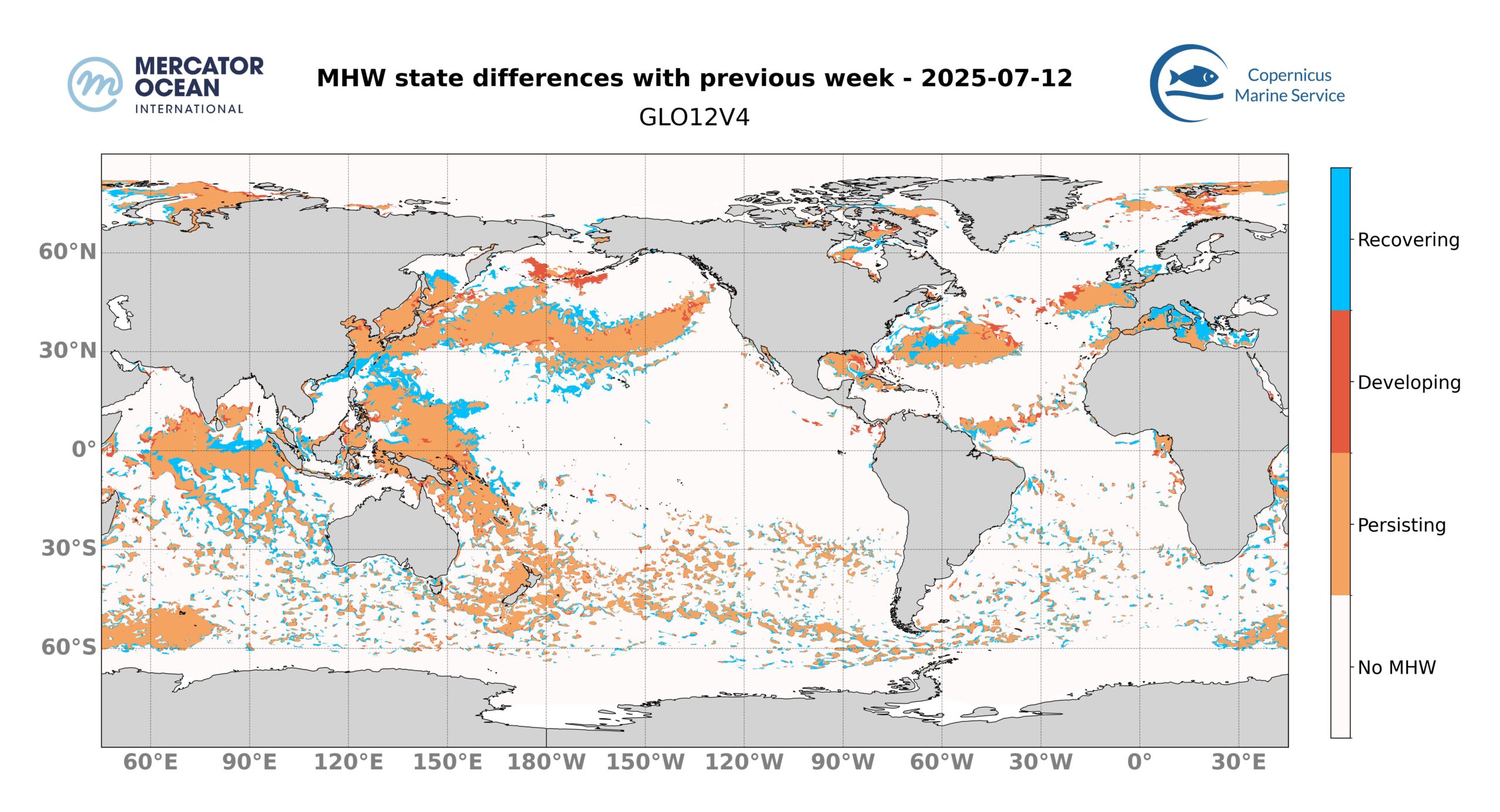
The marine heatwave bulletin provides forecasts and analysis of marine heatwave events across the globe and throughout the year. Used datasets include observations (satellite sea surface temperature maps) and numerical model analyses (assimilating satellite and in situ observations) to derive marine heatwave forecasts for a 10-day period. This week’s forecasts were produced using as a comparison the marine heatwave situation on 01/07/2025.
Key Takeaways
- Overall decrease in marine heatwave activity in the European zone – Mediterranean sea and North Atlantic Ocean.
- Increasing marine heatwave intensity and extent in the North Pacific and in the Tropical Atlantic.
- Stable conditions in the Indian Ocean.
European Zone
North Atlantic Ocean
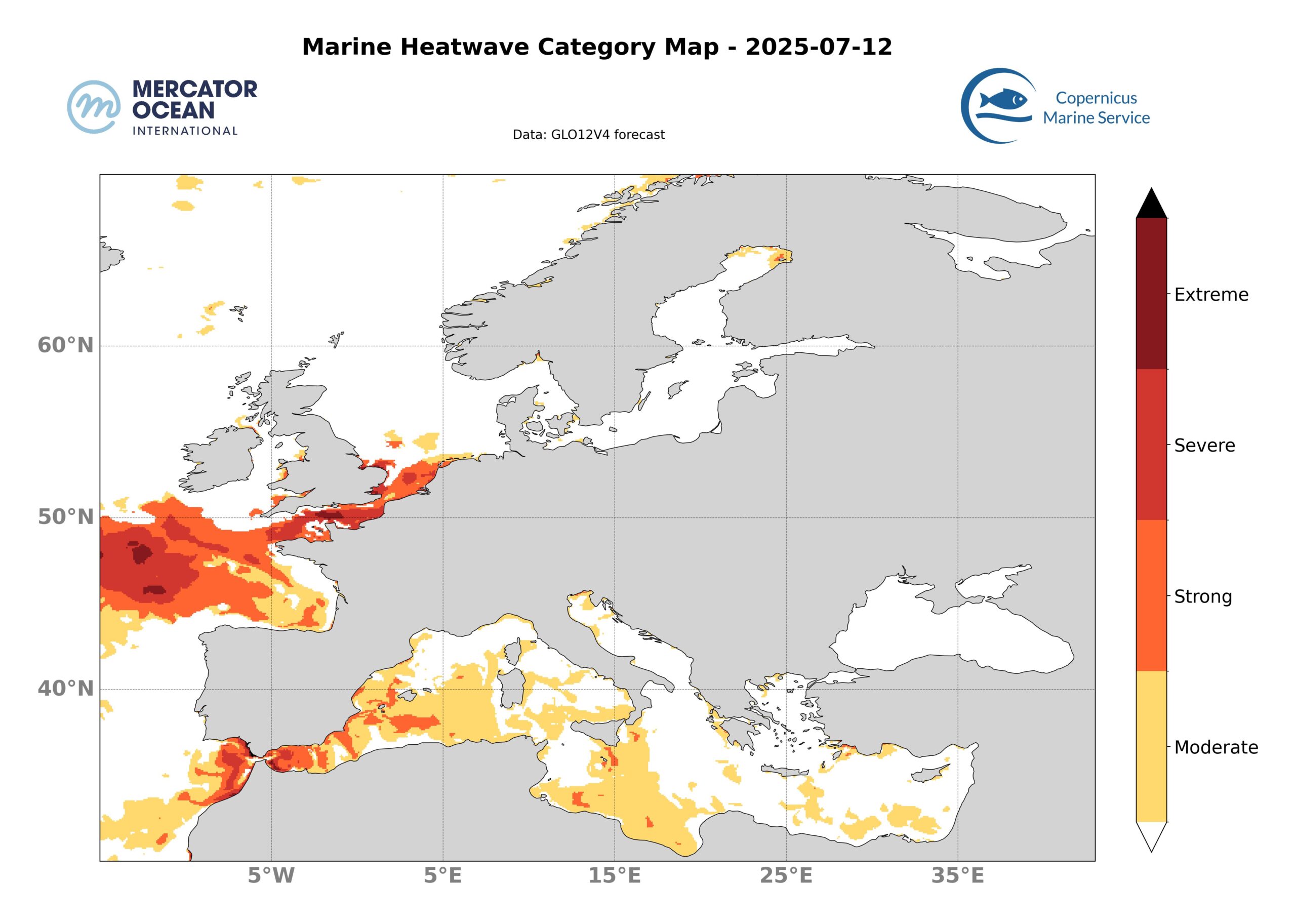
- The marine heatwave to the west of the European coast decreases in surface area off the Portuguese coast, but increases in surface area in the middle of the North Atlantic basin. This marine heatwave remains in the strong and severe category, but the surface area in the extreme category is decreasing.
- The marine heatwave in the North Sea is decreasing in area, and only moderate to locally extreme categories persist in the Channel.
- The heatwave present from eastern Florida to the middle of the Atlantic Basin decreases in area off Florida. However, the surface area of this marine heatwave increases in the middle of the Atlantic basin. The intensity of this marine heatwave remains stable, with moderate to severe categories.
Mediterranean Sea
In the Western Basin, the marine heatwave is decreasing in intensity and area, from strong to severe to moderate to locally strong. In the eastern basin, the marine heatwave is also diminishing in area and intensity, with only a few areas remaining in the moderate category.
Global ocean
Tropical Atlantic
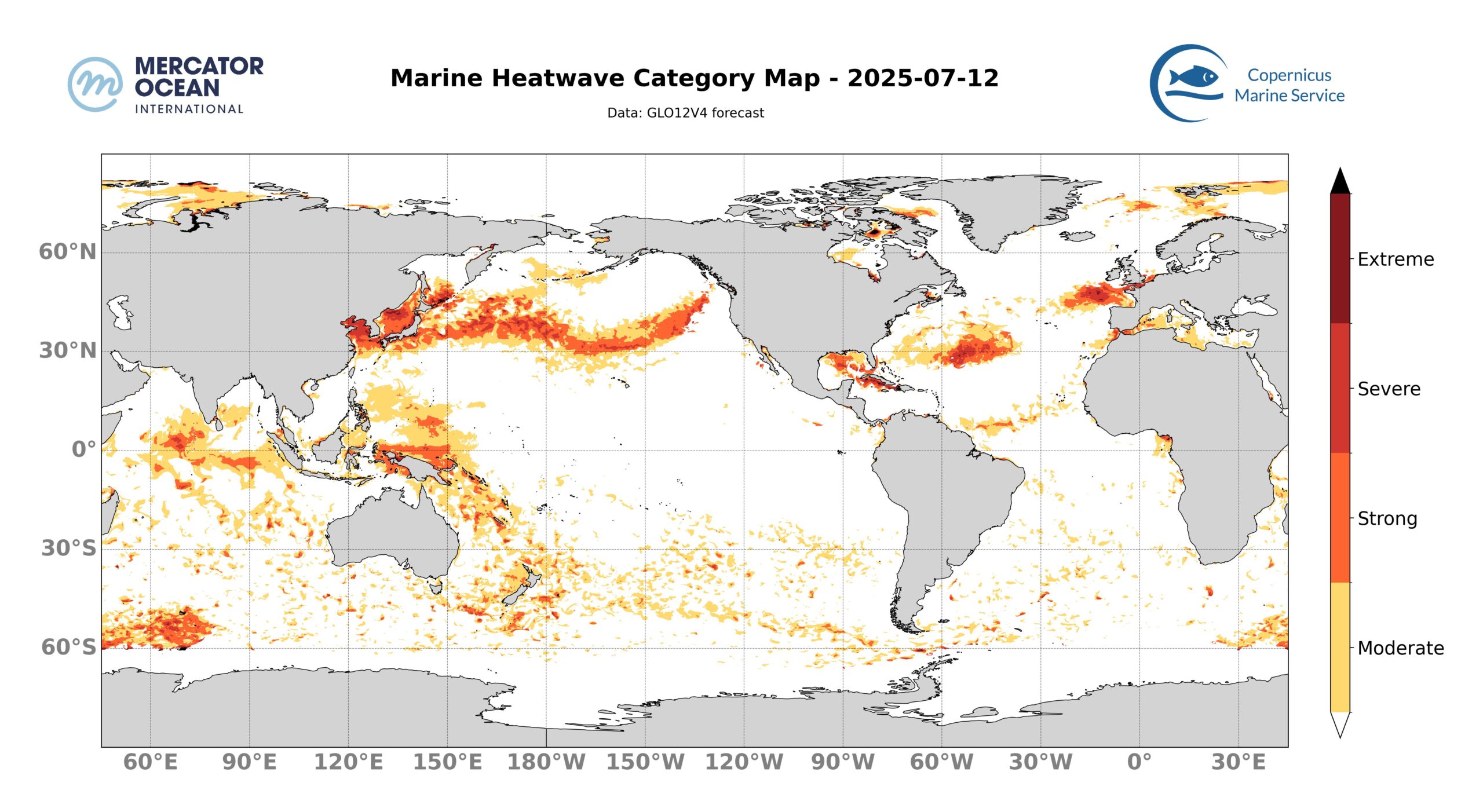
The marine heatwave in the Gulf of Mexico and South of Cuba is increasing in intensity, with strong to locally extreme categories.
North Pacific
The marine heatwave in the center of the basin at around 30°N is increasing in size and now extends from the Japanese coast to the North American coast. The intensity of this marine heatwave is also increasing, and is now mainly in the strong category, with a few moderate and severe categories.
Marine heatwave in the Sea of Japan is increasing in intensity and is now generally in the strong category, with some severe categories locally.
Indian Ocean
The marine heatwave in the center of the basin remains stable, with moderate and strong categories.
Weekly Temperature Anomalies
6 – 12 July 2025
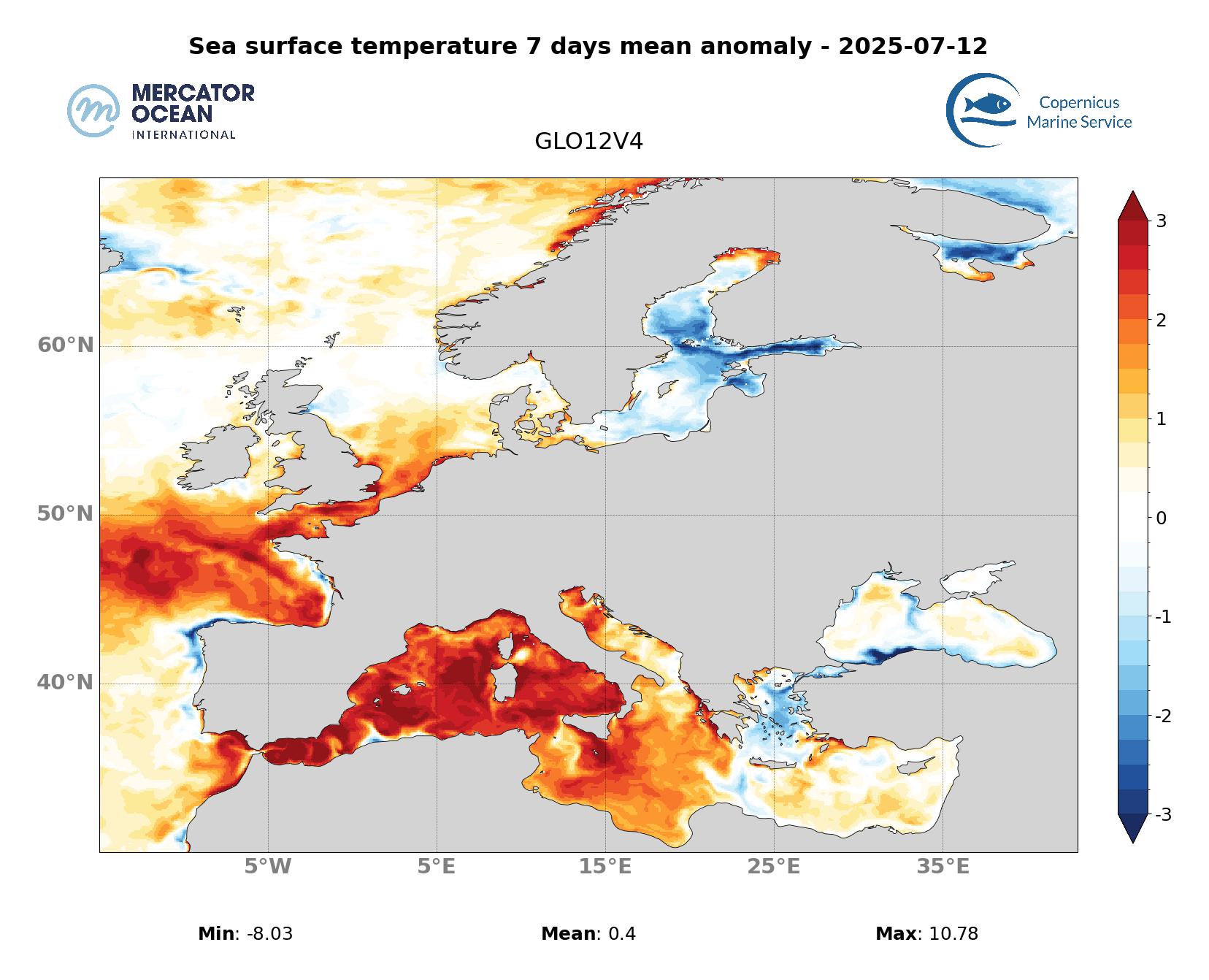
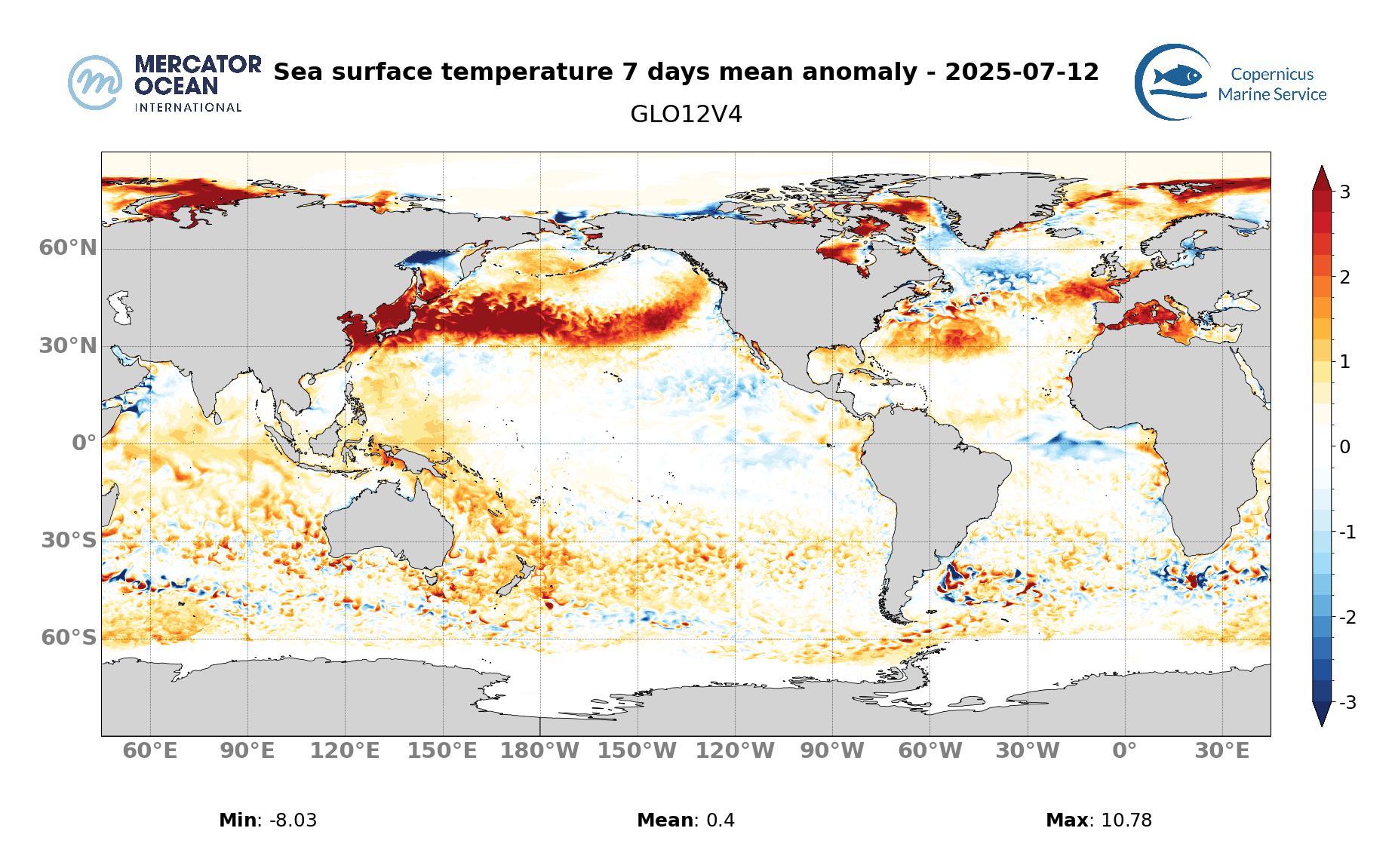
| North Atlantic | -2°C to 3°C |
| Mediterranean Sea | -1°C to >3°C |
| Tropical Atlantic | -2°C to 2°C |
| North Pacific | -3°C < à >3°C |
| Indian Ocean | -3°C to 2°C |
Access the Daily Global Physical Bulletin for a 9-day forecast here.
SURVEY
Help us improve our content! Answer a quick survey about this bulletin here.
Notes
Datasets and products :
Global Ocean Physics Analysis and Forecast (sea surface temperature) E.U. Copernicus Marine Service/ Mercator Ocean International. https://doi.org/10.48670/moi-00016
Categories
Categories Select Category Events Marine Heatwave Bulletin News Non classé @en Ocean Temperature Bulletin presse Sea Ice Bulletin Spotted in the media
Tags
altrimetry Antarctique Argo Climate Change CMEMS Connaissance de l’environnement océanique COP21 Copernicus copernicus marine Copernicus Marine Environment Copernicus Marine Service Decade Collaborative Centre digital ocean Digital Twin Ocean EUDTO EUMETSAT European Space Solutions GEO Blue Planet GMMC GOOS IGO international ocean governance IOC-UNESCO jason-3 Jason-3 data Jean-Louis Etienne Météo France North-West Shelf Ocean Decade ocean governance ocean observation Ocean Observing System Ocean prediction Ocean State Report Oil Spill OSR partnership plastic pollution S-100 satellite sea level Sentinel Sentinel-3A UN Ocean Decade