

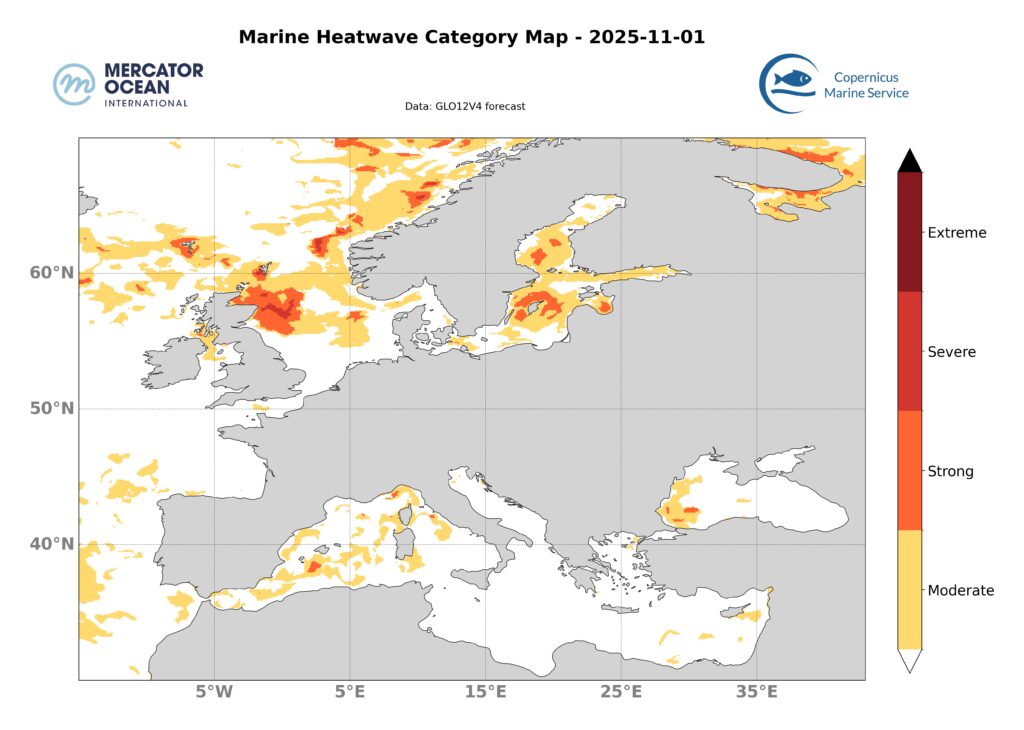
The marine heatwave in the western part of the basin is decreasing in size and intensity, shifting into a moderate category.
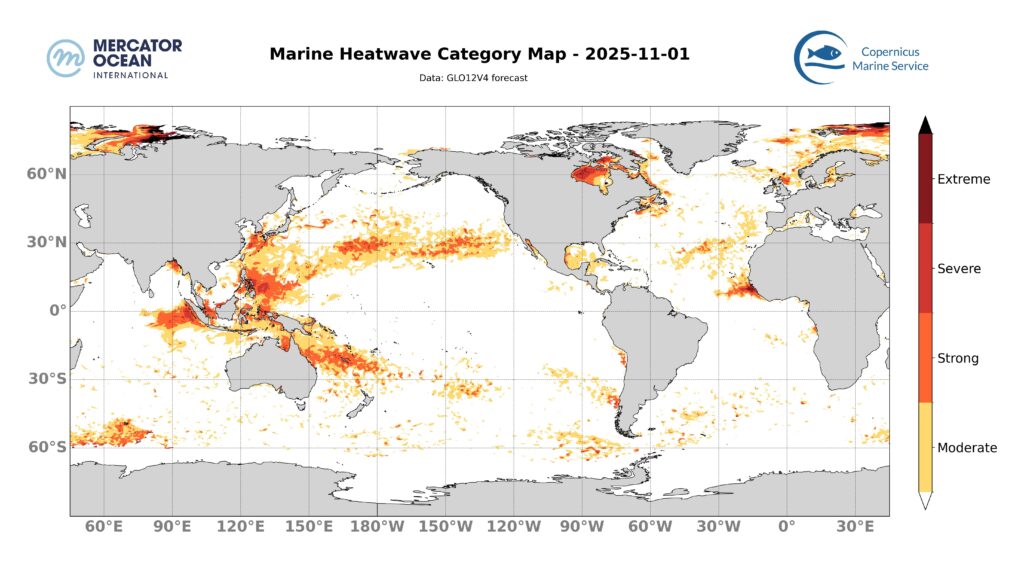
The extent and intensity of the marine heatwave in the Gulf of Mexico are decreasing, shifting from strong and moderate categories to mostly moderate. In the Caribbean Sea, the strong and moderate marine heatwave has almost completely disappeared. The marine heatwave around 30°W is decreasing in area and intensity, shifting overall to a moderate category. A strong to extreme marine heatwave is developing west of the African coast around 8°N.
The marine heatwave in the center of the basin is decreasing in extent but remains stable in intensity, with moderate and strong categories still present. The marine heatwave in the East China Sea is decreasing in extent and intensity, shifting from strong to extreme categories to strong to severe categories.
The marine heatwave stretching from the Philippine Sea to Indonesia is increasing in intensity with the development of strong and severe categories, and remains stable in area. A moderate to strong marine heatwave stretching from the north-east coast of Australia to 180°E is developing.
The marine heatwave west of Sumatra is increasing in extent and intensity and is now globally in strong to severe category. The marine heatwave in the Bay of Bengal is decreasing in size, with only one area of marine heatwave in strong category remaining in the north of the gulf.

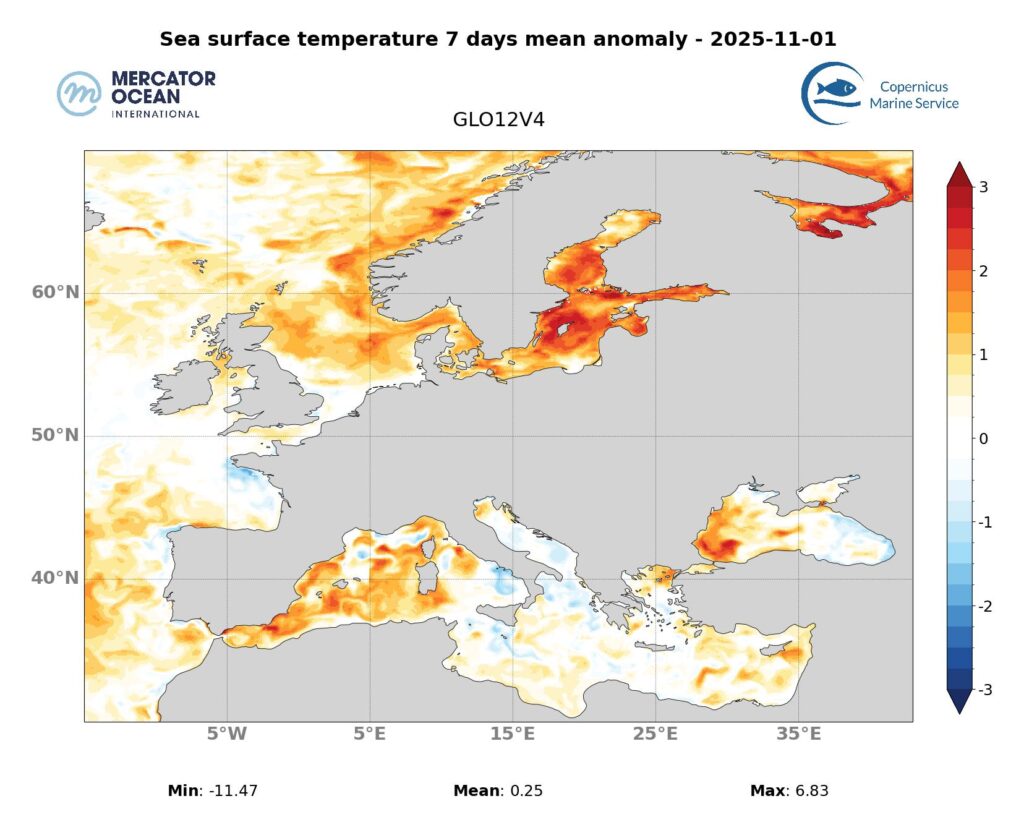
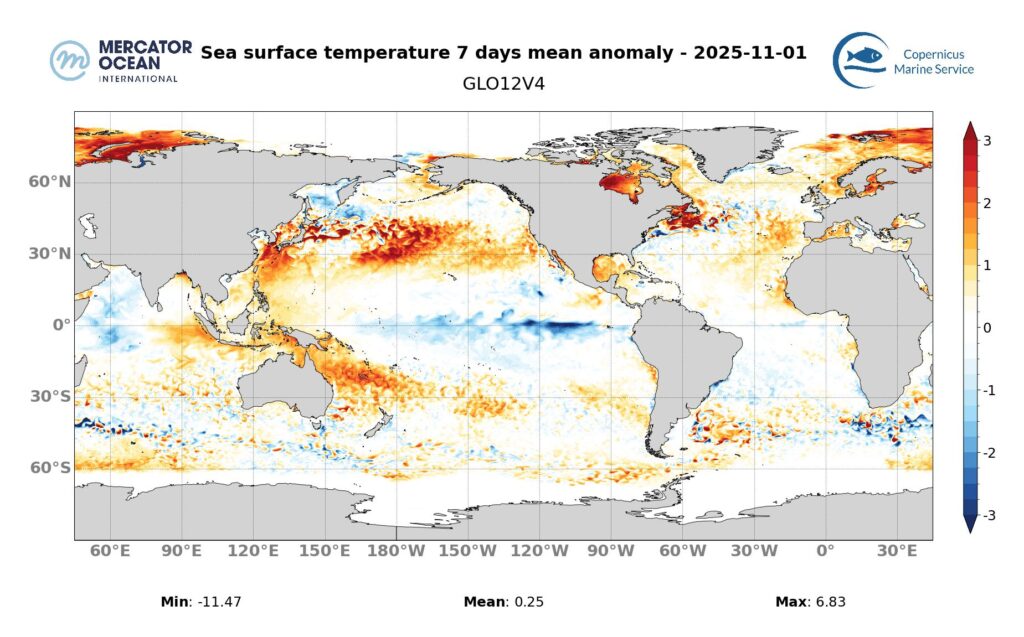
| Tropical Atlantic | -0.5°C à 1.5°C |
| North Pacific | – 2°C to > 3°C |
| Tropical Pacific | < -3°C to 2.5°C |
| Mediterranean Sea | -0.5°C to 1.5°C |
| Indian Ocean | -1°C to 2°C |