
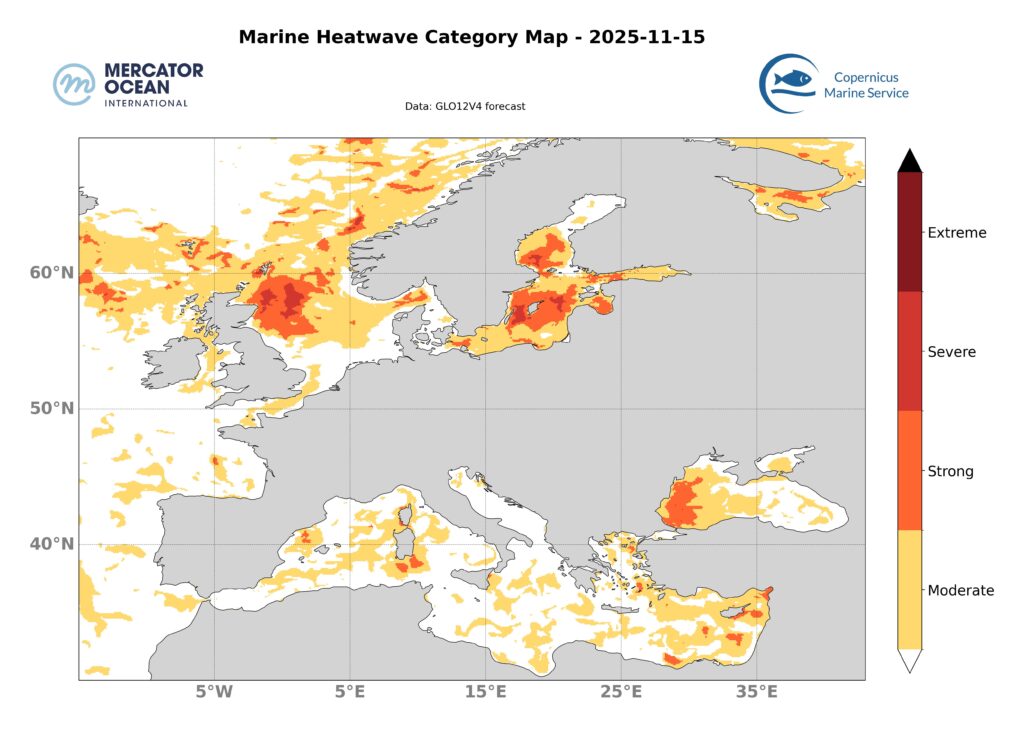
The extent of the marine heatwave in the western basin decreases with local presence of the moderate category. The marine heatwave in the eastern basin increases in extent.
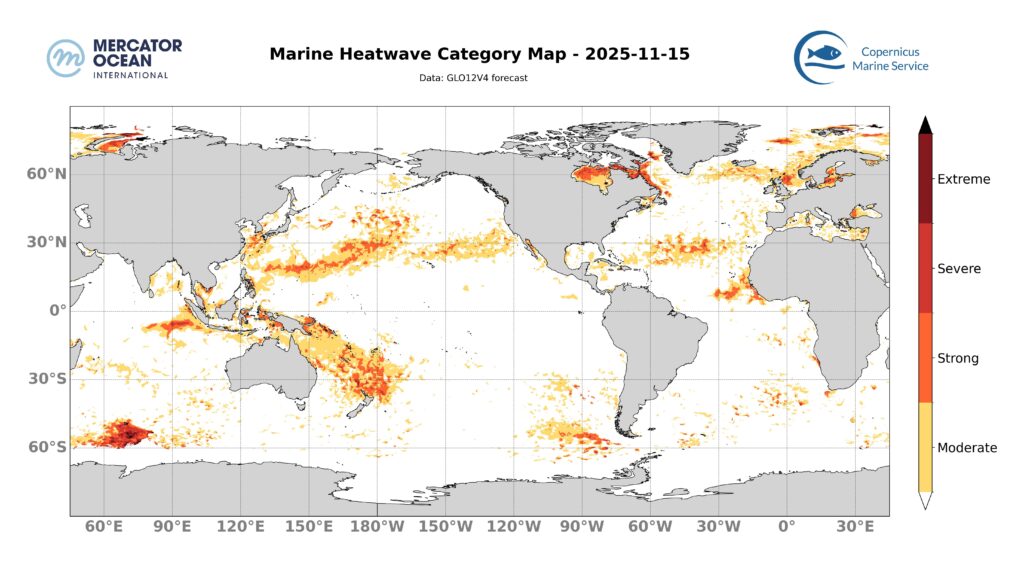
The extent and intensity of the marine heatwave in the Gulf of Mexico and the Caribbean Sea are decreasing. Only a few scattered areas remain under the moderate category. The marine heatwave around 30°W is decreasing in extent, falling into the moderate category, and locally into the strong category. The marine heatwave off the west coast of Africa near 8°N is decreasing in both intensity and extent, with the persistence of the moderate and strong categories.
The marine heatwave in the eastern part of the basin is decreasing in extent, with moderate category conditions dominating. The marine heatwave extending from the East China Sea to 180°W is decreasing in area but increasing in intensity, with moderate to strong categories observed.
The marine heatwave located south of the South China Sea is decreasing in extent and intensity. The marine heatwave off the Australian coasts persists in surface area but decreases in intensity. The marine heatwave north of New Zealand is increasing in intensity.
The marine heatwave west of Sumatra is decreasing in extent and remains stable in intensity, with moderate to strong categories present. The marine heatwave in the Bay of Bengal is decreasing in both intensity and extent.

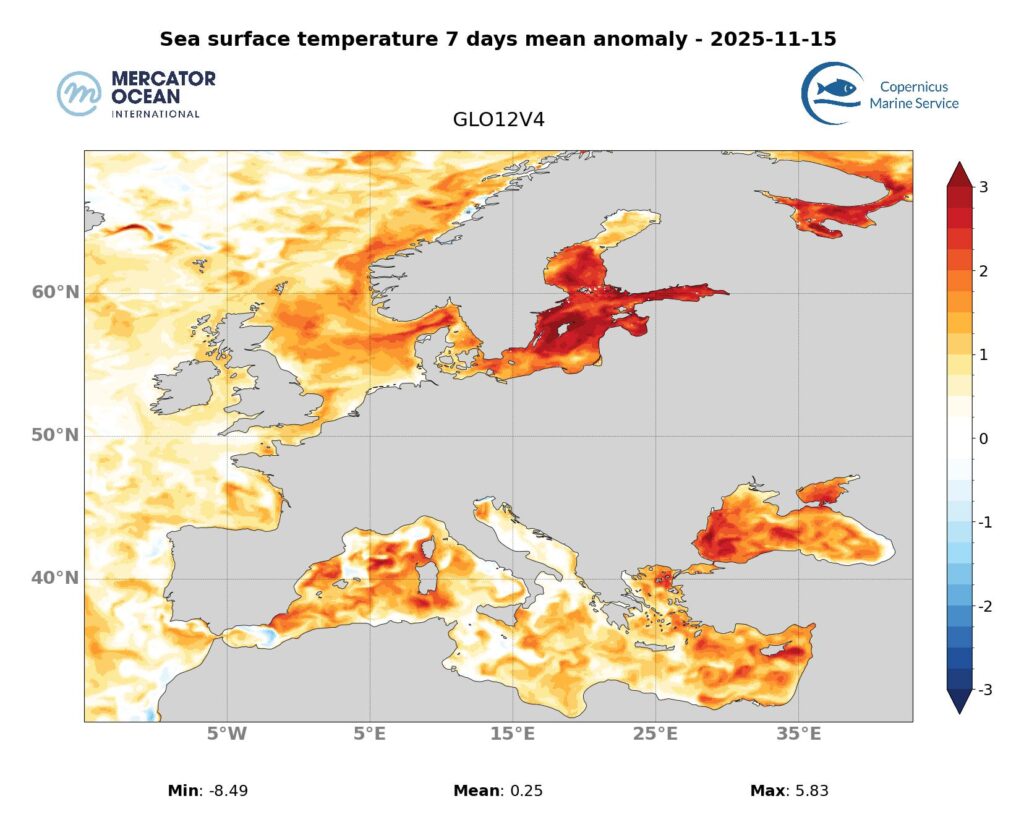
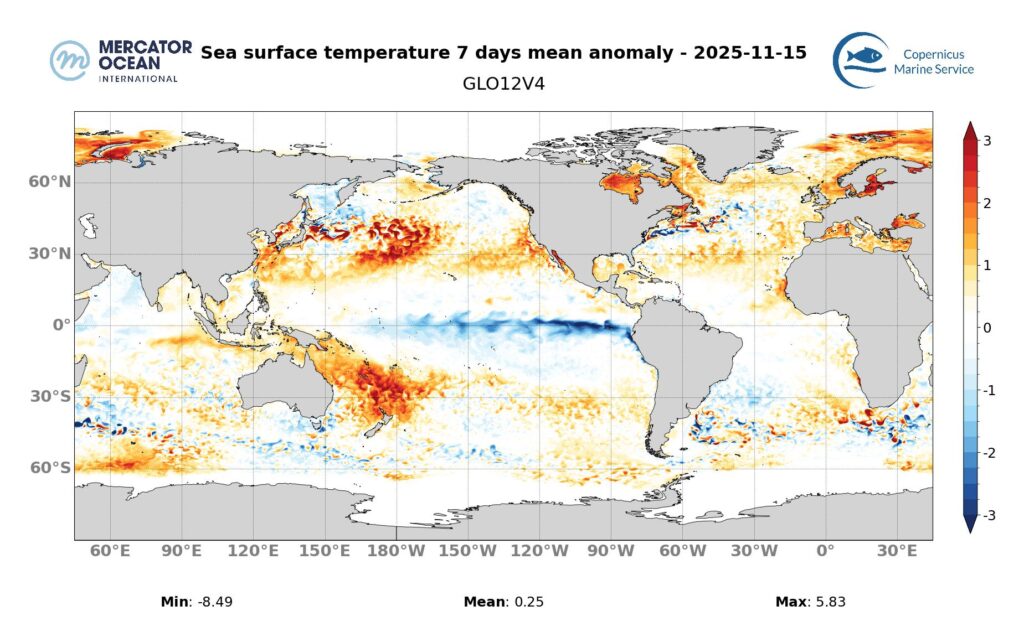
| Mediterranean Sea | 0°C to 1.5°C |
| Tropical Atlantic | -0.5°C to 1.5°C |
| North Pacific | – 2°C to > 3°C |
| Tropical Pacific | < -3°C to 3°C |
| Indian Ocean | -2°C to 2°C |