Ocean Temperature Bulletin
December 2025

Mercator Ocean International (MOi) oceanographers examine marine heatwaves across the global ocean. They analyse a variety of datasets from observation analyses
(satellite sea surface temperature maps) to model analyses
(assimilating satellite and in situ observations) and model forecasts.¹

All images in this article can be used freely and should be credited with the following information :
Image source: European Union, Copernicus Marine Service Data 2025 © Mercator Ocean .

Key takeaway

  • In December 2025, the global ocean (between 60°S and 60°N) was the 5th warmest December on record, with a mean sea surface temperature (SST) of 20.53 ± 0.05°C — with the record 20.84 ± 0.06 °C reached in 2023.
  • December 2025 average sea surface temperatures were above average for 66% of the global ocean. In the Mediterranean Sea, almost the entire basin experienced above average sea surface temperatures (92%) whereas for the North Atlantic, this accounted for 71% of the basin (between 0°N and 60°N).
  • Marine heatwave conditions during the last month recorded as the 5th most intense for the global ocean, and in the regional bassins of the Mediterranean Sea and the North Atlantic. During December 2025, the North Atlantic experienced significantly long marine heatwave events and ranked the 2nd most extreme December since 1993.

sea Surface Temperature

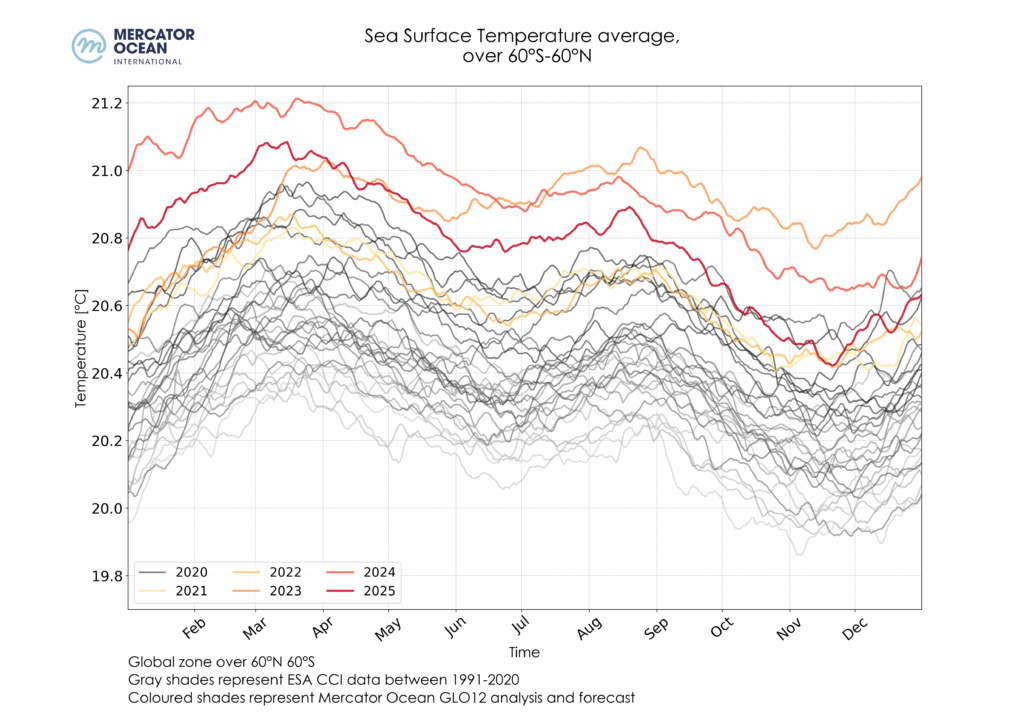
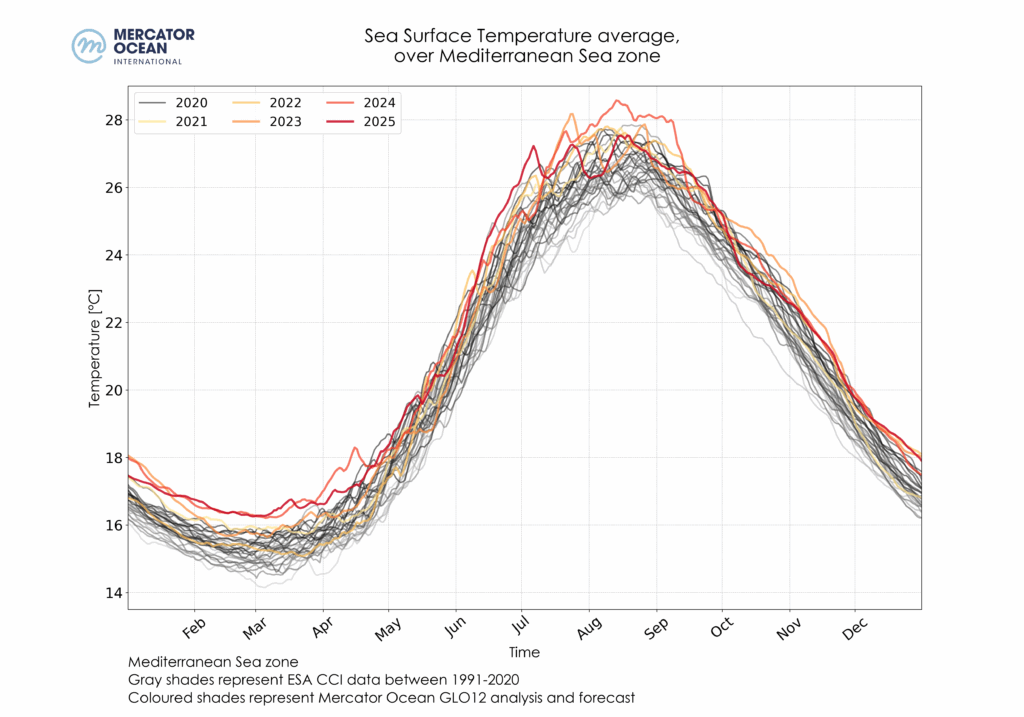
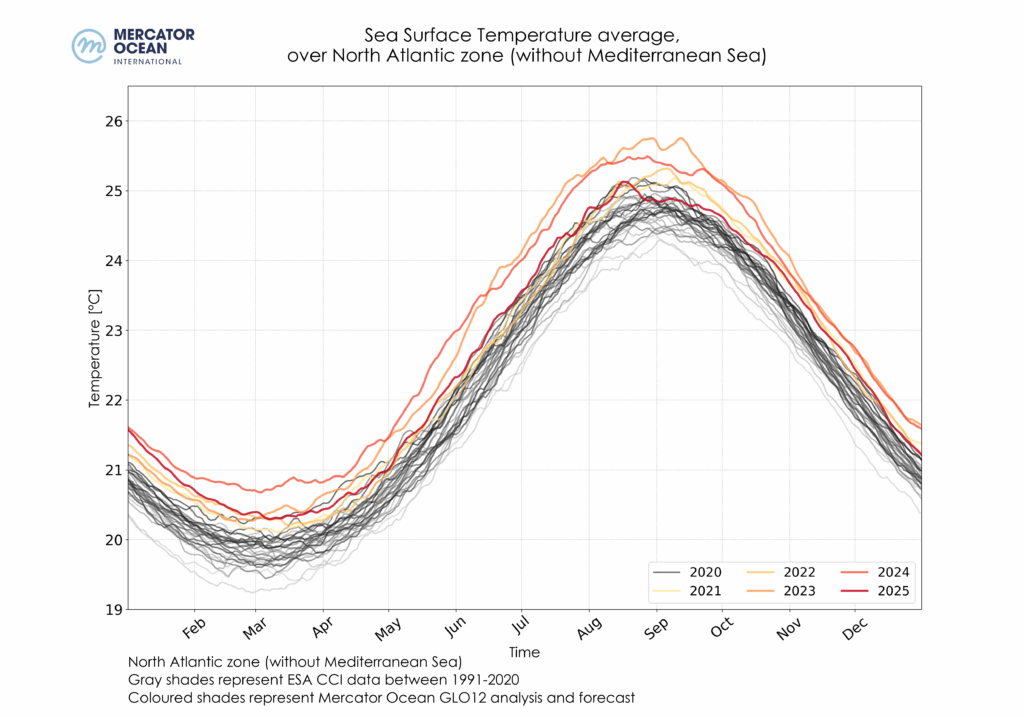
Daily sea surface temperatures averaged for the global ocean (top), the Mediterranean Sea (middle) and the North Atlantic Ocean (bottom) between 1991-2020 using ESA’s Climate Change Initiative (grey shades), and between 2021-2025 (colored shades) using Mercator Ocean International’s GLO12 analysis and forecast.


  • December 2025, at global level (between 60°S and 60°N), was the 5th warmest December on record, with a mean Sea Surface Temperature (SST) of 20.53 ± 0.05°C — the record of 20.84 ± 0.06 °C was reached in 2023.
  • In the Mediterranean Sea, December 2025 SST was the 3rd warmest December of the past 33 years, with a mean SST of 18.71 ± 0.12°C, ranking behind 2023 (18.73 ± 0.20°C) and 2022 (18.76 ± 0.13 °C).
  • For the North Atlantic (between 0°N and 60°N), December 2025 was the 5th warmest December month with a mean SST of 21.76 °C.

Sea surface temperature anomalies 


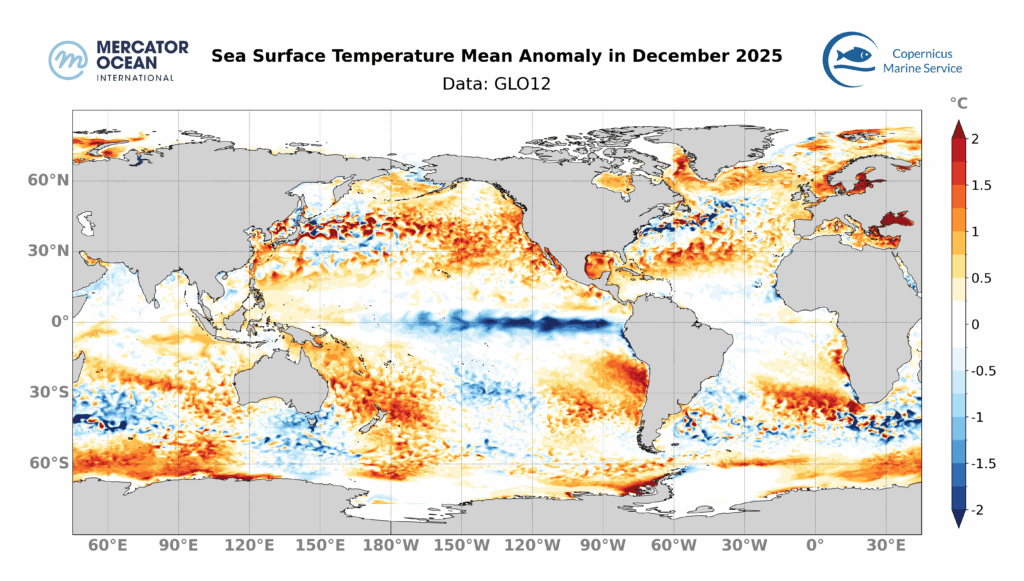
December 2025 Mean SST Anomaly relative to a 30-year climatology (1993-2022). Data: GLO12/GLORYS12. Credit: E.U. Copernicus Marine Service Data 2026/ © Mercator Ocean. 
  • December 2025 mean SSTs are above average for 66% of the global ocean (between 60°S and 60°N), with 11% exceeding the average by at least 1°C.
  • Almost the entire Mediterranean Sea (92%) showed above-average SSTs, with 34% of the basin reaching at least 1°C above average, mainly in the eastern part.
  • The North Pacific Ocean showed widespread high SSTs at midlatitude spanning the entire width of the basin and reaching 3°C above average in the western part. Above-average SSTs are also observed in the western South Pacific, extending from the Australian coast to the east of New Zealand, reaching 2°C above average. Off the coast of Chile, SSTs reached 1°C to 2°C above average. The equatorial region is characterized by a large below-average SST (reaching below -2°C) continuing the transition from ENSO neutral to La Niña conditions observed in previous months.
  • The North Atlantic recorded above-average SSTs over 71% of its area (between 0°N and 60°N), mainly in the subtropical part of the basin, with anomalies reaching 1.5-2°C. Northeastern Europe is also experiencing anomalies exceeding 2°C locally.
  • In the Indian Ocean, SSTs were predominantly above average in the eastern and southern parts (locally approaching 2°C above average) and below average in the western part.
  • Widespread above average SSTs are observed in the Southern Ocean, between 30°W and 120°E, reaching up to 1.5-2°C locally.


Ongoing Marine Heatwaves


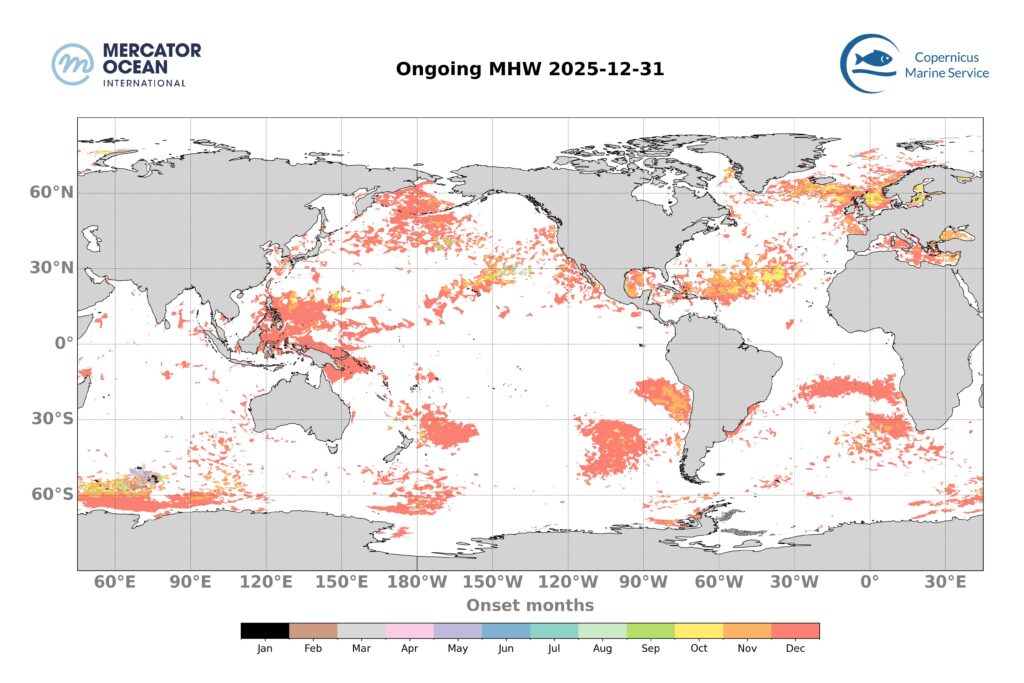
Month of onset for the ongoing MHWs on the 31st December 2025. The colors indicate the month during which the MHW started. For instance, ocean pixels in red correspond to an MHW that developed during December 2025 and are less than one month old, in orange MHW between 1 and 2 months old, etc.
  •  On the 31st of December, 18% of the global ocean (between 60°S and 60°N) was affected by MHWs.
  • The majority of these MHWs developed recently, with 14% of the global Ocean (between 60°S and 60°N) affected by MHWs less than 1 month old and approximately 3% by events between 1- and 2-month-old.
  • The oldest MHWs are in the North Atlantic, particularly in the subtropical region and north of Europe, as well as in the Southern Ocean between 60°E and 90°E. On a more localized scale, the North Pacific also has regions of persistent MHWs.


Total Surface Marine Heatwaves

Global Ocean

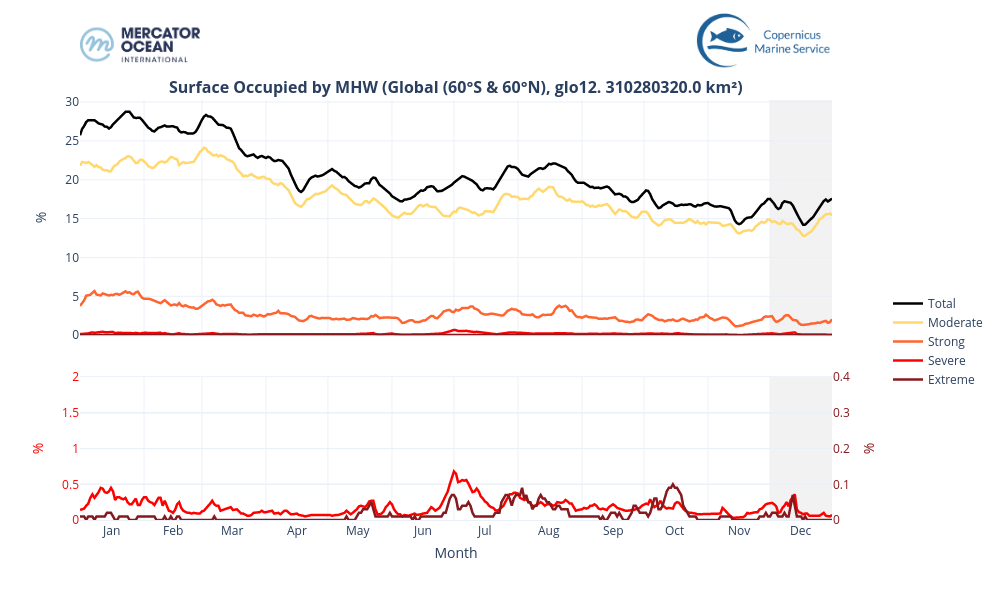
Surface occupied by MHWs in the global ocean (between 60°S and 60°N) between January 2024 and December 2025 based on daily monitoring. The black solid line represents the total surface of MHW, while the colored lines represent the surface of each MHW category. The gray background highlights the month of December 2025.


  • In December 2025, the total surface area of MHW (black line) remained stable around 18% of the global ocean (between 60°S and 60°N), despite a decrease to 14% mid-month. The majority of MHWs events were of moderate category (between 13 and 16% of the global ocean) and to a lesser extent strong categories (~2% of the global ocean).

Mediterranean Sea

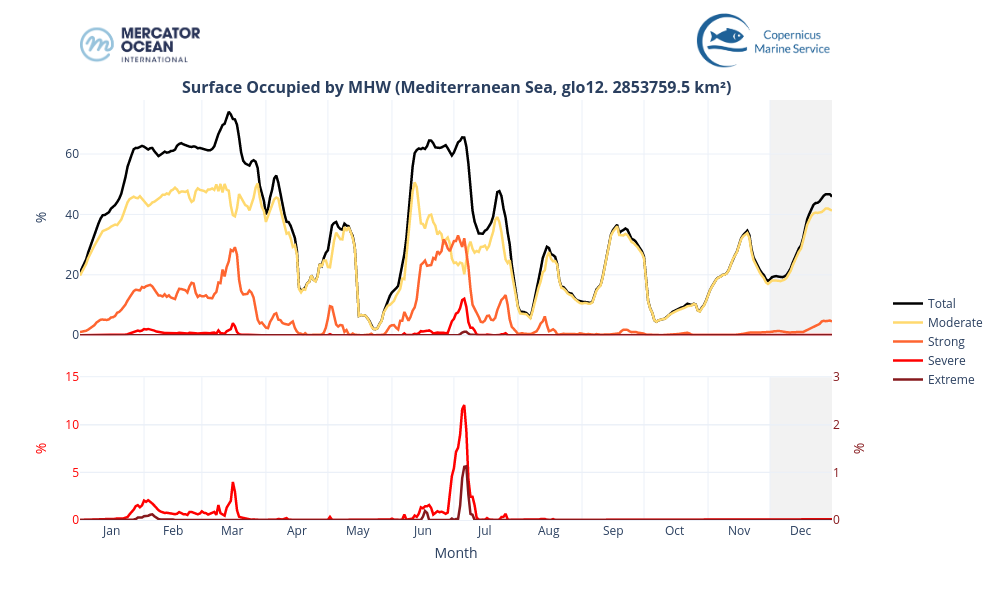
Surface occupied by MHWs in the Mediterranean Sea between January 2024 and December 2025 based on daily monitoring. The black solid line represents the total surface of MHW, while the colored lines represent the surface of each MHW category. The gray background highlights the month of December 2025.
  • For the Mediterranean Sea, the total MHW surface increased from 20% to 45% during the month of December 2025. These MHW were mainly moderate in category, with an increase in the extent of strong events during the second half of the month (~3% of the area). For comparison, in 2024, the total surface area of MHW fluctuated between 32% and 15% during the month of December.

North Atlantic 


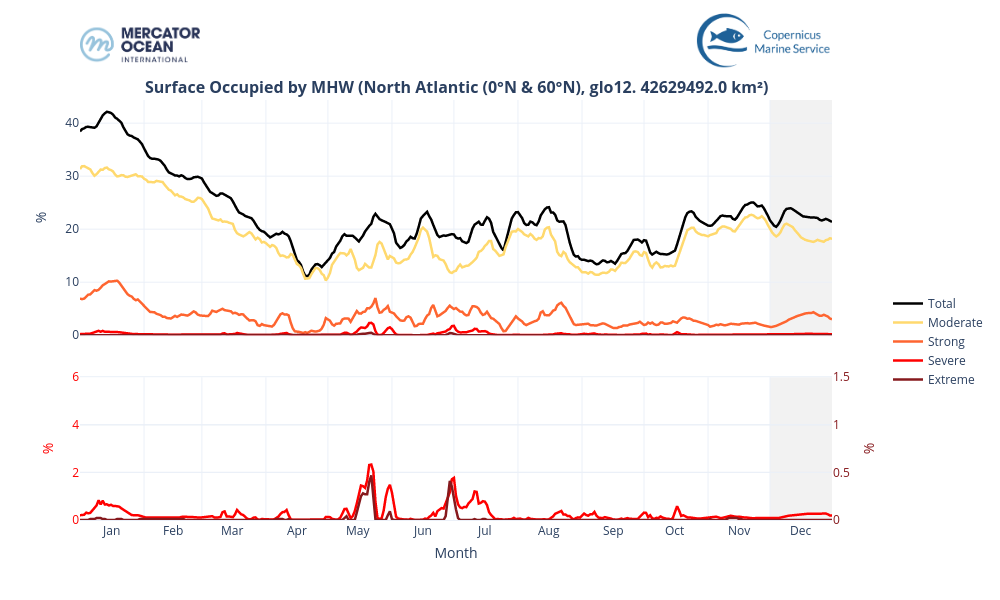
Surface occupied by MHWs in the North Atlantic (between 0°N and 60°N) between January 2025 and December 2025 based on daily monitoring. The black solid line represents the total surface of MHW, while the colored lines represent the surface of each MHW category. The gray background highlights the month of December 2025.
  • In the North Atlantic (between 0°N and 60°N), the total surface area of MHW varied between 20% and 24%, representing 21% of the basin by the end of the month. These events consist mostly of moderate and strong categories (18-21% and 1-3%, respectively). For comparison, in December 2024, the total MHW extent decreased from above 42% to around 33% of the North Atlantic, with the noteworthy presence of strong categories (5-7%) (not shown).


Total Number Marine Heatwaves

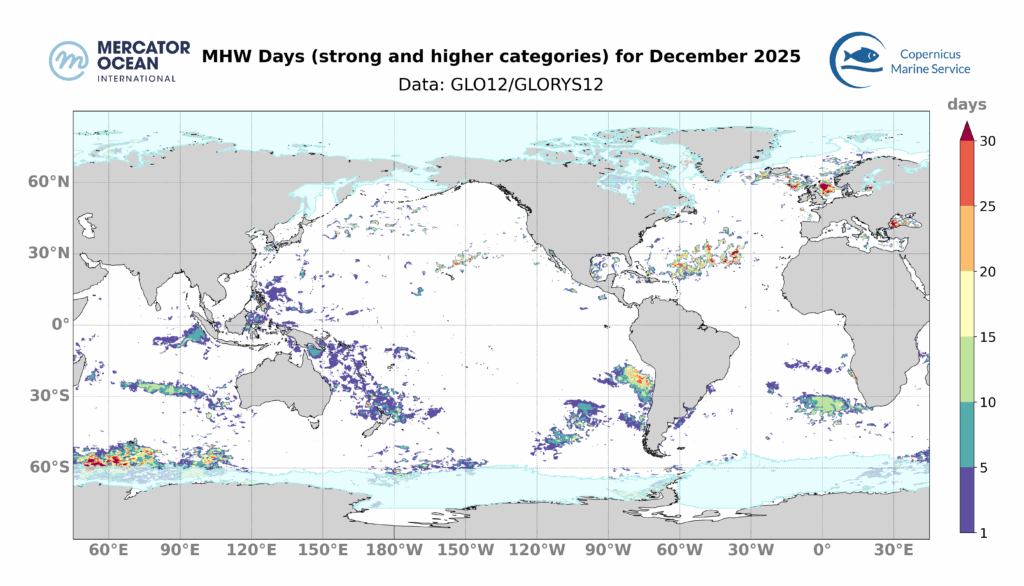
Total number of intense MHW days for December 2025

Number of days during which a MHW of category strong, severe or extreme (intense categories) occurred in December 2025. Blank areas represent no intense MHWs happened during the month. Blue shaded areas in the polar regions represent the sea ice maximum from the climatological period (1993-2022). Monitoring SST extremes with the MHW categorization approach as used here is not best suited for such regions.


December 2025 MHW days of strong and higher category. Number of days during which a MHW of category strong, severe or extreme occurred in December 2025. Blank areas mean that no MHW of strong or higher category happened during the month. Blue shaded areas in the polar regions represent the sea ice maximum from the climatological period (1993-2022). Monitoring SST extremes with the MHW categorization approach as used here is not best suited for such regions.
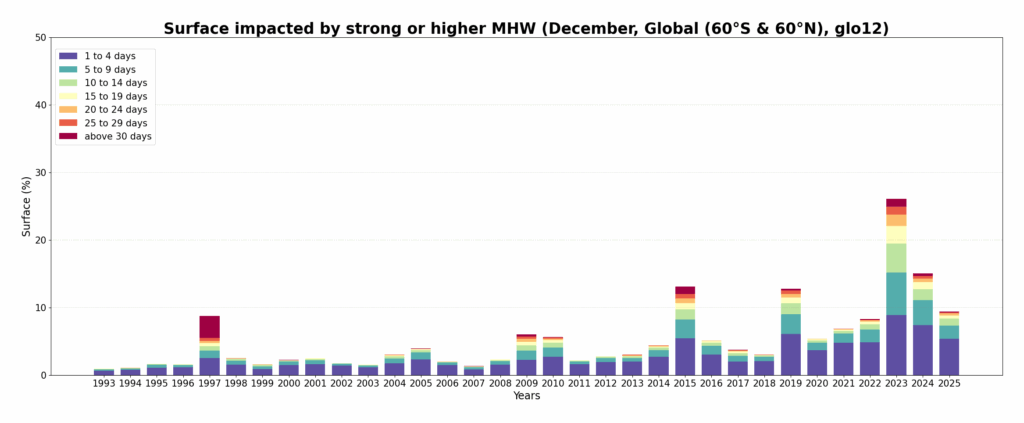
  • 9% of the surface of the ocean was impacted by strong, severe or extreme MHW conditions for at least 1 day during December 2025. This is the 5th widest extent of the last 33 years, after 2019, 2015, 2024 and 2023. The South Pacific off the coast of Chile and the Southern Ocean between 50°E and 90°E are strongly affected (Figure 7).
  • Regionally, 9% of the North Atlantic (between 0°N and 60°N) was impacted by strong, or higher, MHW conditions for at least 1 day. This corresponds to the 3rd largest extent for a December month – behind 2024 (21%) and 2023 (40%). Noteworthy, 5% of the region was affected by intense MHW conditions (Strong or higher) for more than 10 days, mainly in the subtropical part of the basin and north of Great Britain.
  • For the Mediterranean Sea, 10% of the basin was affected by strong-or-higher MHW conditions for at least 1 day, which is the 4th largest extent for a December month, after 2012 (12%), 2022 (18%) and 2023 (20%).


Statistics

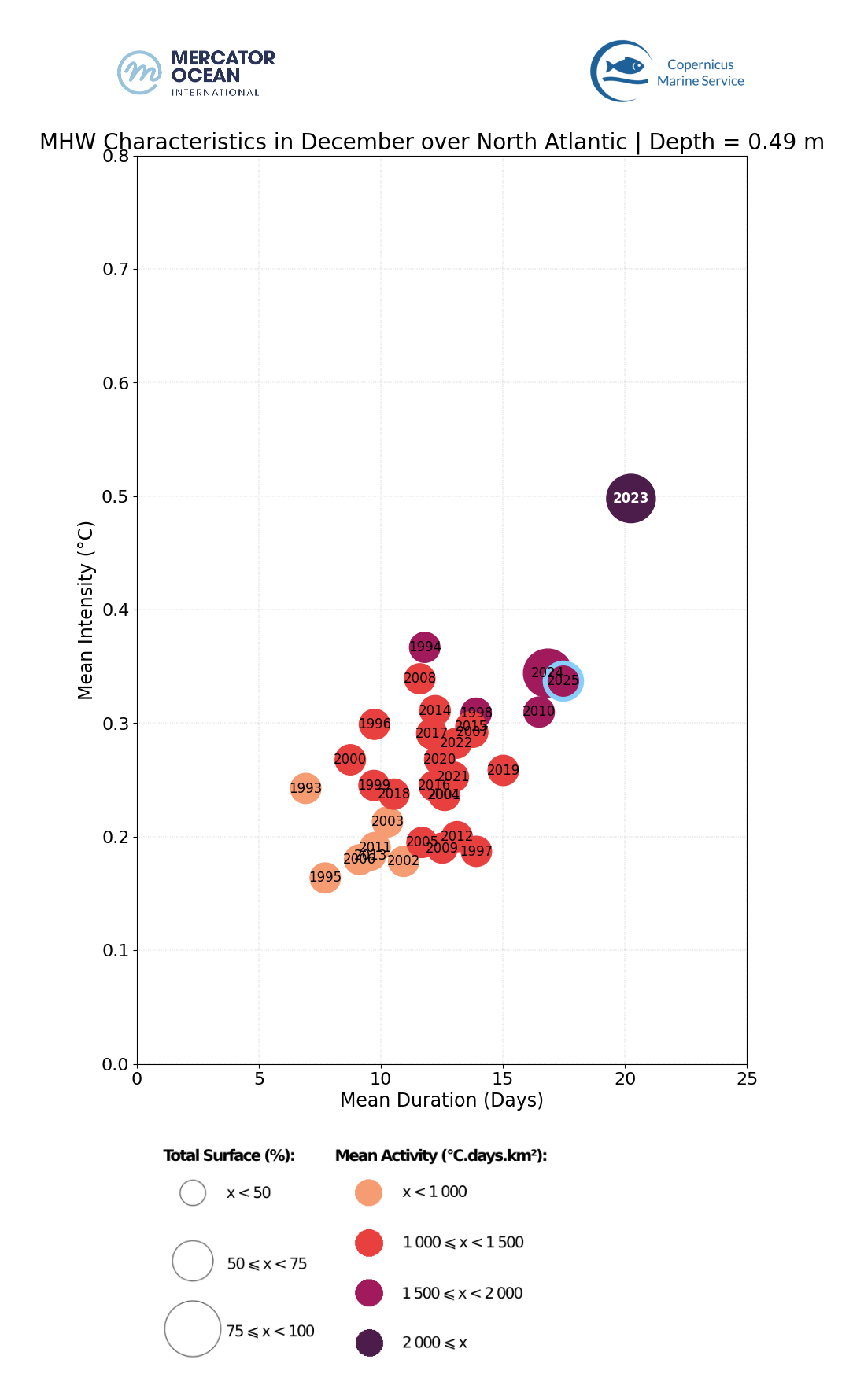
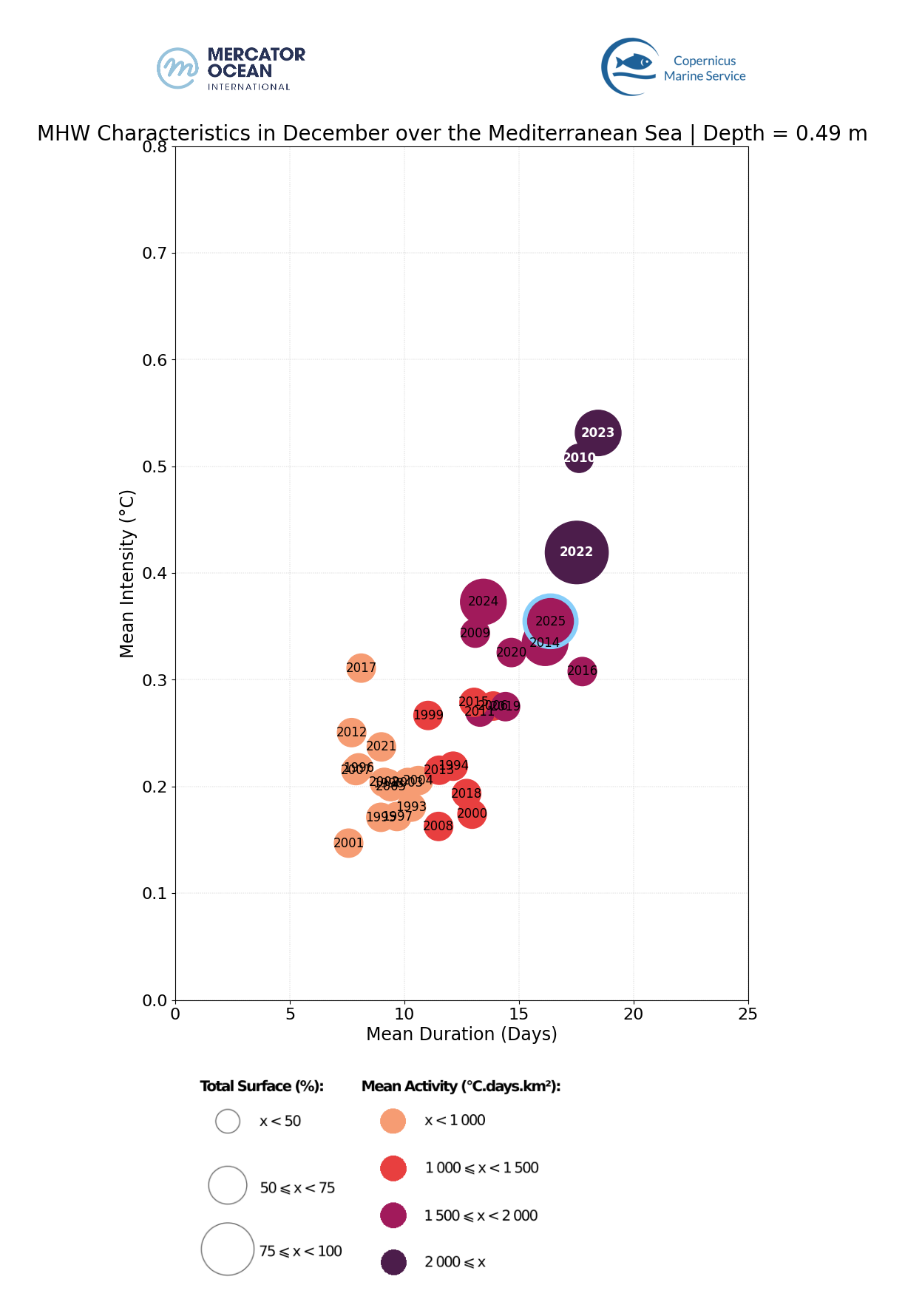
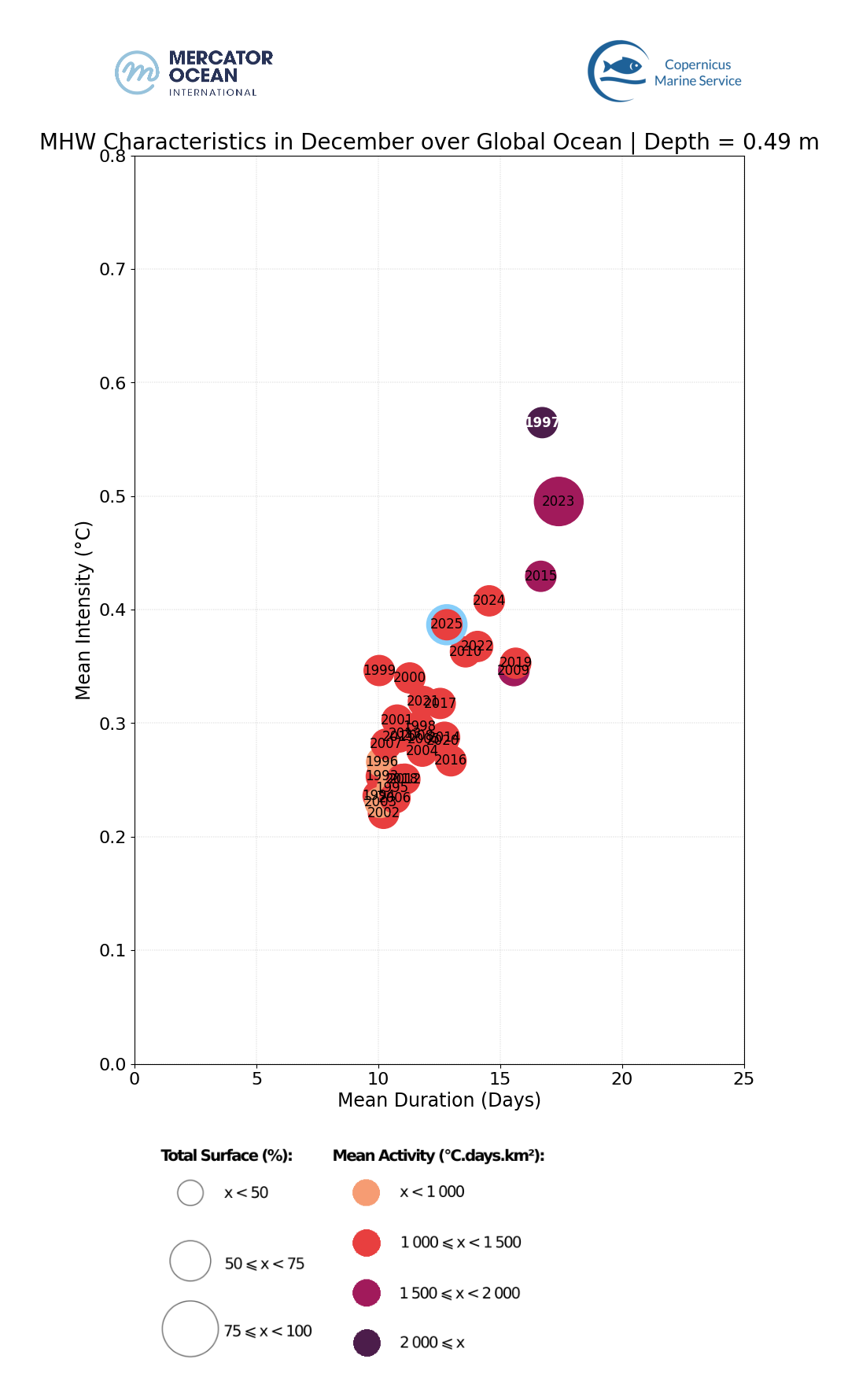
December 2025 marine heatwave statistics (intensity, extent, duration and mean activity).

  • December 2025 was the 5th most extreme December month in terms of MHW intensity for the global ocean, after 2024, 2015, 2023, 1997. Events remained however regional.
  • In the Mediterranean Sea, December 2025 was the 5th most extreme December on average but not as intense as December 2023 or 2010.
  • In the North Atlantic, December 2025 was the 5th most extreme December in terms of MHW intensity and the 2nd in terms of duration, far from the December 2023 event.


MHW Characteristics for December months from 1993 to 2025. Duration, intensity, extent and activity averaged for each December month between 1993 and 2025 for the global ocean (left), for the Mediterranean Sea (center) and the North Atlantic Ocean (right). December 2025 is highlighted with a blue edge.

 

  • December 2025 was the 5th most extreme December month in terms of MHW intensity for the global ocean, after 2024, 2015, 2023, 1997. Events remained however regional.
  • In the Mediterranean Sea, December 2025 was the 5th most extreme December on average but not as intense as December 2023 or 2010.
  • In the North Atlantic, December 2025 was the 5th most extreme December in terms of MHW intensity and the 2nd in terms of duration, far from the December 2023 event.


About the Bulletin

Mercator Ocean International publishes a monthly sea surface temperature bulletin reporting on mean temperature and marine heatwave conditions for the month just passed. It includes:

  • Regions where MHWs are present and the time these events started,
  • Timeseries showing the total surface occupied by MHWs globally and for the European region,
  • The total number of days of exposure to MHW during the month (including only strong and higher intensity categories).

Data sets and products

Sea Surface Temperature

The results are obtained using the Copernicus Marine Service global analysis and forecasting system together with observation-based products.

  • GLOBAL_ANALYSISFORECAST_PHY_001_024 Global Ocean Physics Analysis and Forecast sea surface temperature. U. Copernicus Marine Service Information (CMEMS). Marine Data Store (MDS). DOI: https://doi.org/10.48670/moi-00016
  • ESA SST CCI reprocessed sea surface temperature analyses. E.U. Copernicus Marine Service Information (CMEMS). Marine Data Store (MDS). DOI: https://doi.org/10.48670/moi-00169
  • NOAA OI SST V2 High Resolution Dataset data provided by the NOAA PSL, Boulder, Colorado, USA, from their website at https://psl.noaa.gov, Huang, B., C. Liu, V. Banzon, E. Freeman, G. Graham, B. Hankins, T. Smith, and H.-M. Zhang, 2021: Improvements of the Daily Optimum Interpolation Sea Surface Temperature (DOISST) Version 2.1, Journal of Climate, 34, 2923-2939. doi: 10.1175/JCLI-D-20-0166.1
  • Global Ocean OSTIA Sea Surface Temperature and Sea Ice Analysis. E.U. Copernicus Marine Service Information (CMEMS). Marine Data Store (MDS). DOI: https://doi.org/10.48670/moi-00165
  • ODYSSEA Global Sea Surface Temperature Gridded Level 4 Daily Multi-Sensor Observations. E.U. Copernicus Marine Service Information (CMEMS). Marine Data Store (MDS). DOI: https://doi.org/10.48670/moi-00016

Notes: The global analysis system was used to study the ocean surface temperature from 2021 and 2025. To study surface temperature for previous years (1991 to 2020), it was used the ESA CCI data. The other observation-based sea surface temperature products (OSTIA, OI SST and Odyssea) were used for calculating monthly mean and uncertainty values for November 2025.

 Marine Heatwaves

The results are obtained using the Copernicus Marine Service global systems including the analysis and forecasting system together with the reanalysis product.

  • GLOBAL_ANALYSISFORECAST_PHY_001_024 Global Ocean Physics Analysis and Forecast sea surface temperature. U. Copernicus Marine Service Information (CMEMS). Marine Data Store (MDS). DOI: https://doi.org/10.48670/moi-00016
  • GLOBAL_MULTIYEAR_PHY_001_030 Global Ocean Physics Reanalysis sea surface temperature. U. Copernicus Marine Service Information (CMEMS). Marine Data Store (MDS). DOI: https://doi.org/10.48670/moi-00021

Notes: The global analysis system was used to study MHWs for 2024 and 2025. To study MHWs for previous March (1993 to 2023), it was used the reanalysis system. The reanalysis product was used for generating a daily climatology using the 30-year period from 1993 to 2022