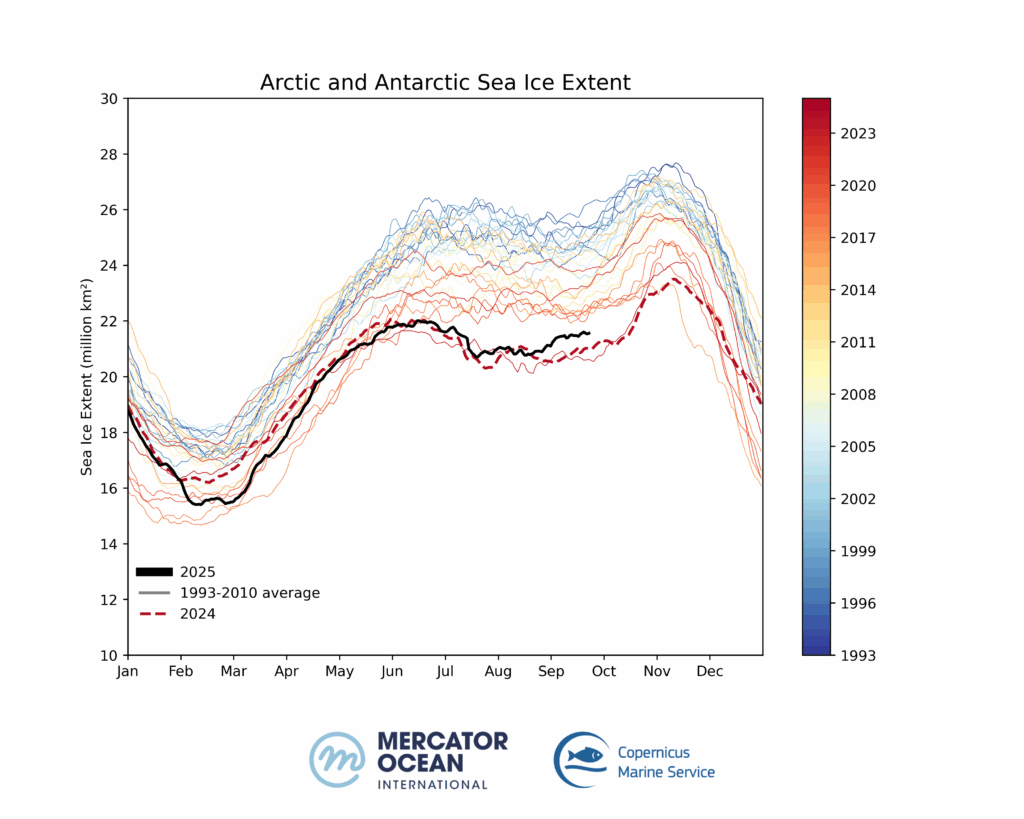



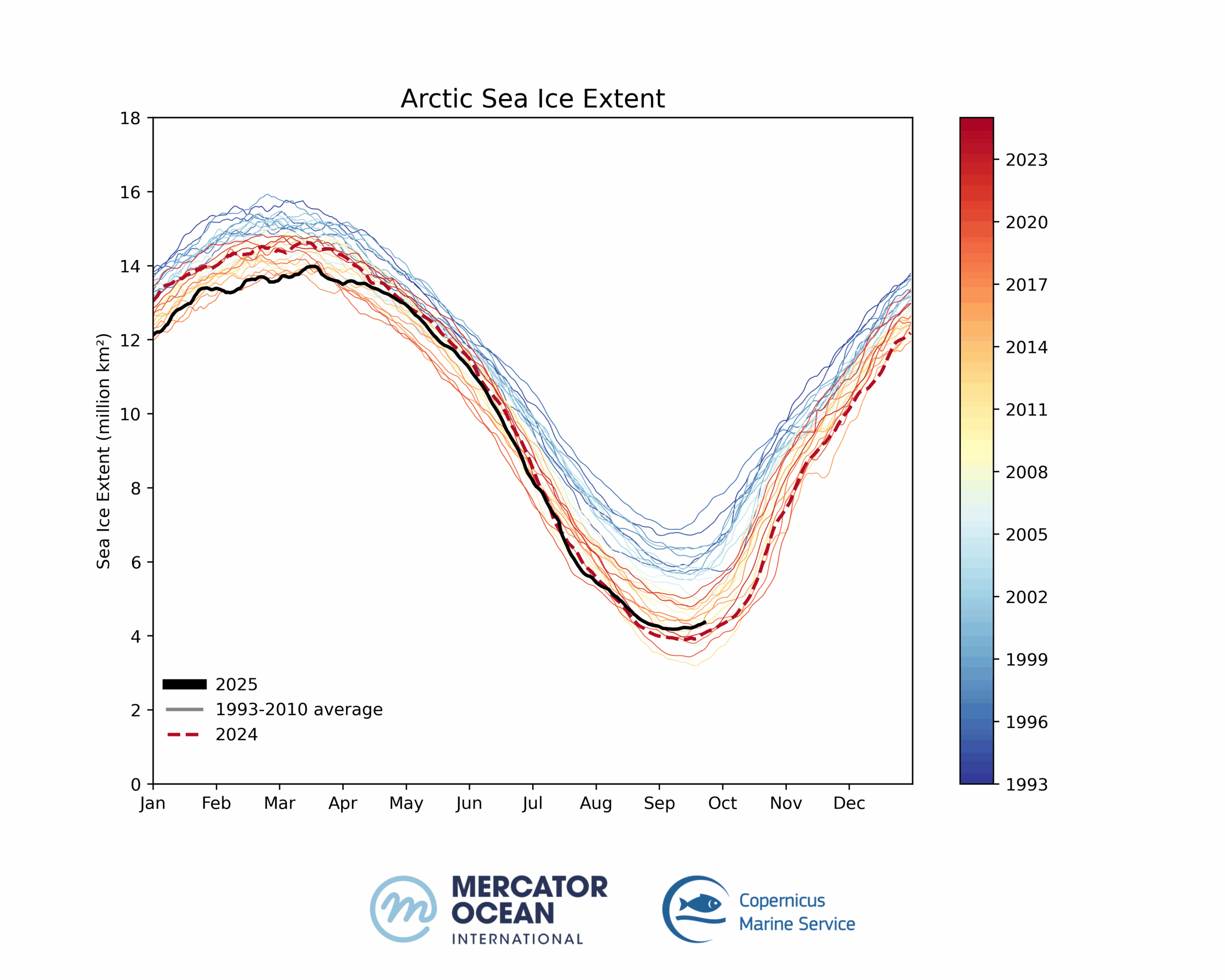
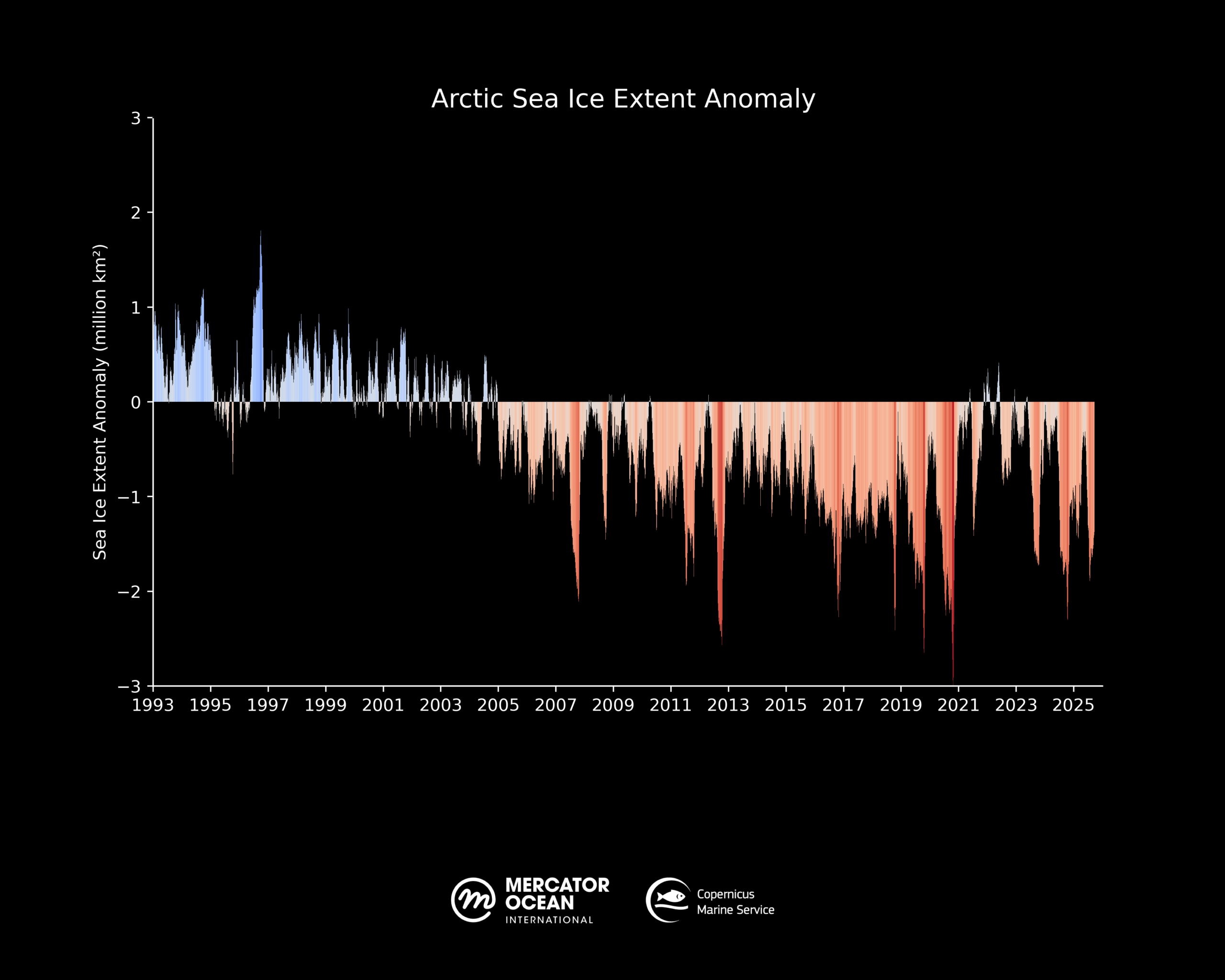
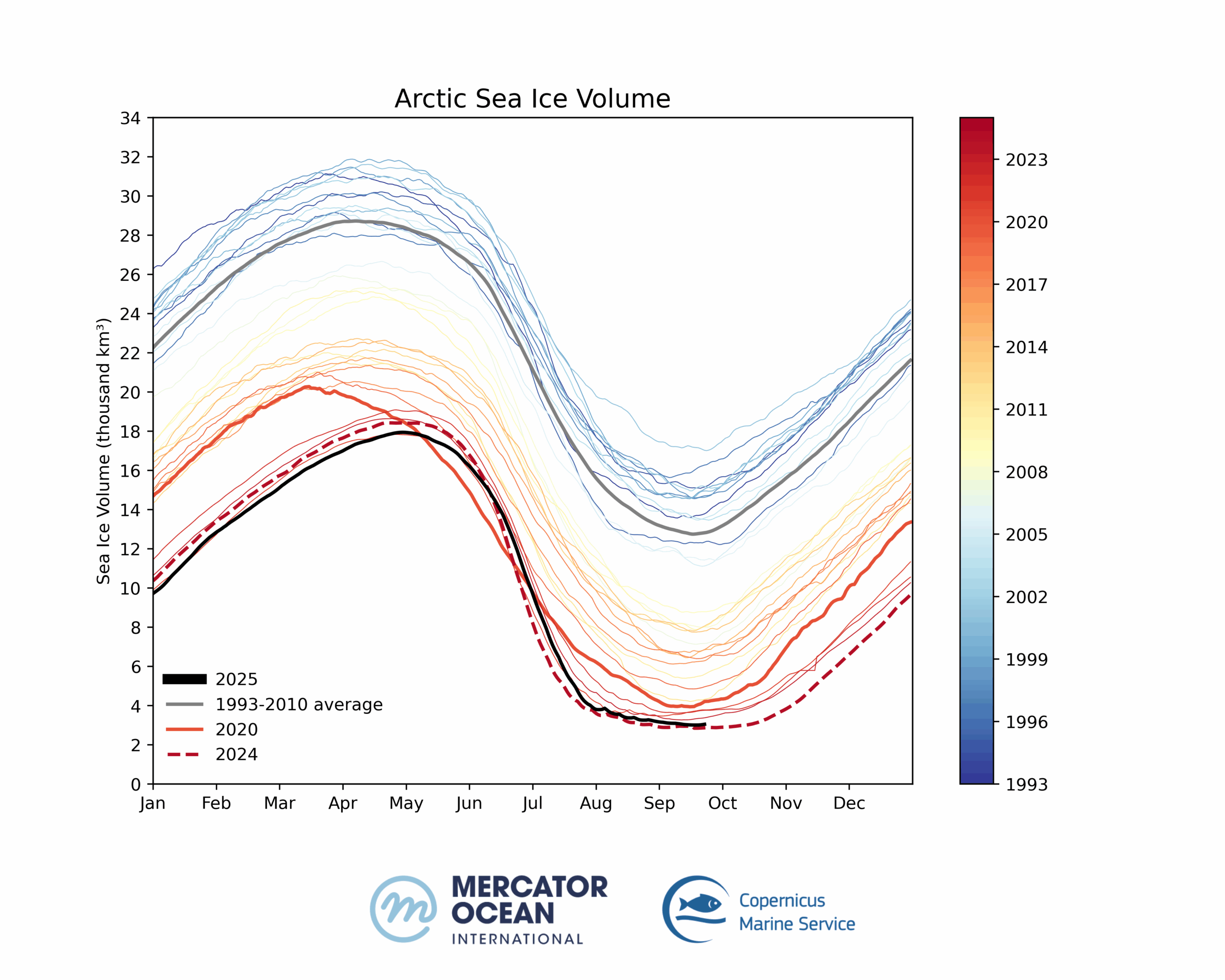
By the end of the Summer in the northern hemisphere, sea ice cover in the Arctic has reached its minimum extent at 4.18 million km² – a loss of 1.45 million km², or 25% less than the long-term average (1993-2010). Since 2007, the last 19 years (including 2025) represent the 19 lowest extents ever measured since 1993. Similar to previous summers in the last decade, the summer of 2025 still sees large areas of ice missing in the Canadian Basin, the Siberian Seas and the eastern part of the Eurasian Basin.
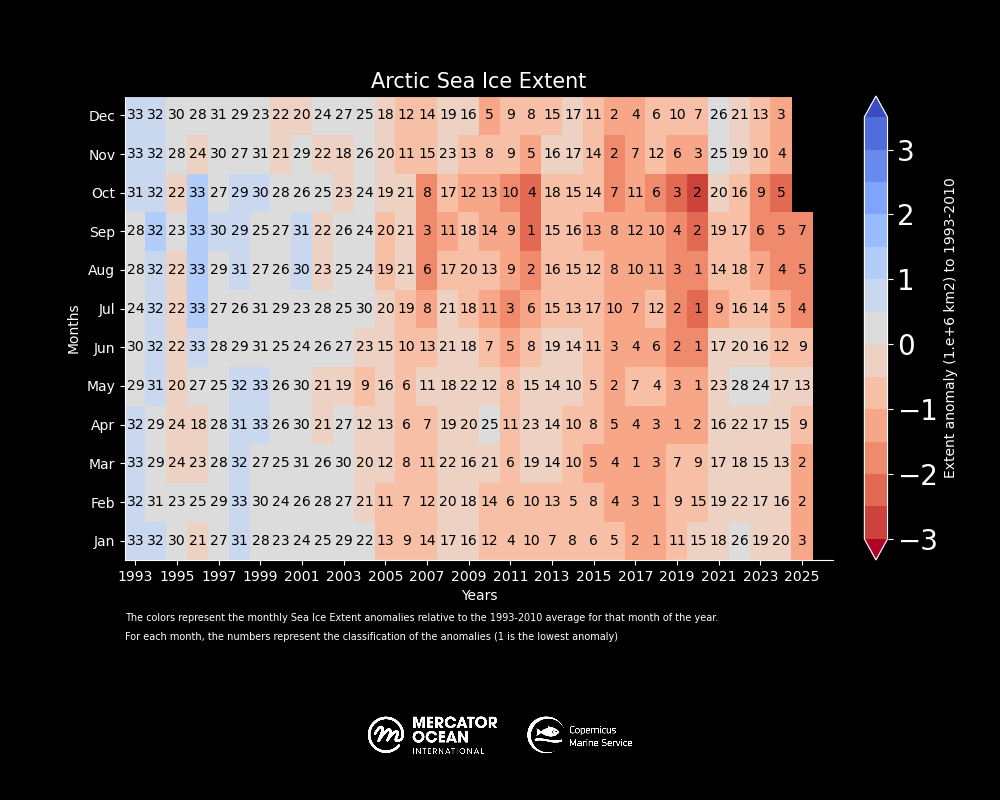
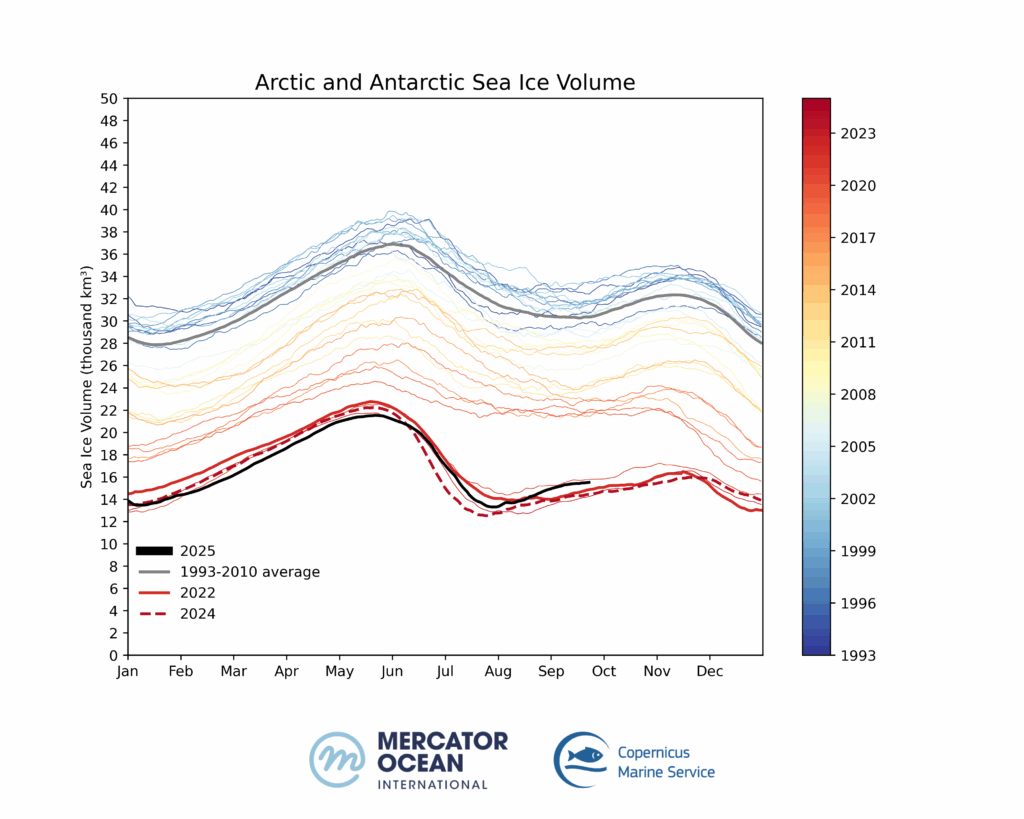
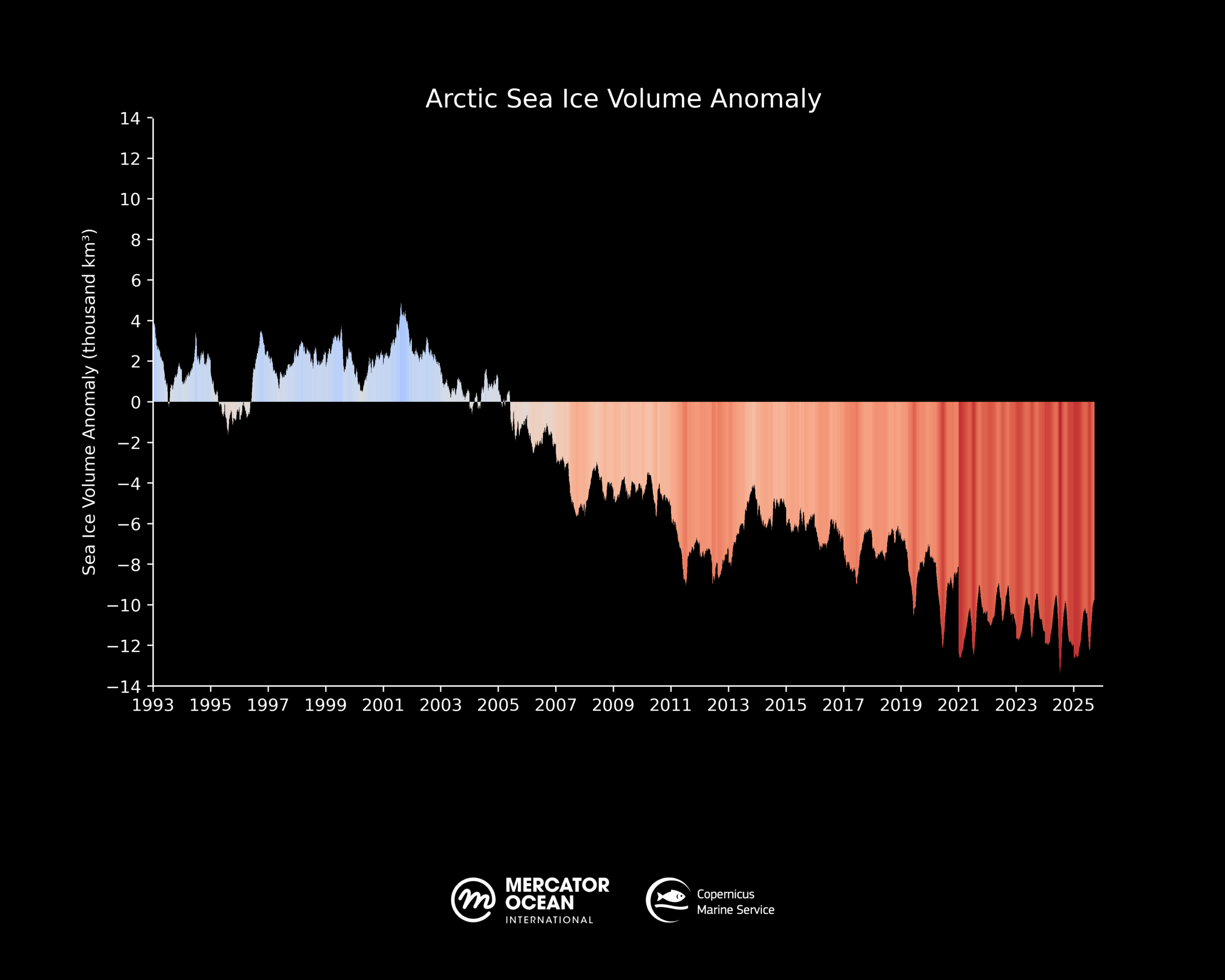
The volume of sea ice in the Arctic on 18 September was 3.00 thousand km³ – 9.74 thousand km³ below the long-term average 1993-2010. The volume of sea ice in the Arctic in summer 2025 is in line with the gradual loss of ice volume since 1993 and, along with 2024, has reached extremely low levels.
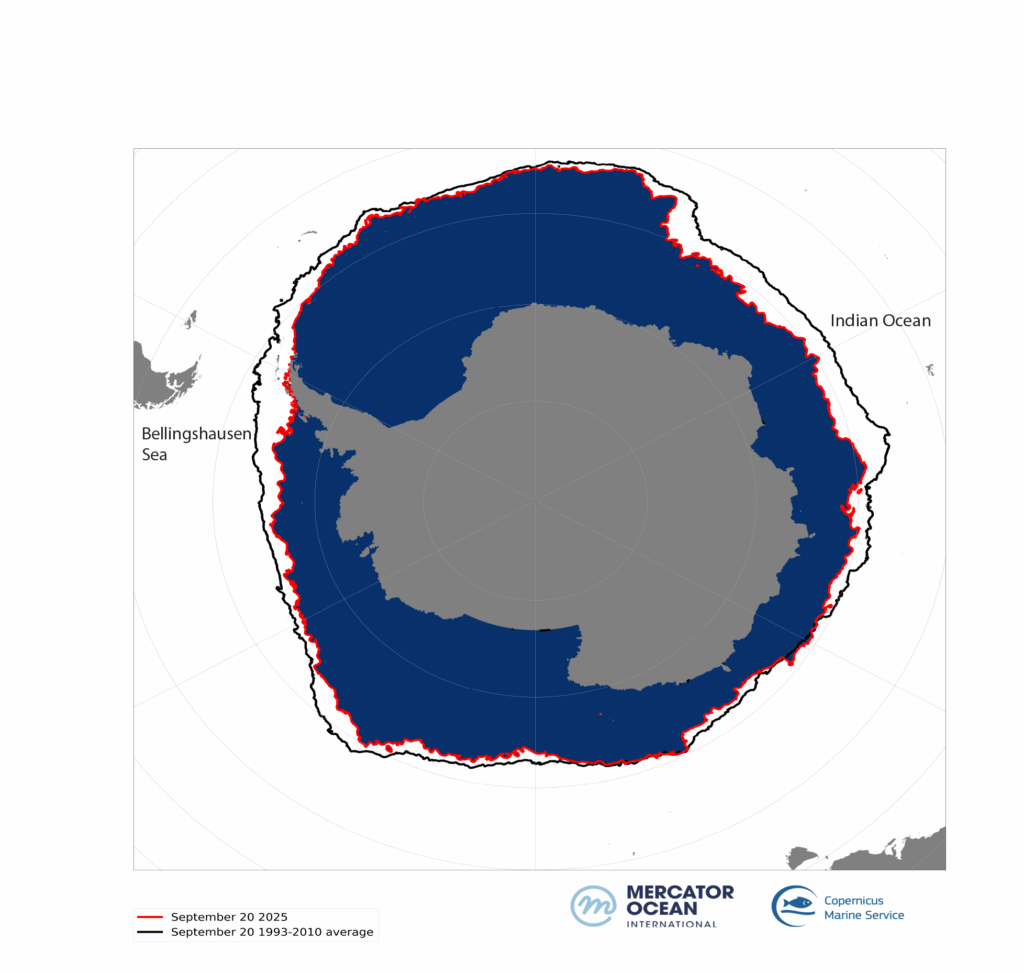
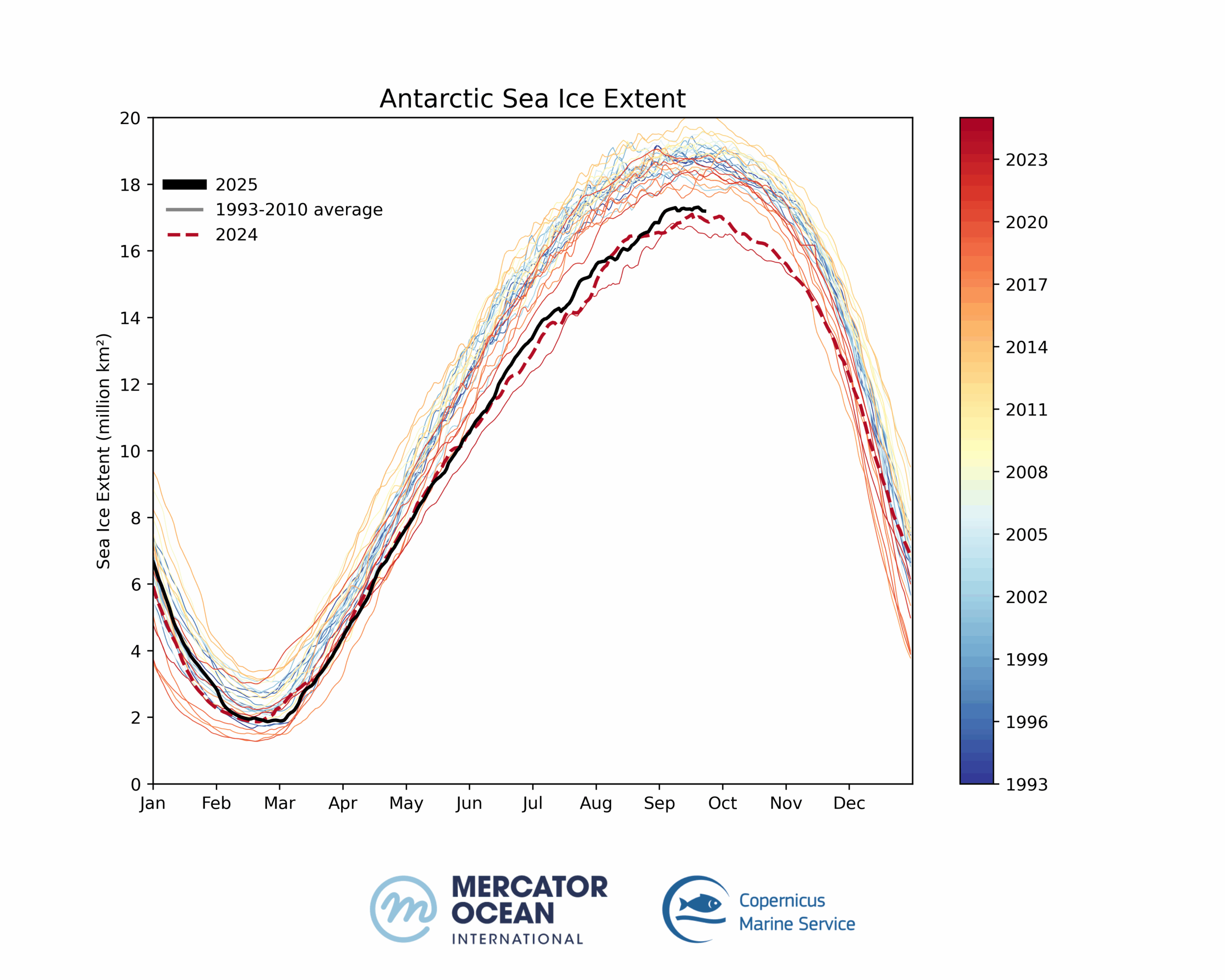
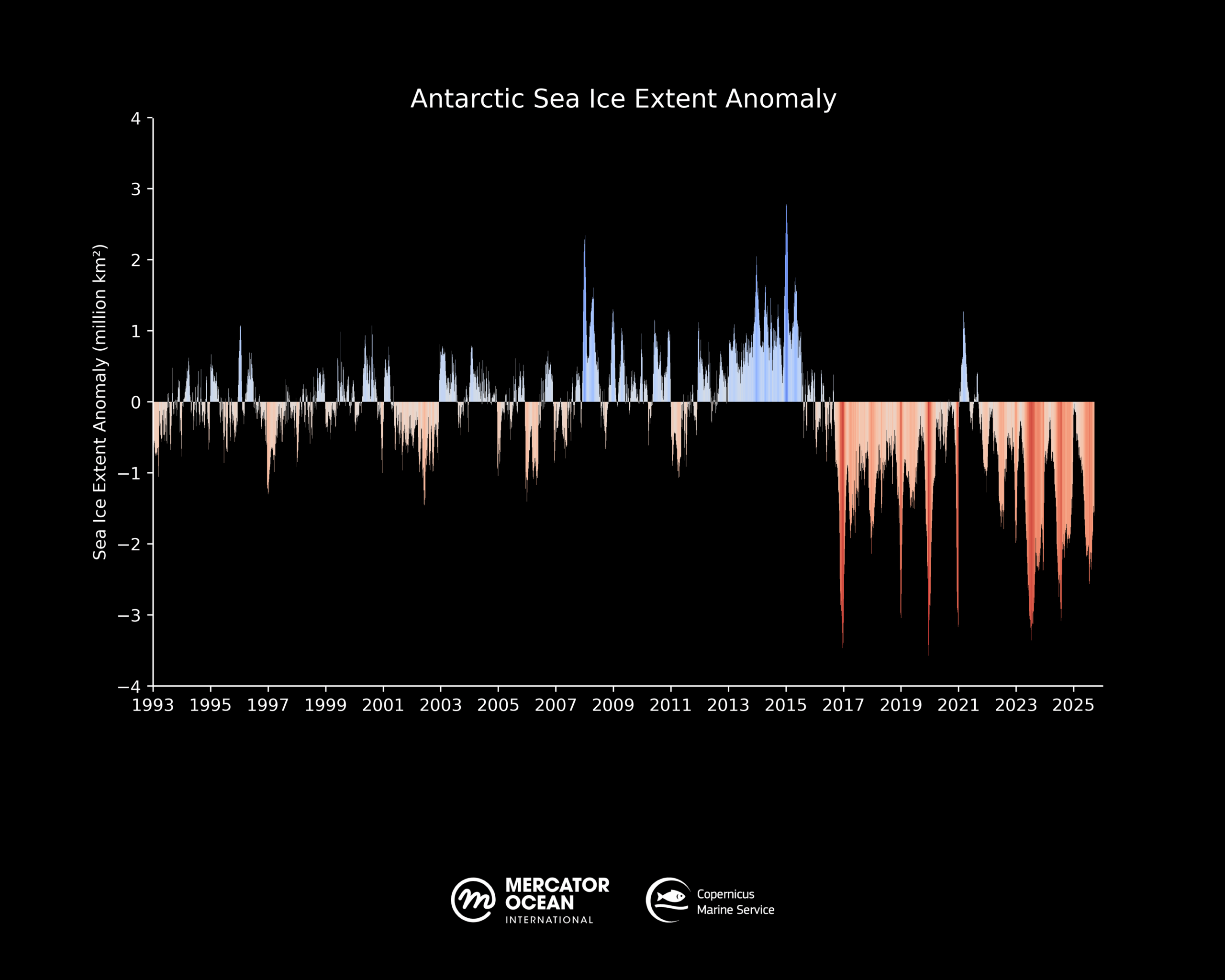
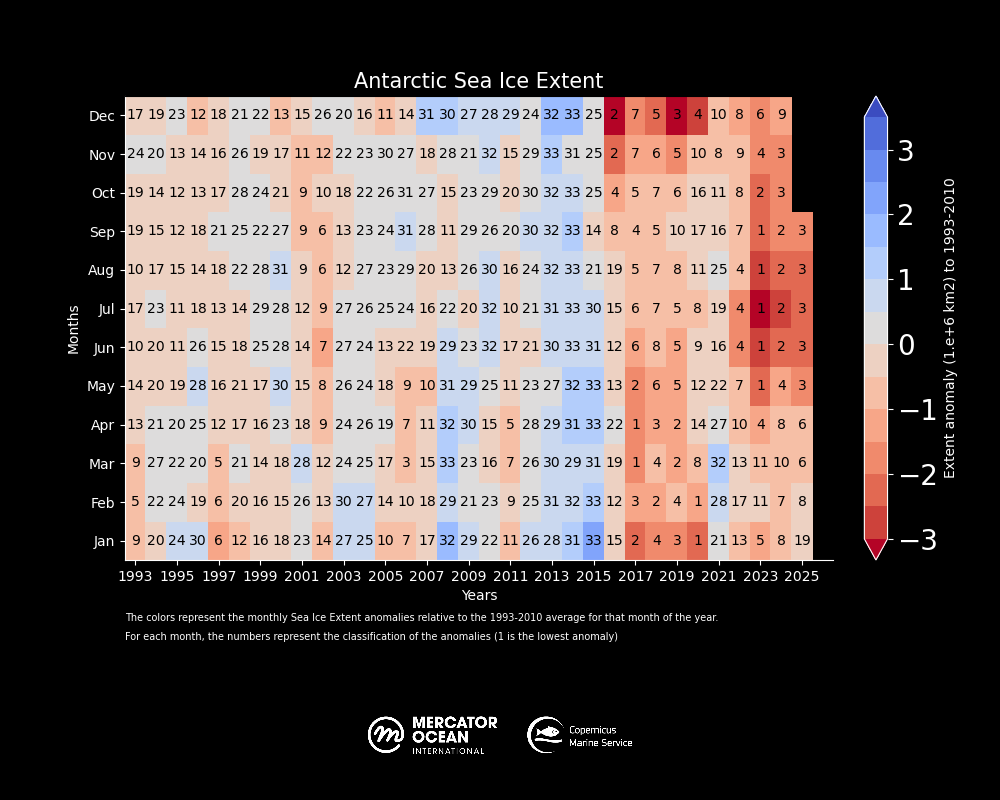
By the end of the Summer in the Southern Hemisphere, sea ice cover in the Antarctic has likely reached on 20 September its maximum extent at 17.31 million km². That represents a loss of 1.54 million km2 (8%) to the long-term average (1993-2010). The Antarctic winter sea ice cover is the third lowest on record, following the exceptionally low trend of 2023 and 2024. Sea ice extent in the Indian Ocean and Bellingshausen Sea sectors are well below the 1993-2010 average . Since 2016, 2025 is the eighth year with Antarctic sea ice extent estimates lower than the 1993–2010 average for this time of year.
Sea ice volume in the Antarctic on 23 September was 12.47 thousand km³ – 5.07 thousand km³ below the long-term average 1993-2010. The year 2025 is the fifth consecutive autumn/winter season with an ice volume deficit of more than 5 million km³ compared to the 1993–2010 average.
Since 2016, 2025 is the tenth consecutive year with Antarctic sea ice volume estimates lower than the 1993–2010 average for this time of year.
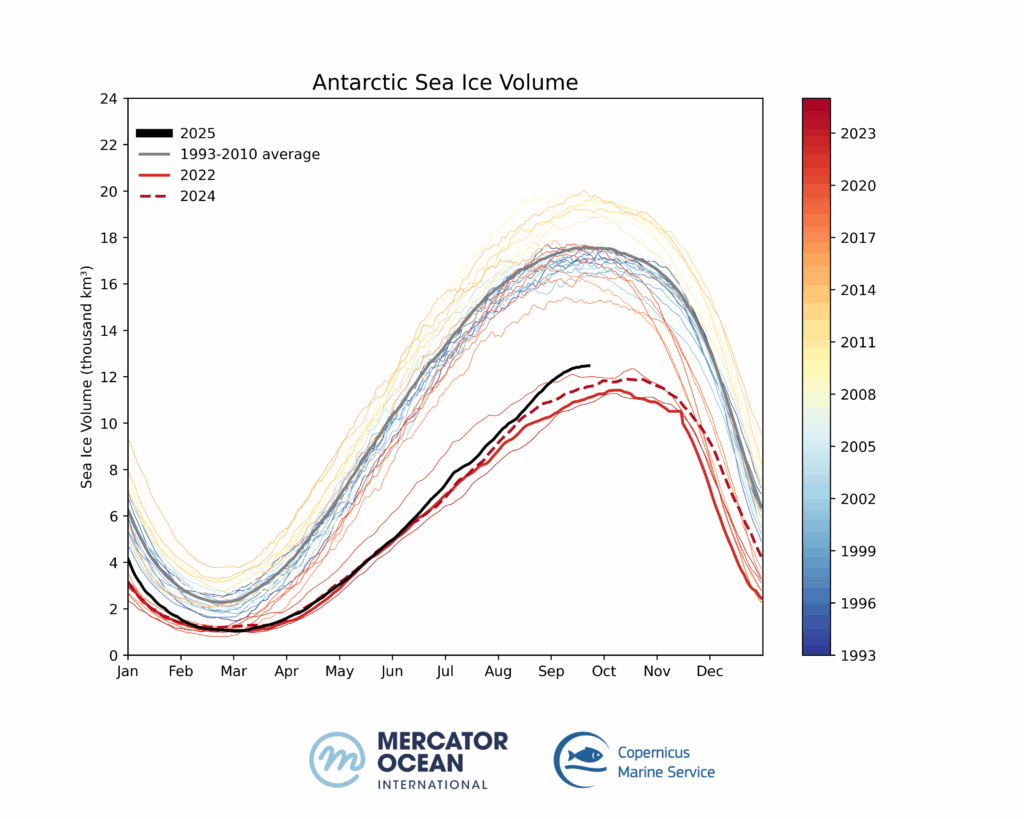
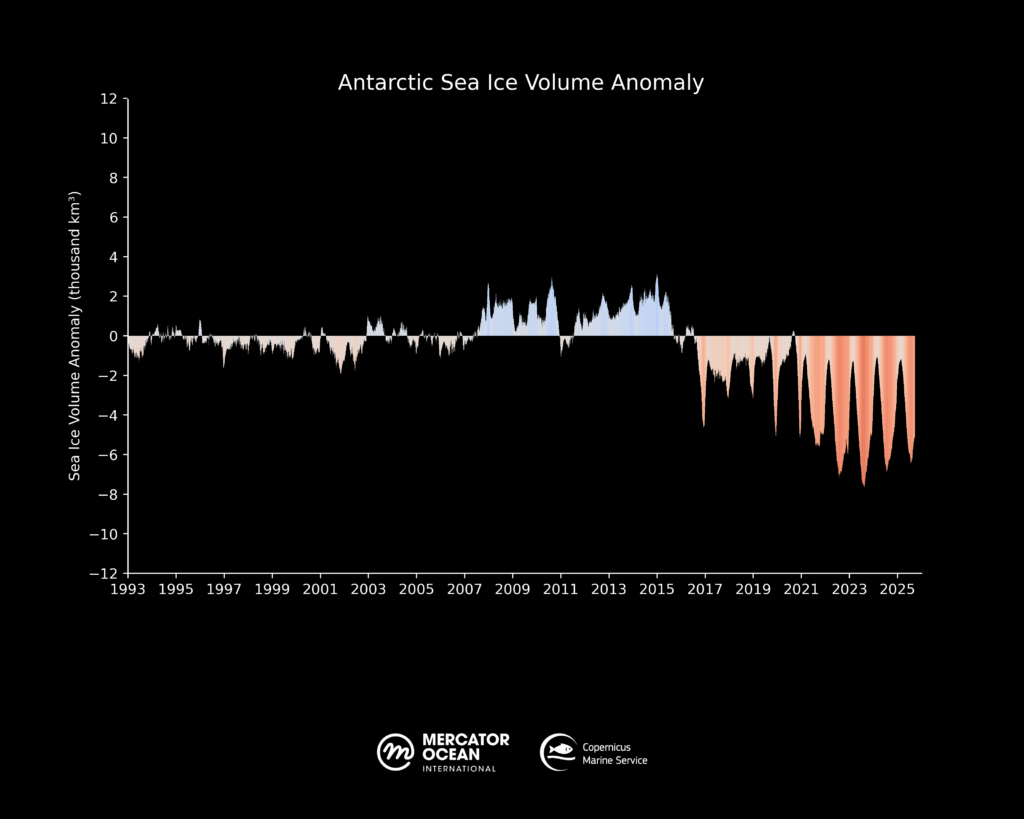
The last three years (including 2025) show a significant net loss of global ocean surface covered by sea ice (approximately 1 million km²) during the Antarctic winter and Northern Hemisphere summer when compared to previous years since 1993.
In 2025, the global sea ice volume remains within the range of the last four years, marking a very clear difference of around 6 million km³ compared to previous years during the Antarctic winter.