


Toulouse, FRANCE – The latest Sea Ice Bulletin from Mercator Ocean International reports that both polar regions have reached their respective 2025 annual maximum and minimum sea ice cover, revealing persistent and significant deviations from long-term averages.
In the Southern Hemisphere, the Antarctic sea ice maximum, recorded on 20 September 2025 by Mercator Ocean monitoring systems, reached an estimated 17.31 million km², which is 1.54 million km² (–8%) below the 1993-2020 average. This marks the third-lowest winter maximum extent since 1993.
“For nearly ten years, Antarctic sea ice has remained almost entirely below long-term estimates. This can either represent an unusual behaviour of the natural high variability of sea ice in the region or a shift in the Southern Ocean’s environment.” — Gilles Garric, Polar Oceanographer at Mercator Ocean International
Since 2016, Antarctic sea ice has not recovered to earlier baselines, highlighting a shift in the seasonal patterns that govern polar climate balance. Scientists continue to monitor whether this reflects short-term variability or a deeper, system-level change.
Meanwhile, in the Northern Hemisphere, the Arctic sea ice minimum, observed on 8 September 2025, ranked among the seven lowest ever recorded. Together, these data confirm the continuing downward trend in global sea ice coverage observed over recent decades.
At the global scale, the combined Arctic and Antarctic sea ice extent in 2025 remained within the lowest range observed in recent years. Over the past three years, global sea ice extent has shown a net deficit of around 1 million km² compared to the same period in previous decades.
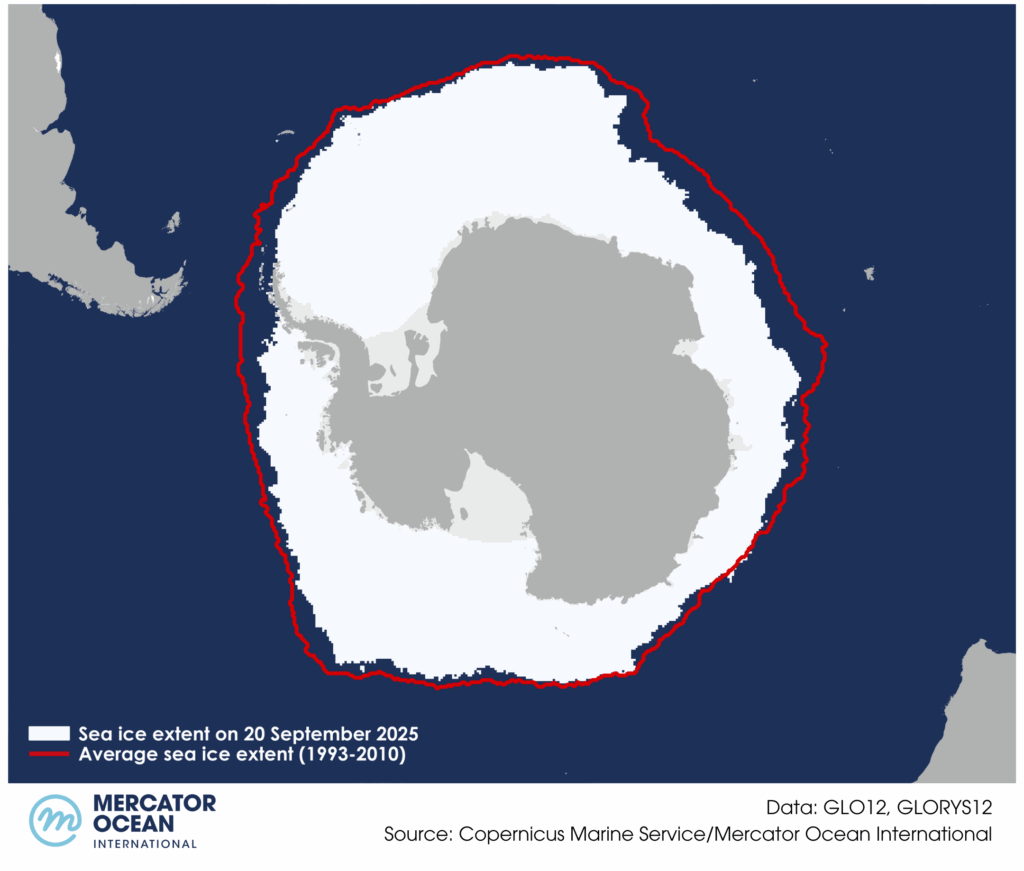
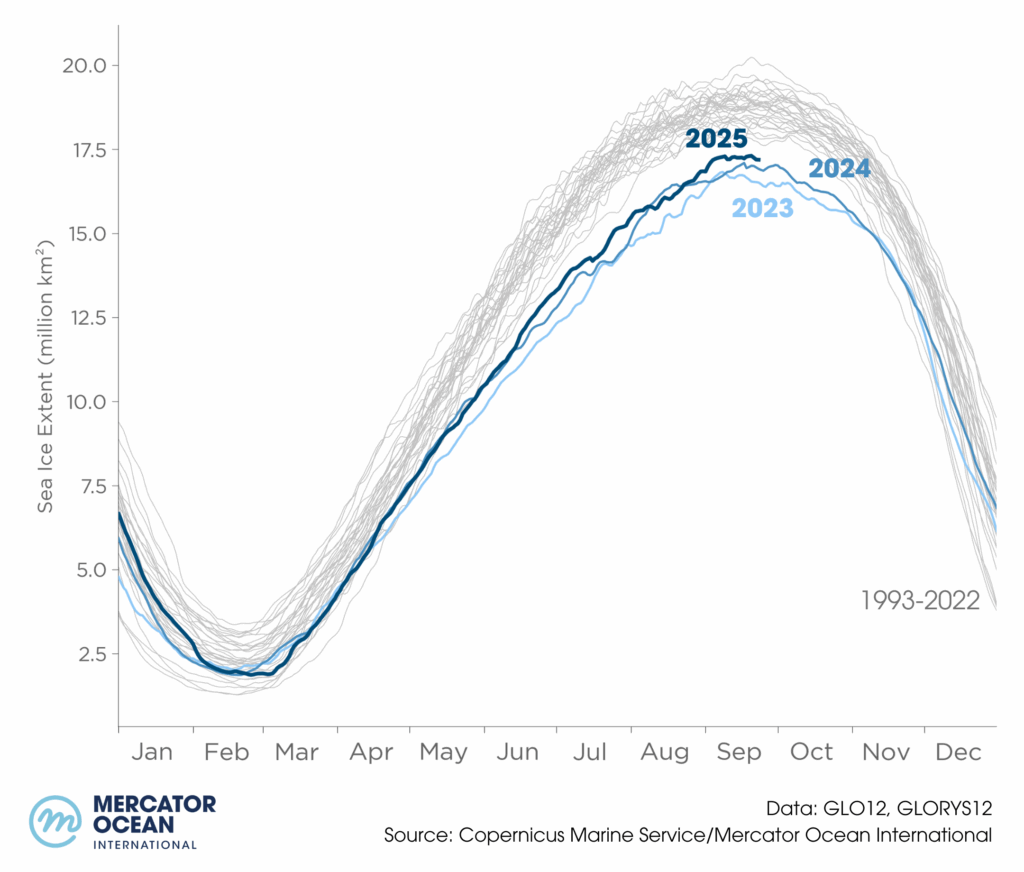
Left: Antarctic sea ice extent (white) for 20 September 2025. The red line represents the 1993-2010 average (climatology) for the same day of the year. The light-grey areas are ice shelves, extensions of thick land ice that flow out over a cold coastal Ocean. Right: Antarctic daily sea ice extent, 1993-2025.
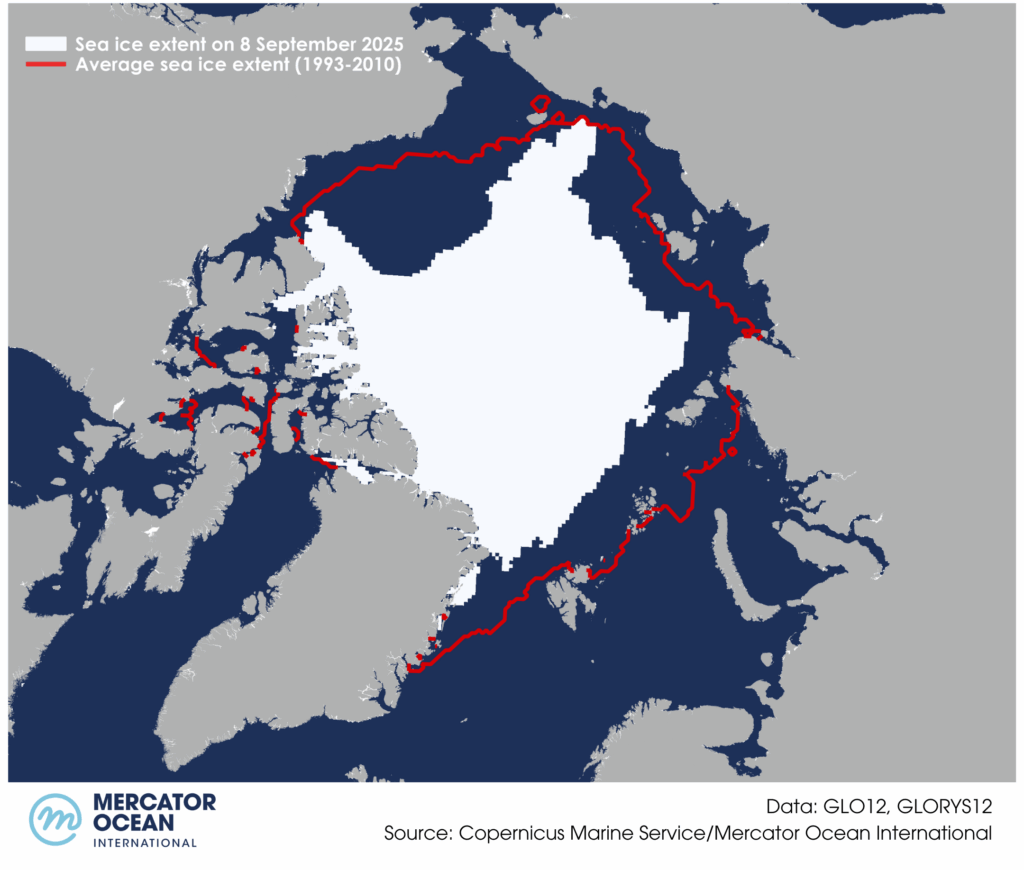
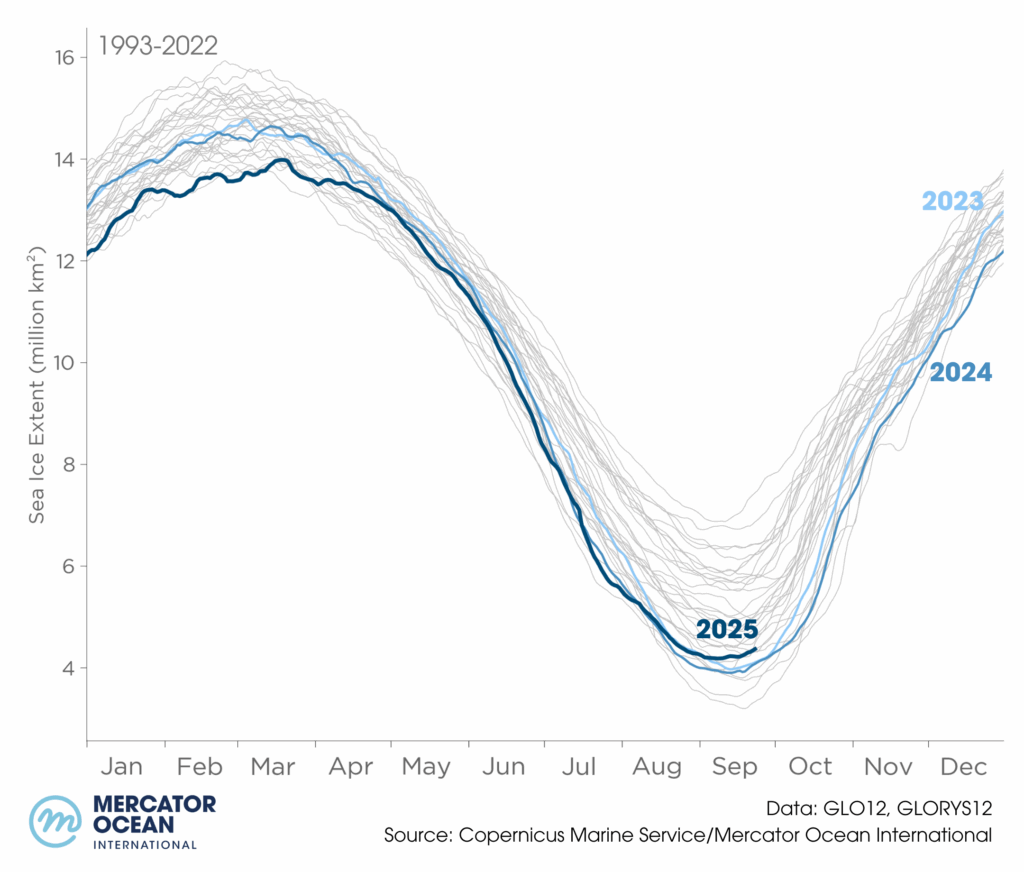
Left: Arctic Sea ice extent (white) for 8 September 2025. The red line represents the 1993-2010 average (climatology) for the same day of the year. Right: Arctic daily sea ice extent, 1993-2025.
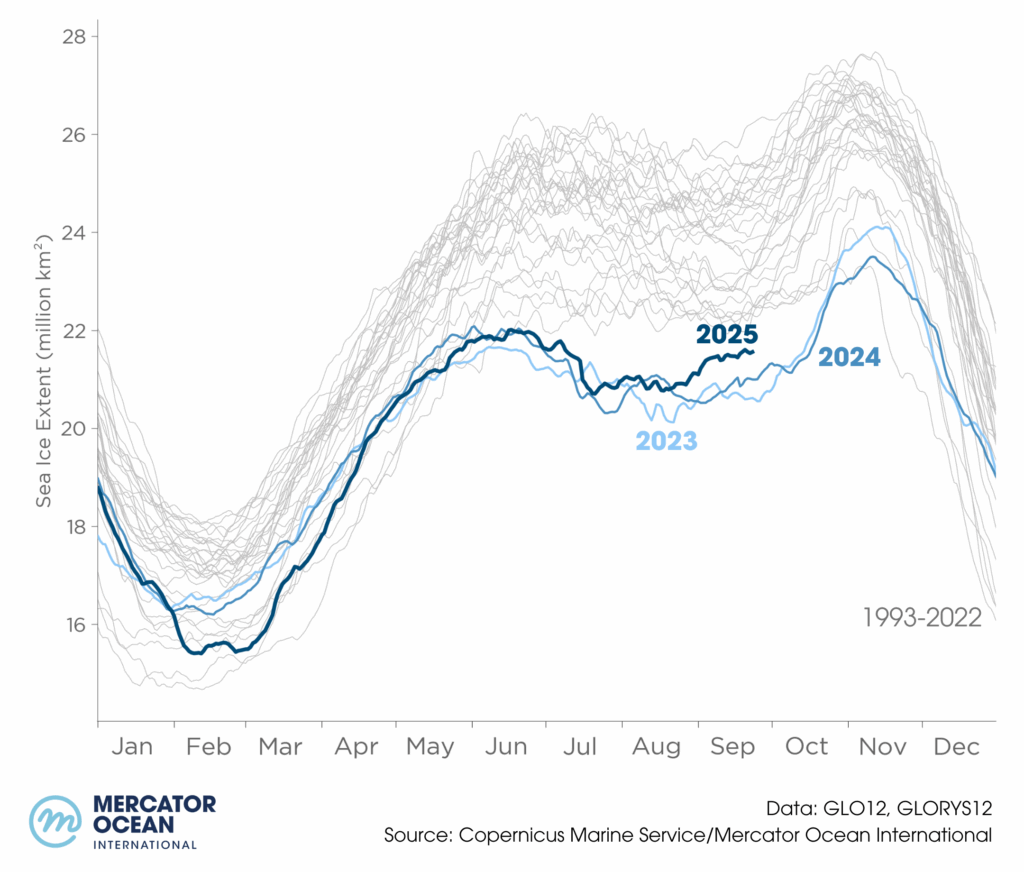
Daily global sea ice extent, 1993-2025.
For the full analysis, read the Sea Ice Bulletin: https://www.mercator-ocean.eu/bulletin/sea-ice-bulletin-september-2025/
About the Sea Ice Bulletin: The Sea Ice Bulletin is produced by Mercator Ocean International, the European centre for global Ocean analysis and forecasting, as part of its mission to monitor and understand the state of the global ocean. It provides seasonal updates on polar sea ice conditions.
About Mercator Ocean International: Mercator Ocean International is a global leader in digital oceanography and ocean forecasting. Since 2014, it has been entrusted by the European Commission to operate the Copernicus Marine Service, providing free, reliable ocean data and forecasts for the global ocean. Its team of scientific experts designs, develops, and maintains cutting-edge numerical modelling systems that deliver comprehensive 4D ocean representations—including reanalyses, hindcasts, near-real-time analyses, and forecasts—across the Blue (physical), White (sea ice), and Green (geochemical and biological) ocean. Mercator Ocean leads the development of the European Digital Twin Ocean with partners across Europe to support ocean decision-making through advanced predictive scenario exploration. Currently evolving into a new intergovernmental organization, Mercator Ocean is further strengthening its collaboration with European and global partners to advance digital ocean systems and services for a sustainable ocean. www.mercator-ocean.fr