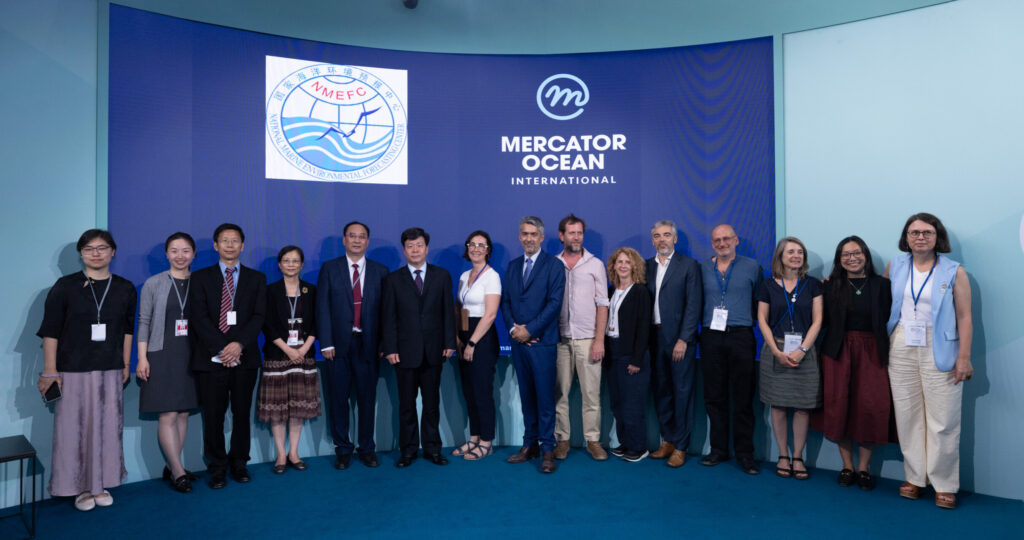
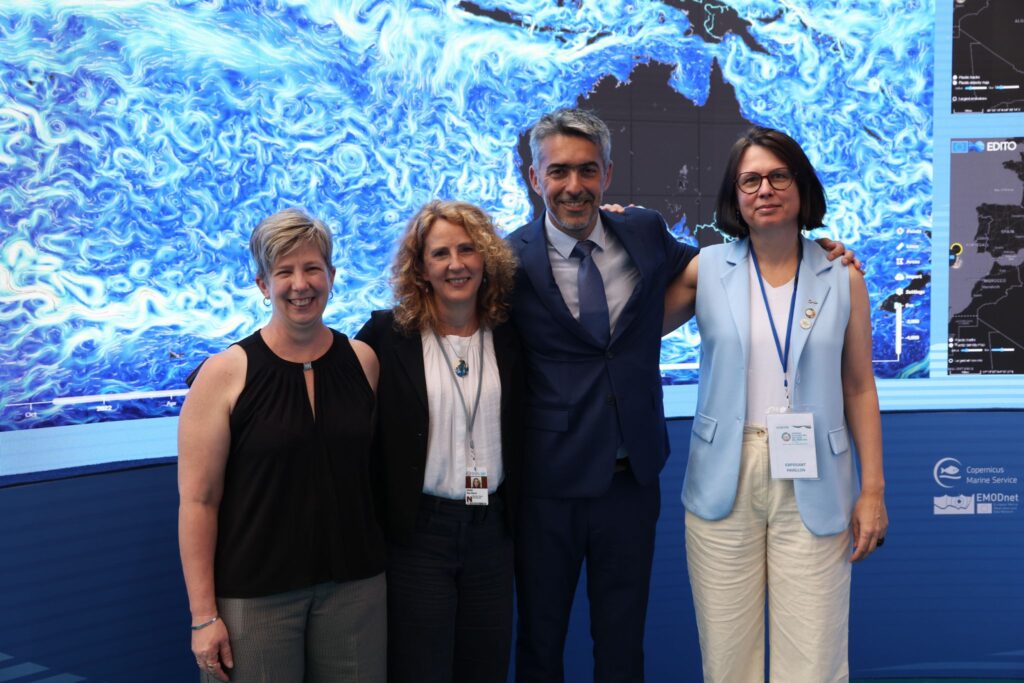
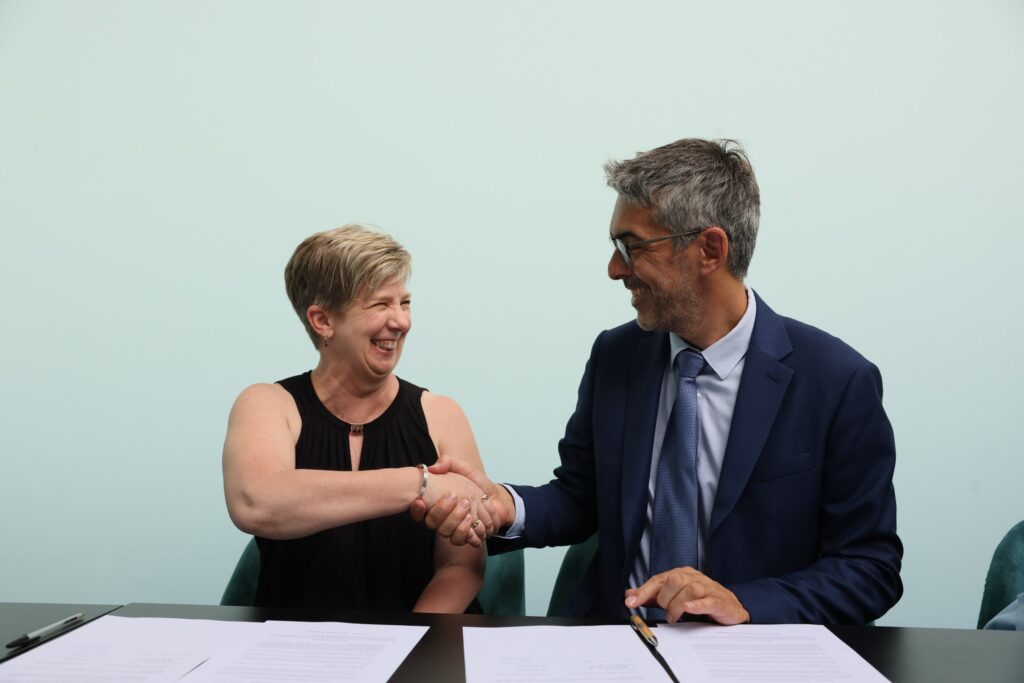
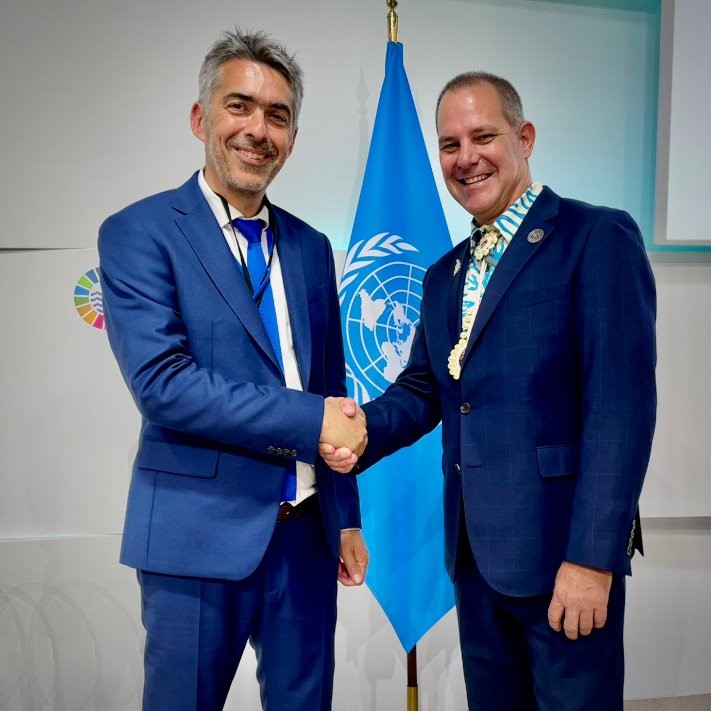
At the 2025 United Nations Ocean Conference (UNOC) in Nice, Mercator Ocean signed a series of Memoranda of Understanding (MoUs) with international partners, reinforcing its capacity to strengthen and unite the global Ocean prediction community.
These Memoranda were signed as 12 European countries also endorsed a joint Declaration to advance the transformation of Mercator Ocean into an intergovernmental organization: the Mercator International Centre for the Ocean. This new Centre will serve as a collaborative platform for international cooperation on ocean monitoring and prediction. These agreements together represent a major stride forward in uniting global efforts for Ocean prediction and advancing the goals of the UN Decade of Ocean Science.
MoUs Signed at UNOC: A Global Commitment
Mercator Ocean has signed new or renewed agreements with partners from Australia, Brazil and China, further expanding its global network of collaborations. These partnerships join an existing international community that includes Canada, the Pacific Community (SPC), and Costa Rica.
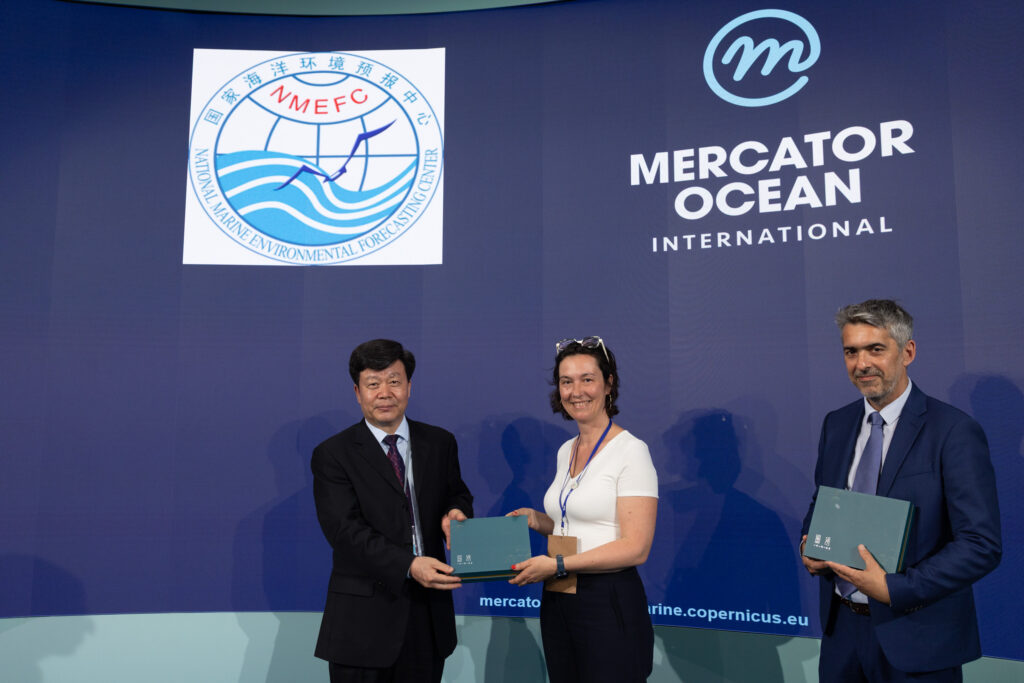
The MoU between Mercator Ocean and the National Marine Environmental Forecasting Center (NMEFC) of China renews a decade-long collaboration. Since 2014, the two institutions have worked together on marine forecasting systems validation and intercomparison and have organized regular exchanges on their progress in model development, and data assimilation. The new agreement (2025–2027) strengthens their joint research efforts in innovative Ocean prediction systems and services such as AI applications, with a shared vision of supporting global Ocean protection and multi-hazard early warning capabilities.
Mercator and Australia’s Integrated Marine Observing System (IMOS) will collaborate on common challenges : providing users and policymakers with information on the use of statistics and case studies demonstrating the value of Ocean observing; conducting observing system design studies to optimize investments in observing systems; and exploring how to integrate new forms of data such as socio-economic data or indigenous knowledge into services.
IMOS operates through 11 institutions across Australia, delivering Ocean data for the Australian marine and climate science community, government, industry, and international stakeholders.
Mercator Ocean will also work with Brazil’s National Institute for Ocean Research (INPO) to align research and development agendas for digital Ocean systems, machine learning, digital twins, and AI applications. This partnership aims to enhance the capacities of both partners to respond to global challenges, including climate change, biodiversity loss, and pollution, and to strengthen collective forecasting capacities in South Atlantic, improving the ability to assess, adapt, or mitigate the impacts of human activities in the region.
INPO’s mission is to promote marine sciences in an integrated and transdisciplinary manner, addressing national challenges at different scales, while providing the technical foundation for a sustainable Ocean.
Maria Hood, Senior Advisor, Strategic Planning and International Collaborations:
“ The Convention of the Mercator International Centre for the Ocean underscores the new organization’s role as a shared collaborative platform for the development of digital Ocean systems and information services. Its objective is to support the expansion of these systems to better serve the needs of international partners. These cooperation agreements with institutions worldwide enhance both the development of the systems and the diversity of their applications.”
Expanding Partnerships: Satellite and Space Collaboration
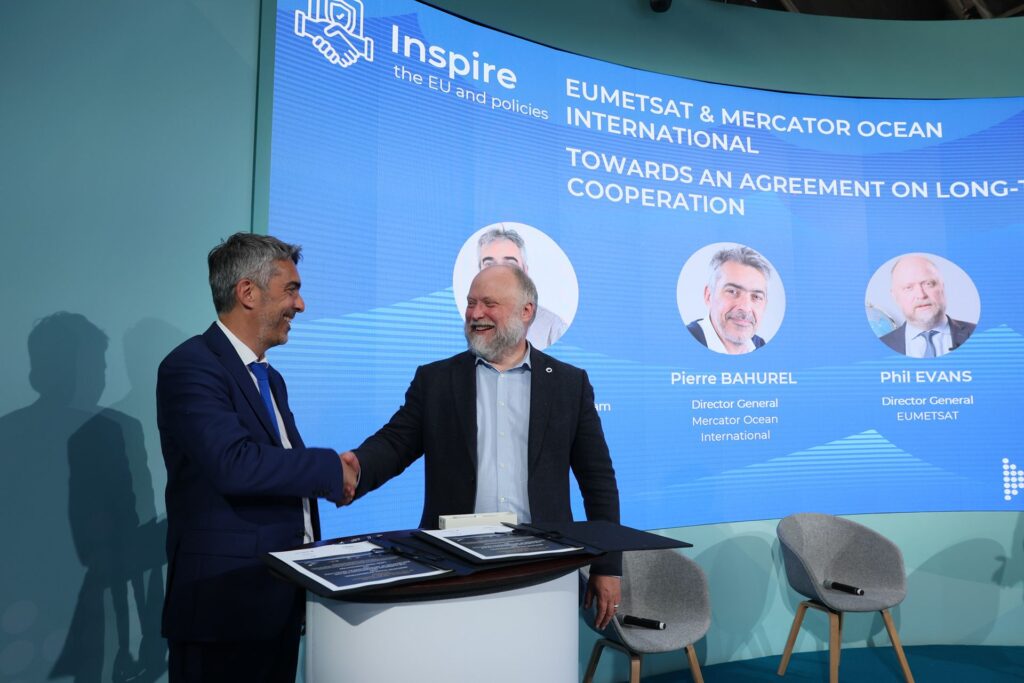
Mercator Ocean has also renewed its Memorandum with EUMETSAT, reinforcing collaboration on requirements for and delivery of space-based observations for oceanography—including coastal and polar areas—and advancing the use of digital twins and artificial intelligence for satellite data assimilation in ocean modelling. The agreement was ratified by Eumetsat’s Member States on 2 July, with a special event during UNOC.
All these agreements are linked to a broaderCall for International Mobilization launched at UNOC by Mercator Ocean and OceanPredict/ForeSea, in partnership with OceanPrediction DCC, GOOS, and supported by EU4OceanObs. This call seeks to mobilise all actors across the Ocean prediction value chain to accelerate advances in Ocean prediction capabilities to meet pressing societal needs. Building on the outcomes of the OceanPredict’24 Symposium and aligned with the priorities of the UN Ocean Decade, it invites international stakeholders to join forces to enhance ocean observation, modelling, data assimilation, and digital technologies—for the benefit of society as a whole.
Pierre-Yves Le Traon, Scientific Director of Mercator Ocean International :
“Ocean prediction systems offer evidence-based solutions for Ocean protection and sustainable development. A strong international mobilization of all ocean observation and prediction stakeholders and users will put state-of-the-art science and technology at the service of society to address the critical challenges facing our Ocean”
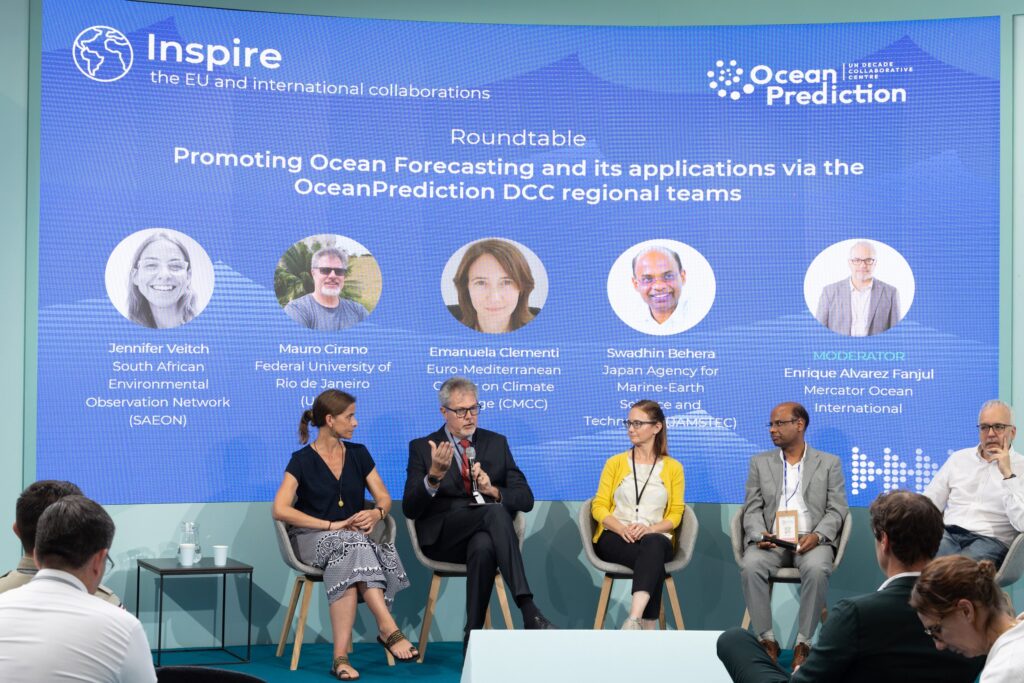
Global mobilization is also being led by the OceanPrediction Decade Collaborative Centre (DCC), hosted by Mercator Ocean. The OceanPrediction DCC is a cross-cutting structure under the UN Decade of Ocean Science, working globally to enhance Ocean prediction capabilities through community building, collaboration, knowledge sharing, and capacity building.
The OceanPrediction DCC community can be visualized on the ATLAS mapping Ocean forecasting activities worldwide, and is organized around nine Regional Teams. This year, two key projects kicked off: the OPERA Project to strengthen Ocean forecasting capacities in Africa, and the OP4CR Project advancing marine ecosystem monitoring and prediction with Costa Rica.
“OceanPrediction DCC has built a community around Ocean forecasting, integrated into regional Teams, that is ready to respond to this call for mobilization and contribute to the UN Ocean Decade challenge of a predicted Ocean.”