


At this year’s European Ocean Days, Ursula von der Leyen unveiled the European Ocean observation initiative OceanEye, with the EU Digital Twin Ocean as a key component.
The EU Digital Twin Ocean at the service of OceanEye
The 3rd edition of the European Ocean Days brought together the European Ocean community in Brussels for a week-long event featuring high-level panel sessions and an interactive Digital Twin Ocean exhibition. At the opening ceremony on 2 March, European Commission President Ursula von der Leyen announced OceanEye, a European ocean-monitoring and observation initiative to position the EU at the forefront of international efforts to build an effective global ocean-observing system.
The initiative, which is part of the European Ocean Pact, will be formally launched later in 2026 and aligns with the EU’s broader efforts to achieve an ocean-observing system by 2030. The President also announced the launch of an International Alliance bringing together EU Member States and international partners to support the Global Ocean Observing System capacities, in partnership with UNESCO’s Intergovernmental Oceanographic Commission.
In her speech, von der Leyen mentioned the EU Digital Twin Ocean as a key component of the OceanEye initiative: “the Digital Twin of the Ocean is a good example of Europe’s leadership. This powerful tool uses marine data to predict ocean behaviour. It can forecast ocean currents, weather patterns, and even the migratory routes of whales. The Digital Twin is at the heart of OceanEye. And we are committed to making it fully operational by 2030.”
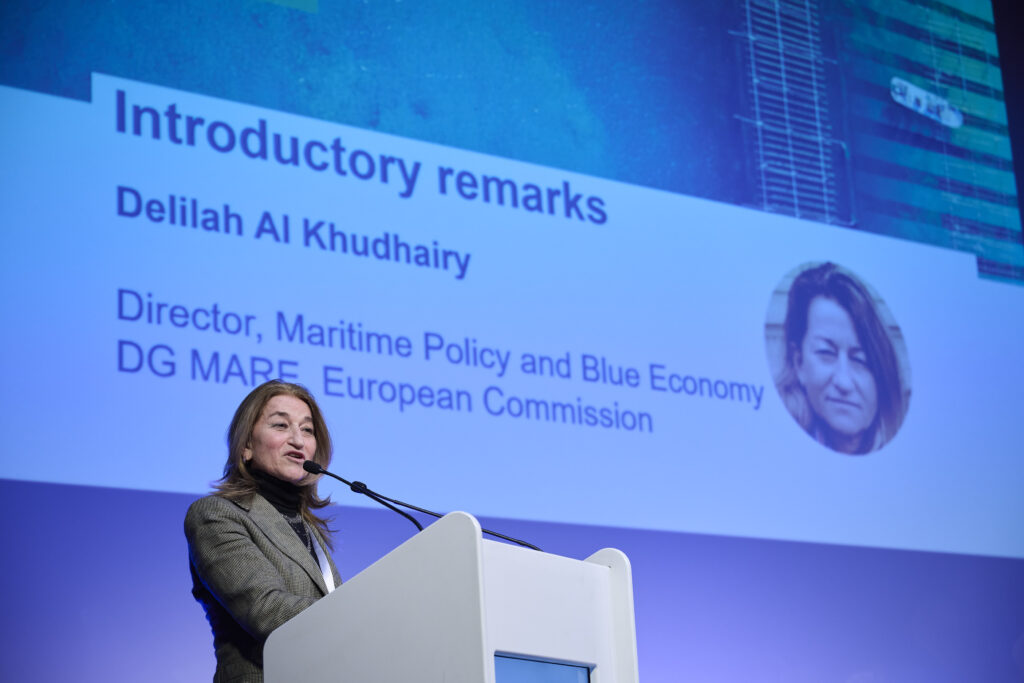
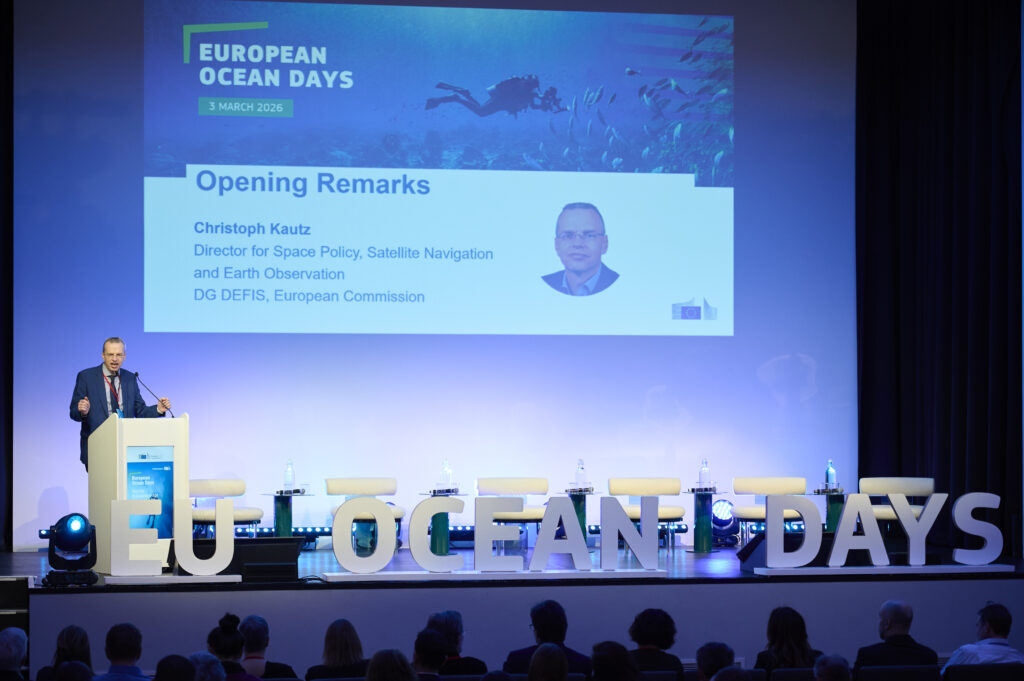
The words of the European Commission President were echoed by European Commission officials Delilah Al Khudhairy, Director for Maritime Policy and Blue Economy, DG MARE and Christoph Kautz, Director for Space Policy, Satellite Navigation and Earth Observation, DG DEFIS, who underlined the synergies between the Copernicus Marine Service and EMODnet, and their key role in shaping the foundations of the EU Digital Twin Ocean.
“A good example of Europe’s leadership is the Digital Twin of the Ocean” said Delilah Al Khudhairy
“The good news is that Europe already has at its disposal several assets in the domain of Ocean Observation: the Copernicus Marine Service, EMODnet and, what we are currently building, the EU Digital Twin of the Ocean“, added Christoph Kautz in his keynote.
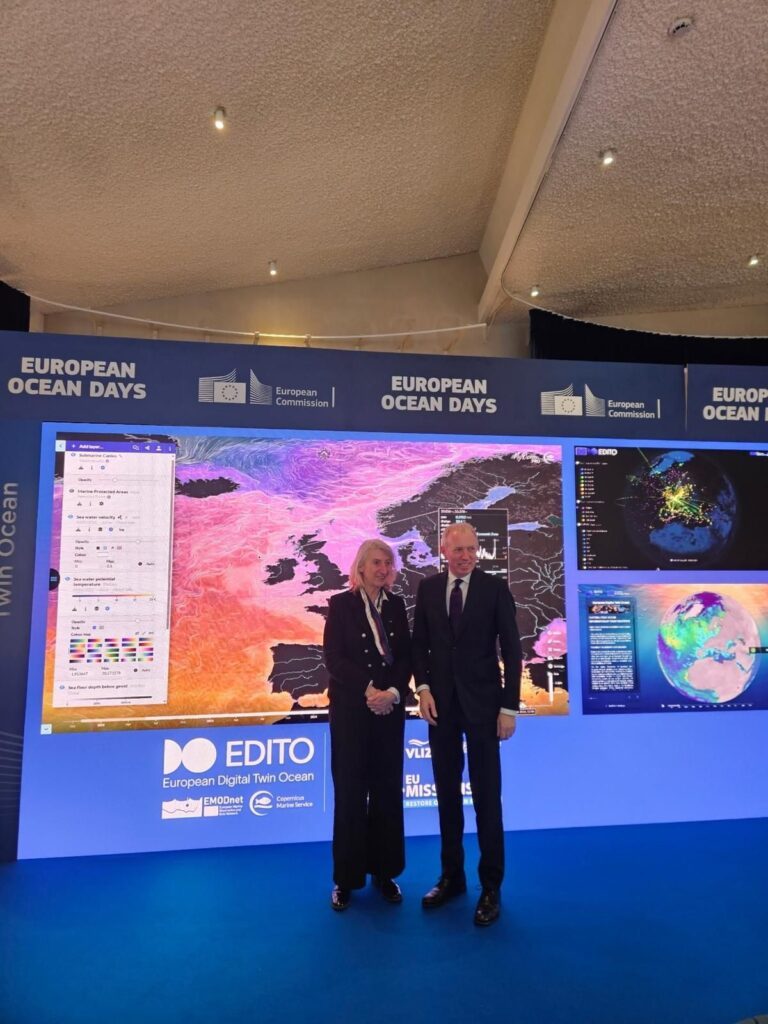
Mercator Ocean at the European Ocean Days 2026
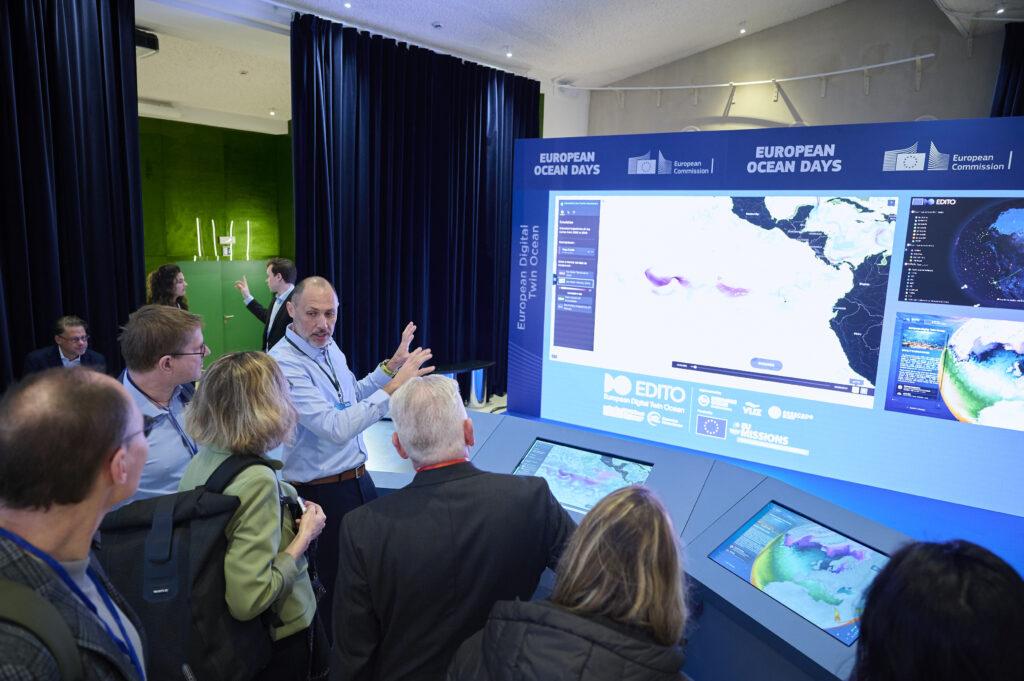
Over the course of the week, Mercator Ocean’s Ocean Data Solutions Architect Fabrice Messal guided attendees through the interactive installation of the EU Digital Twin of the Ocean, showcasing concrete real-world applications to support climate resilience, blue economies, maritime navigation and Europe’s digital sovereignty.
Several demonstrations were presented to stakeholders from DGs, European institutions, research organisations, private companies, NGOs, and science communication agencies. Generating strong interest in EDITO as a platform for integrating marine data, deploying analytical services, and supporting policy-relevant applications, including marine spatial planning, environmental monitoring, and climate risk assessment.
The following day, On 3rd March, under the theme Marine Knowledge for Ocean Health, Stefano Ciavatta, head of Marine Ecosystems at Mercator Ocean and coordinator of the NECCTON Horizon Europe project, participated in the panel “Ocean data and applications for Ocean Health” and illustrated how we are moving marine ecosystems into the digital domain.
“We are integrating observations into operational systems that can be used in real-world decision-making.”, he said.
From plankton to fish populations, from pollution to contaminants, comprehensive ecosystem models are becoming operational tools.
“Marine ecosystem modelling is no longer just research, it is a practical tool for governance.”, he added.
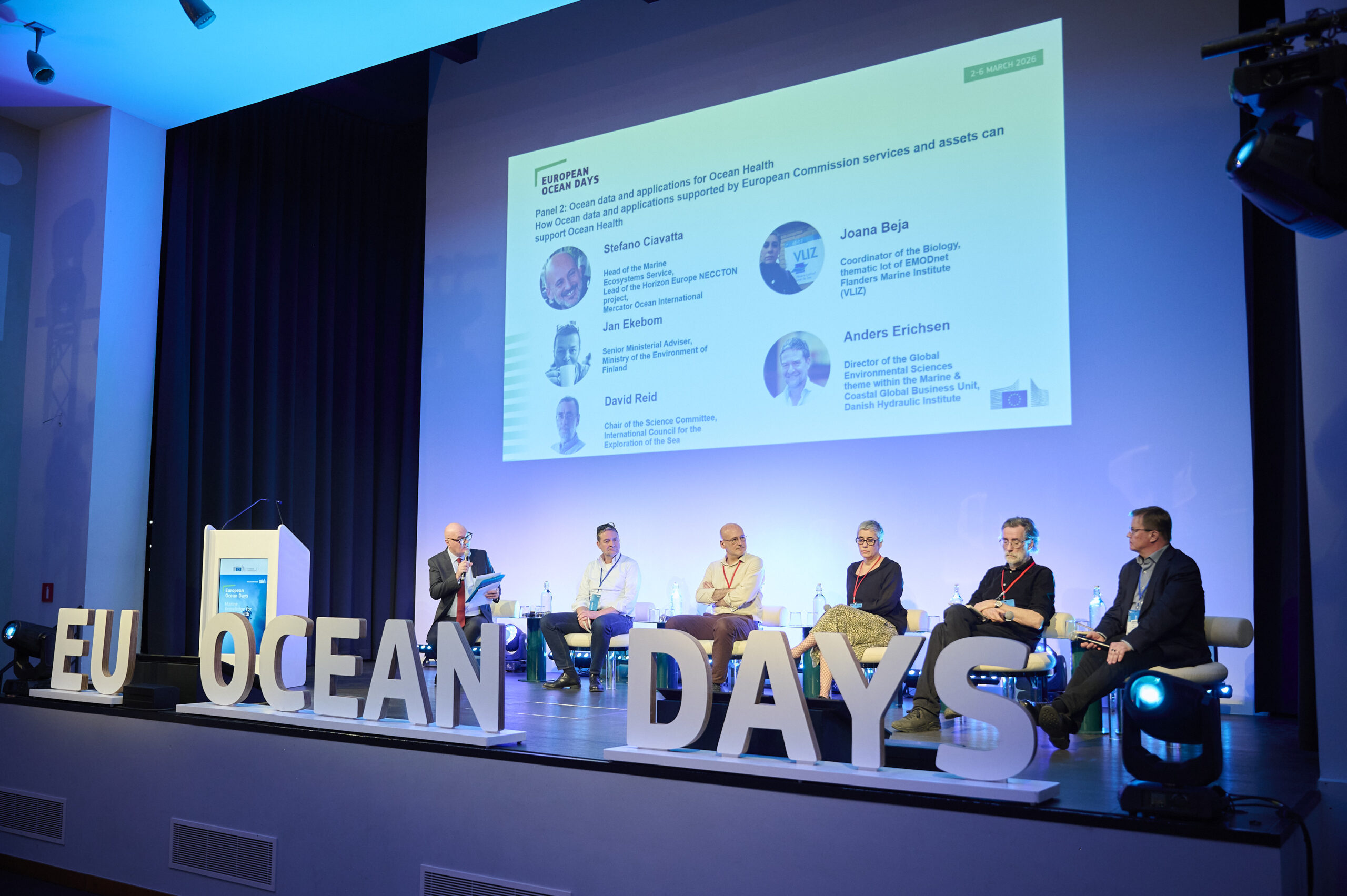
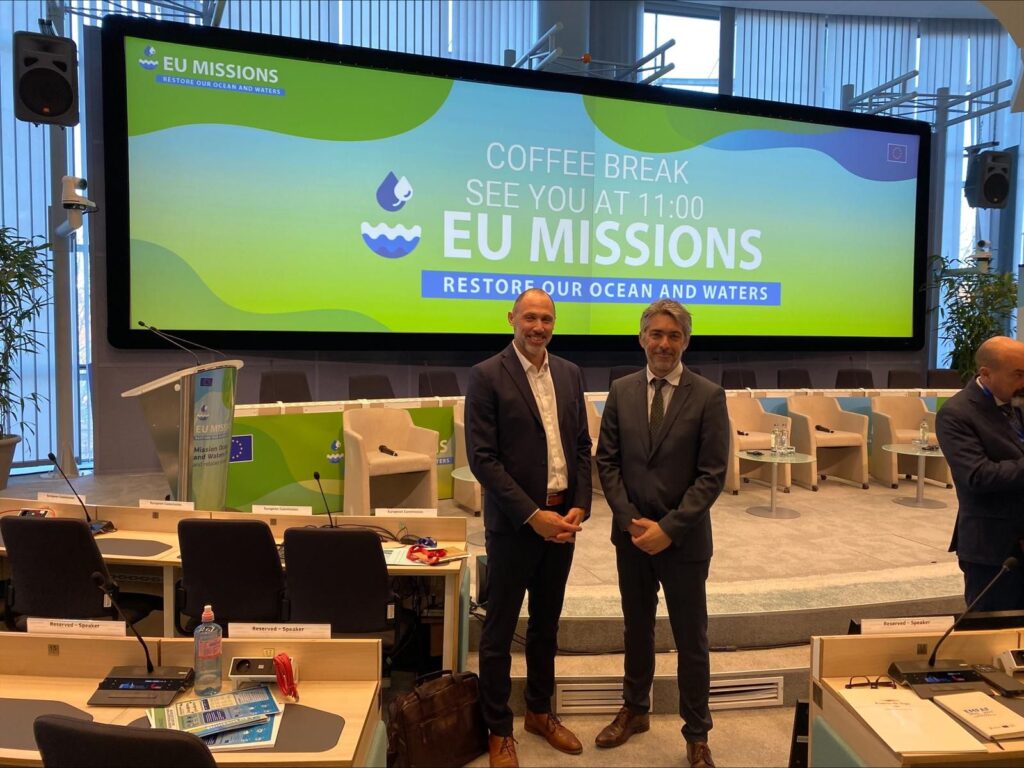
Fabrice Messal also intervened at the Mission Ocean and Waters Forum on Thursday 5 March, highlighting the success stories of the first phase of the EU Mission: Restore our Ocean and Waters, with digital models becoming practical tools for protecting and restoring marine ecosystems, contributing to the success of the Mission:
“The European Digital Twin of the Ocean is more than a digital platform. It is an investment in resilience, innovation, and European sovereignty. Through the Digital Twin of the Ocean, we can explore and test scenarios and support decisions for protecting and restoring marine ecosystems.” The session was opened by Costas Kadis, European Commissioner for Fisheries and Oceans, and Pascal Lamy, Chair of the Mission Board
As highlighted by Commissioner Kadis in his opening, Europe is for the first time building a dynamic digital replica of its seas, combining satellite data, in-situ observations, advanced modelling and artificial intelligence within a shared, accessible European infrastructure.
Towards 2030
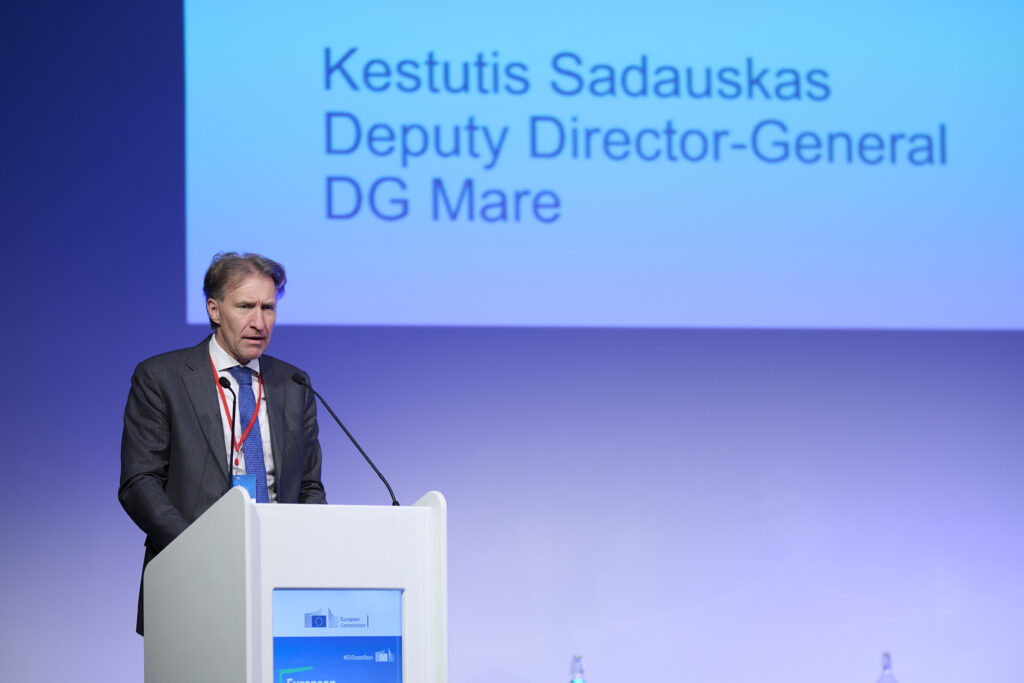
“Today it is only a beginning. By 2030, with an operational Digital Twin of the ocean and the strengthened European ocean observation system, our collective capacity to protect, restore, and sustainabily manage the ocean will be enhanced and will take it to a different level“, said Kestutis Sadauskas, Deputy Director-General at DG MARE.
At Mercator Ocean, we remain committed to delivering an operational and actionable EU Digital Twin Ocean alongside our trusted partners and to support EU policies and initiatives, including the new OceanEye initiative.
Mercator Ocean is transforming into an Intergovernmental Organization (IGO), with the purpose to “Design, develop and operate world-class Digital Ocean Systems and contributions to a Digital Twin of the Ocean, encompassing marine physics, biogeochemistry and ecosystem sciences and to provide authoritative Digital Ocean Information Services of general interest to Member States and international ocean governance.”