


With PhD candidate Ergane Fouchet on board, Mercator Ocean is participating in the 36th PIRATA cruise, contributing essential observations in the tropical Atlantic to support research and operational ocean forecasting.
Mercator Ocean on the 36th PIRATA Cruise
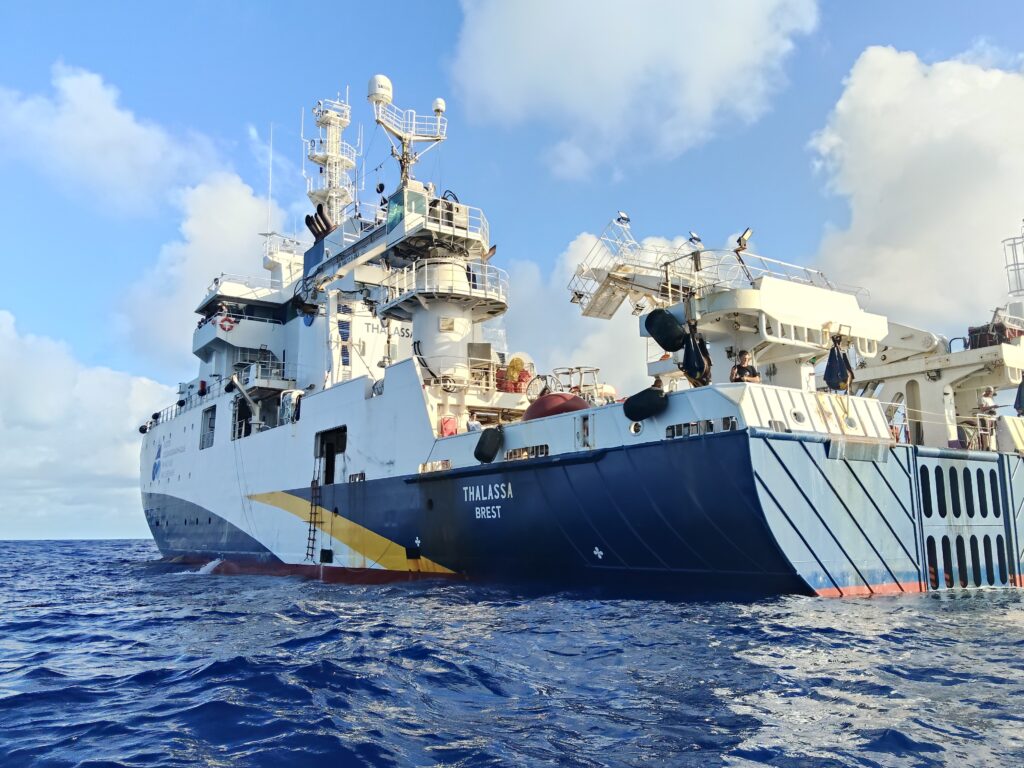
Ergane Fouchet, PhD candidate at Mercator Ocean, is currently taking part in the 36th Pilot Research Moored Array in the Tropical Atlantic (PIRATA) cruise aboard the French research vessel Thalassa; she is among the 16 scientists sailing across the tropical Atlantic for a 30‑day expedition.
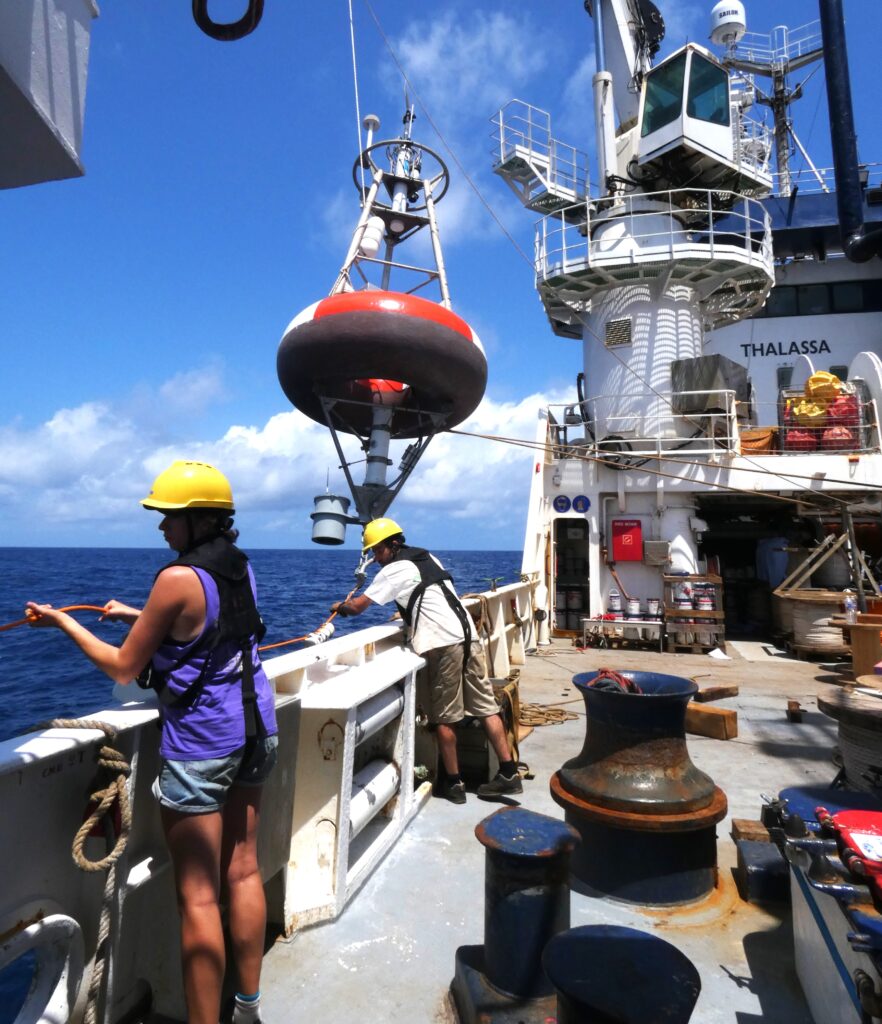
The team is maintaining meteo‑oceanic buoys, deploying Argo floats and Acoustic Doppler Current Profilers (ADCP) moorings and conducting extensive physical and biogeochemical oceanographic measurements. Operations include eXpendable BathyThermographs (XBTs) launches to collect temperature profiles and the deployment of the Conductivity Temperature, and Depth (CTD) rosette, lowered to depths of up to 4,000 metres to measure conductivity, temperature and depth while collecting seawater samples.
On the biogeochemical side, the campaign comprises 27 hydrographic profiles and the collection and analysis of around 2,500 samples, covering dissolved oxygen, salinity, pH, nutrients, methane production, PFAS, mercury in marine organisms and the buoyancy of sargassum seaweed.
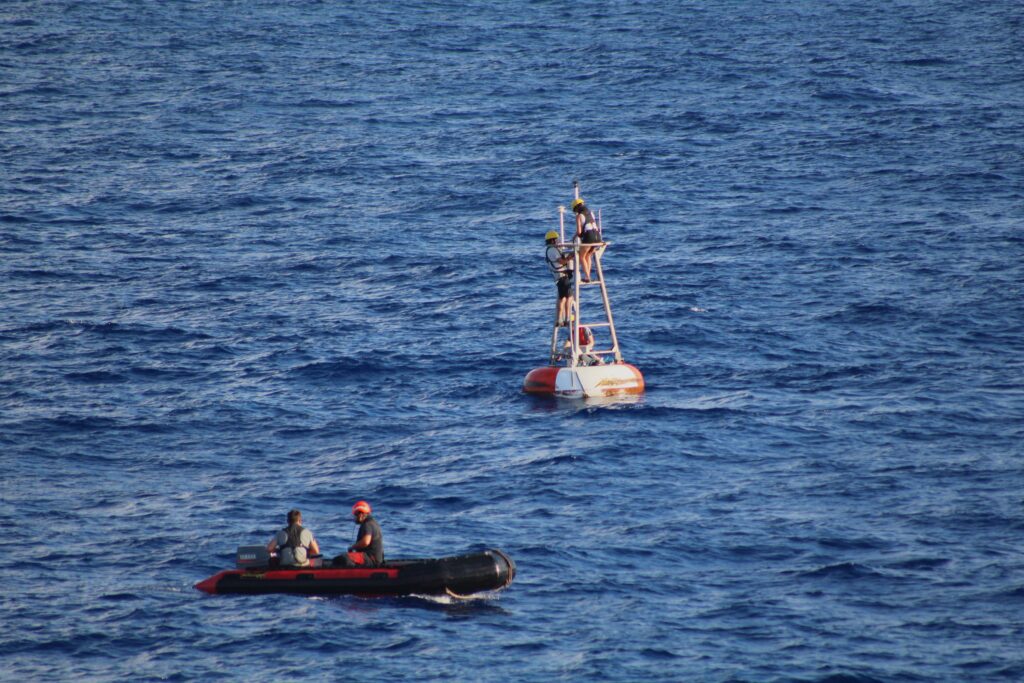
Ergane Fouchet is directly involved in buoy maintenance, approaching each buoy by zodiac, boarding the structures to recover instruments, downloading a full year of data and redeploying newly equipped systems, while also collecting temperature profiles and seawater samples for laboratory analysis.
PIRATA: Sustaining long‑term Ocean observations
Launched in 1997, PIRATA (Prediction and Research Moored Array in the Tropical Atlantic) is an international scientific programme led by France, Brazil and the United States to monitor ocean‑atmosphere interactions in the tropical Atlantic.
Its network of around 20 meteo‑oceanic buoys provides continuous, long‑term observations essential for understanding climate variability and its impacts on marine ecosystems. Annual research cruises ensure the maintenance of this observing system and the continuity of its data record. The physical temperature data collected are assimilated into Mercator Ocean’s operational forecasting systems, complementing satellite observations and improving the quality and reliability of Copernicus Marine Service products.