


The first Digital Ocean Week (8–12 June 2026, Brussels) marks a key step in Europe’s journey towards a fully operational Digital Ocean, connecting observation, digital infrastructures and services.
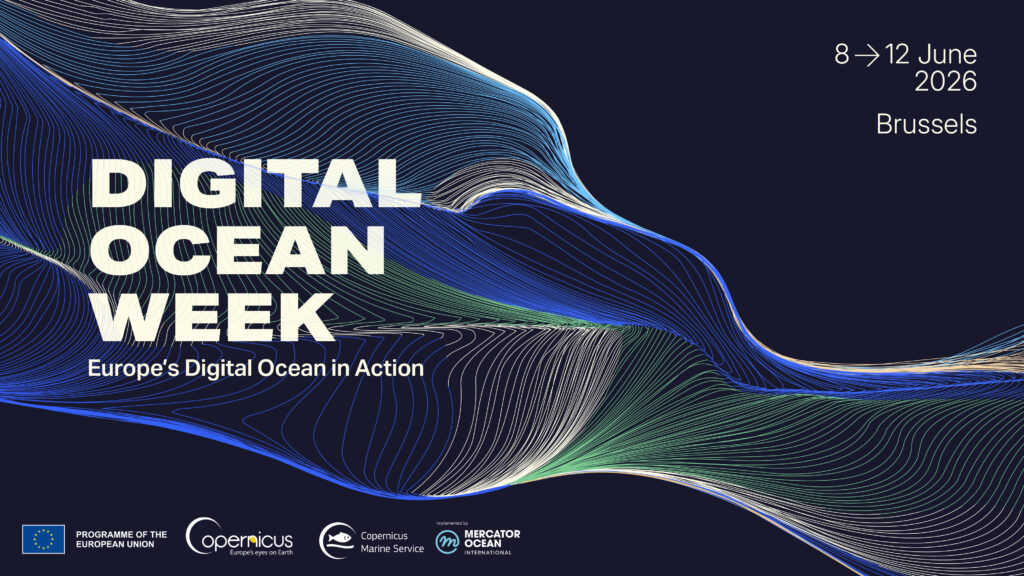
From 8 to 12 June 2026, Brussels will host the first edition of Digital Ocean Week, organised by Mercator Ocean International. Opening on World Oceans Day, the Week will bring together EU institutions, Member States, scientists, industry and users to examine how Europe is developing an integrated and operational Digital Ocean system to support EU policies and digital sovereignty. The week’s programme is built around four landmark appointments: a High-Level Opening Event on 8 June, the Copernicus Marine Service General Assembly on 9–10 June, and two centrepiece events, the OceanEye High-Level Event and the first AI Ocean Forum.
Digital Ocean Week is dedicated to Europe’s growing capacity to deliver trusted, decision-ready ocean intelligence for public policies and operational uses. At a time when ocean knowledge is central to climate action, environmental protection, economic activity and security, the Week will demonstrate how Europe is linking ocean observation, digital infrastructures and services into a coherent system that supports evidence-based decision-making.
A trusted and operational European Digital Ocean
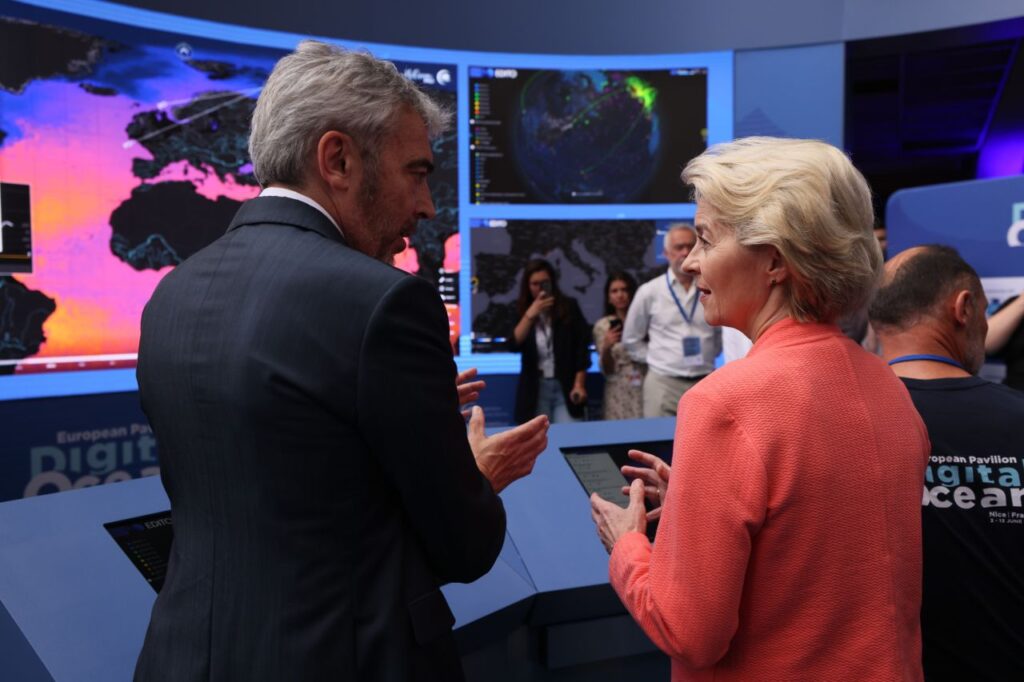
Europe is already building a trusted and operational Digital Ocean system. Key programmes such as the Copernicus Marine Service, EMODnet and the European Digital Twin Ocean (EU DTO) provide concrete operational capacity, supporting authorities, scientists and users across Europe and beyond.
Digital Ocean Week will highlight how these programmes are increasingly connected through shared digital infrastructures and advanced modelling capabilities. In parallel, artificial intelligence and digital technologies are transforming ocean data into faster, more accurate and increasingly on-demand services, reinforcing Europe’s ability to translate ocean knowledge into actionable intelligence.
Setting the policy framework: 8 June
The Week will open on 8 June with a policy-focused event anchored in the European Ocean Pact. This opening sequence will set the broader European policy context and present the development of Europe’s Digital Ocean system as an integrated architecture combining the Copernicus Marine Service, EMODnet and the European Digital Twin Ocean.
The event will outline how this system is evolving towards the next Multiannual Financial Framework, emphasizing the need to scale Europe’s ocean observation and digital infrastructure capacities. It will also open a dialogue with the community on key policy priorities aligned with the European Ocean Pact, before officially launching Digital Ocean Week and its main milestones.
Copernicus Marine as a key enabler of digital Ocean intelligence: 9-10 June
On 9 and 10 June, the 9th Copernicus Marine General Assembly will provide a comprehensive review of the current state and future development of the Copernicus Marine Service, implemented by Mercator Ocean International on behalf of the European Commission.
The Assembly will address ocean climate, coastal and marine applications, the Arctic, marine biology and digital services, as well as coordination with satellite and in situ observation components and other Copernicus Services. These discussions will contribute directly to preparations for the next Multiannual Financial Framework, underlining the role of Copernicus Marine as a key public service.
OceanEye: from vision to implementation
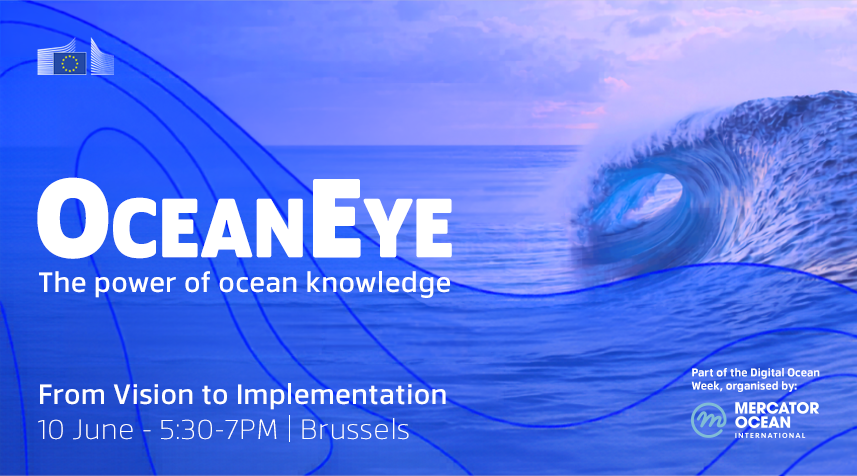
A central moment of Digital Ocean Week will be the high-level event “OceanEye: From Vision to Implementation”, held on 10 June. Announced in March by the President of the European Commission Ursula von der Leyen, OceanEye provides the strategic framework for Europe’s ocean ambition and international cooperation, built on two complementary pillars: strengthened ocean observation and integrated digital ocean systems. OceanEye also features a call to establish an International Alliance of EU countries and international partners to increase efforts for coordinated action and cooperation. “The Digital Twin Ocean is at the heart of OceanEye, and we are committed to making it fully operational by 2030“, said Ursula von der Leyen at the EU Ocean Days back in March.
Bringing together the European Commission, Permanent Representatives, Members of the European Parliament and stakeholders across the observationtoservice chain, the event will highlight Europe’s capacity to turn ocean knowledge into operational intelligence in direct support of the European Ocean Pact.
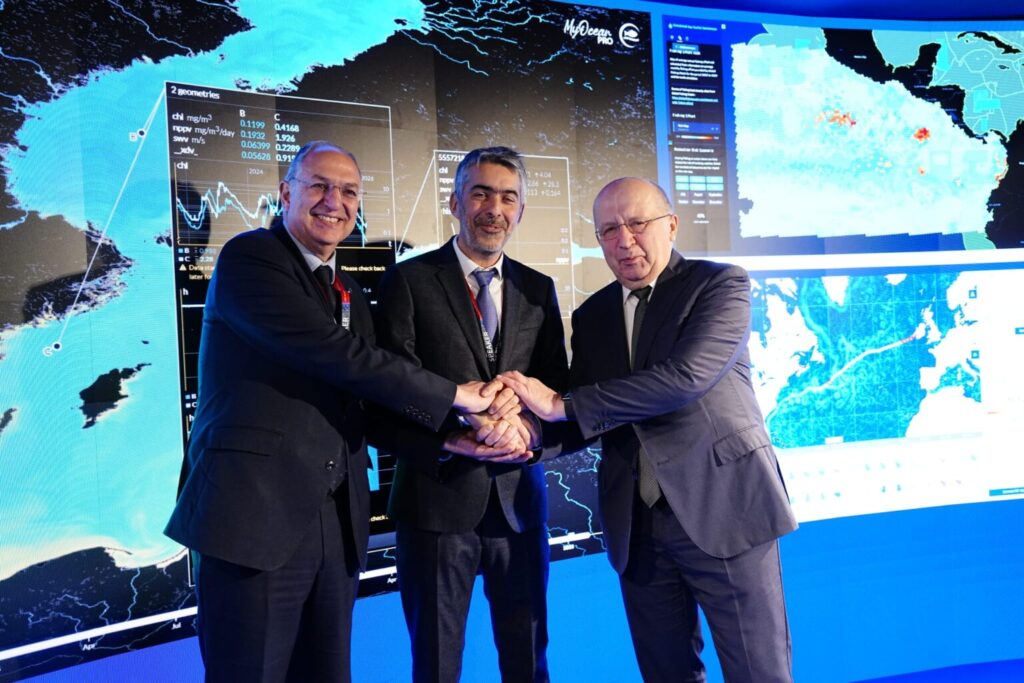
The event will close with a concrete signal of intent: the launch of a partnership between Mercator Ocean and IOC-UNESCO’s Global Ocean Observing System, reflecting the growing momentum toward deeper international cooperation.
AI and the next phase of the Digital Ocean: 11–12 June
The Week will conclude on 11 and 12 June with the AI Ocean Forum, examining the role of artificial intelligence in ocean observation, forecasting and services, and its integration with modelling and digital infrastructures, including the EU DTO.
The Forum will showcase Europe’s advances in AI-enabled ocean intelligence.
A “Setting the Scene” session will then explore ocean modelling in the age of AI, examining how AI methods and physics-based approaches can complement each other and what this means for the future of ocean prediction systems.
The Forum will continue with thematic sessions presenting What-If scenarios and real-world applications supporting decision-making across key sectors, and touching on topics such as the role of AI agents and benchmarking and validation procedures, before concluding with the unveiling of a 2030 AI Roadmap for the European Digital Ocean community, outlining shared priorities and future directions.
Towards a fully operational Digital Ocean by 2030
Designed as a single, integrated event, Digital Ocean Week brings together political mobilization, European coordination and operational demonstration. It structures and federates the European ocean and digital ecosystem, engaging institutions, programmes, research actors and industry around a shared operational vision.
As such, Digital Ocean Week is an important step towards a fully operational Digital Ocean by 2030, supporting European coordination for global commitments and positioning Europe for the next phase of Digital Ocean infrastructures in the context of the upcoming Multiannual Financial Framework.