

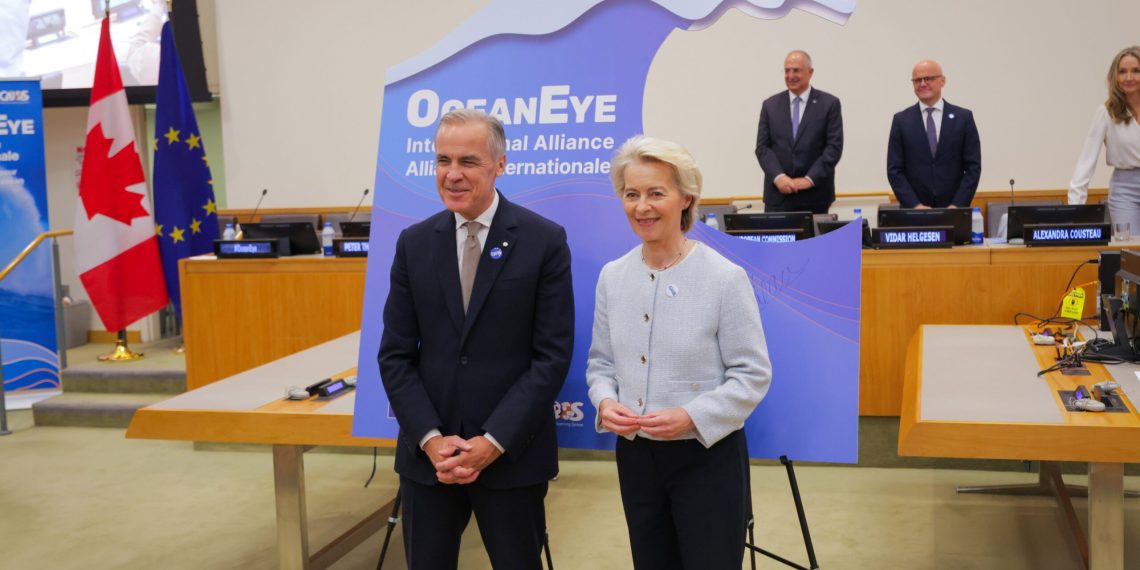
On 23 September 2026, during a high-level pledging event at the 81st United Nations General Assembly in New York, the European Union and Canada launched the OceanEye International Alliance for the Global Ocean Observing System (GOOS), in partnership with the Intergovernmental Oceanographic Commission of UNESCO (IOC-UNESCO) and the World Meteorological Organisation (WMO).
More than 30 countries joined the Alliance, pledging nearly €220 million in financial and in-kind support for global ocean observation. The commitments include funding, equipment and operational capacities to help sustain and strengthen the observing system on which weather forecasting, climate services, maritime safety and coastal resilience depend.
The event also highlighted growing European momentum towards the future Mercator International Centre for the Ocean, an intergovernmental organisation that will provide Member States with a stable, transparent, and State-led framework for the long-term development of digital ocean systems and information services.
Together, these developments conveyed a clear message: ocean observation must be treated as one connected system, supported by international cooperation and sustained through lasting governance.
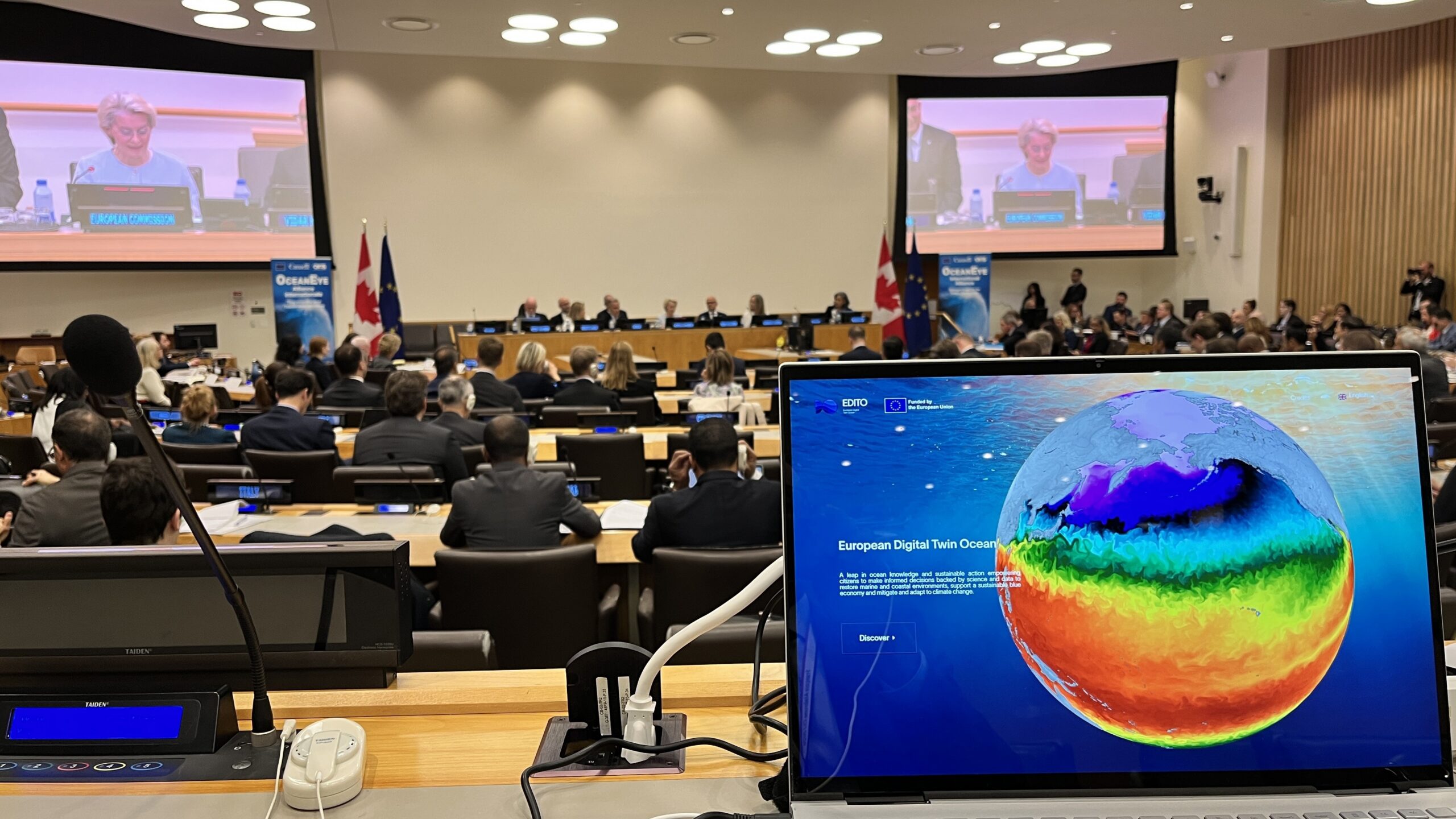
One ocean observing system
The commitments announced in New York respond to gaps in global ocean observation. They also reflected a broader conviction: the ocean can be understood and anticipated only when satellite observations, in situ measurements and digital systems operate as one connected system.
Advanced ocean observation depends on three inseparable pillars:
- Satellite observation which provides continuous, global coverage of the ocean surface.
- In situ networks which measure ocean conditions directly, including below the surface. They also supply reference data used to validate satellite products and models.
- Digital systems which combine these observations with numerical models and artificial intelligence to deliver forecasts, information services and decision-support tools.
Together, these pillars create a continuum from observation to understanding, prediction and decision-making.
Better coordination across these pillars also makes investment in observation more effective. By showing where measurements are available, and where gaps persist across space, depth and time, digital systems can help identify priorities for new observing capacity. They can also assess how specific observing networks improve forecasts and services, making the value of sustained observations clearer to decision-makers.
This is the OceanEye ambition, as reflected during the event, to connect capabilities, make data usable and ensure that ocean information supports decisions, from daily weather forecasting and maritime safety to long-term climate adaptation.
From observing the Ocean to anticipating change
Europe is translating this integrated approach into operational capacity through its Digital Ocean System.
Copernicus Marine provides global and regional ocean data, analyses and forecasting capabilities. EMODNet supports access to aggregation and interoperability across in situ marine and coastal data. The European Digital Twin Ocean builds on this knowledge base and brings data, models and digital tools together to develop predictive scenarios and support decision-making.
It represents a shift in how ocean knowledge can be used: from monitoring what has happened, to exploring what may happen next.
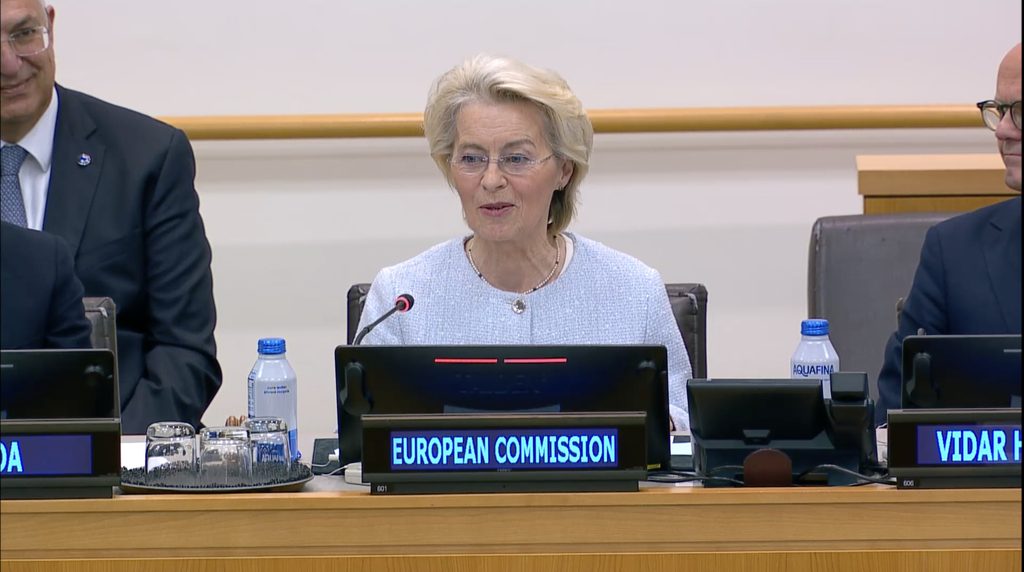
During the OceanEye event, European Commission President Ursula von der Leyen highlighted the complementary nature of these initiatives:
“OceanEye can show us what is happening in the ocean right now, while the Digital Twin of the Ocean can help us predict what may happen next. We are now making this digital twin ocean available to anyone around the world: citizens, scientists and policy makers. We want European science at the service of all.”
Europe is moving from vision to action
Europe is at the forefront of this integrated vision and is now advancing on two complementary fronts.
First, it is consolidating and further integrating its own ocean-observation capabilities. Europe already has major assets in satellite observation, in situ data networks, marine services, modelling and digital infrastructure. The priority is now to connect them more effectively, while reinforcing the in situ pillar that delivers irreplaceable measurements throughout the ocean.
Second, through OceanEye, Europe is taking this ambition to the international level.
The Alliance provides a framework for countries and partners to contribute expertise, infrastructure, funding and operational capacity to a stronger global observing system, in coordination with IOC-UNESCO and GOOS.
The pledges announced in New York provide support for OceanEye and global ocean observation, while signalling a shared international resolve to sustain the observations on which societies, economies and climate action depend on worldwide. The next step will be to translate this mobilisation into durable cooperation, targeted investment and coordinated delivery.
European momentum towards stronger governance
Shared ocean capacities also need governance that can sustain them over time.
UNGA81 also marked renewed momentum towards the establishment of the Mercator International Centre for the Ocean, a future intergovernmental organisation (IGO). This IGO will offer a stable, transparent and State-led framework to guide the long-term development of ocean forecasting, digital ocean systems and information services.
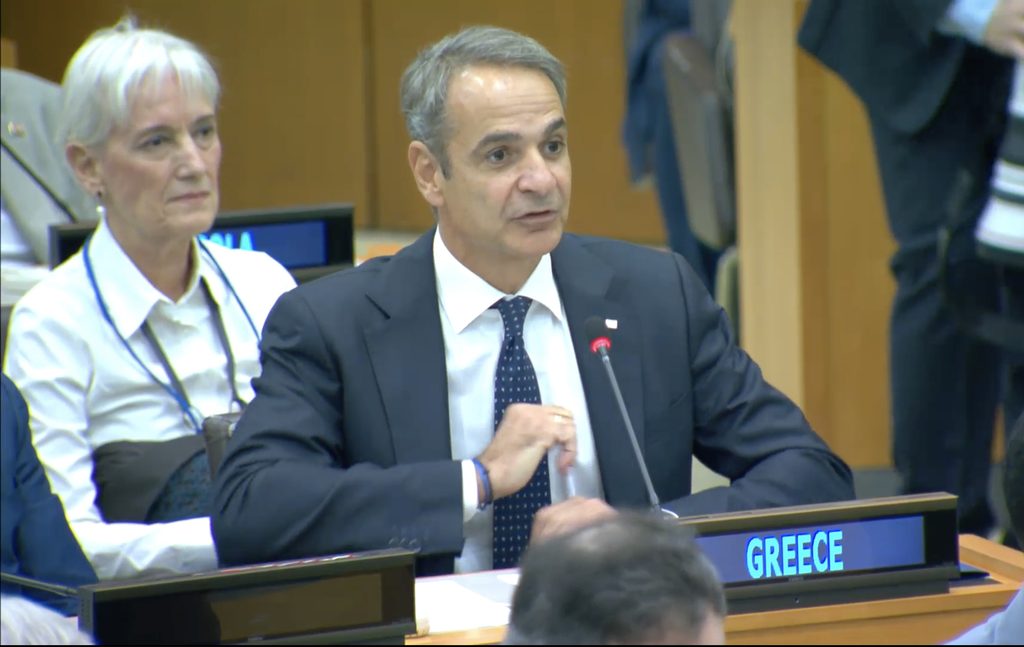
During the UNGA81 pledging event, Greece and Malta notably expressed continued support for the IGO by pledging to ratify the Convention swiftly and encouraged other countries to do the same. Their statements illustrate a wider European mobilisation, with several States accelerating their pathways towards membership, announcing future signatures and recognizing the value of the European digital ocean programmes, from the EU Digital Twin Ocean to Copernicus marine and EMODNet.
Kyriákos Mitsotákis, Prime Minister of Greece: “We have already signed the convention establishing the Mercator Ocean intergovernmental organisation and are committed to very swift ratification by the Hellenic Parliament. We encourage other countries to do the same. and we will also contribute to the EU Digital Twin Ocean data.”
Monique Barbut, Minister for Ecological Transition, Biodiversity and International Climate and Nature Negotiations of France: The transformation of Mercator into an IGO is now essential and a priority that France will continue to champion. Twelve European countries have pledged to join this organisation; it is now time to accelerate and move from commitment to action. France like Greece will soon proceed to the ratification.”
Robert Abela, Prime Minister of the Republic of Malta: “We see value in improving access to high-quality marine data to take better informed decisions and make use of existing European tools such as the Digital Twin Ocean and the Copernicus Marine Service. Malta is committed to engagement with Mercator Ocean International”
Adopted in 2025, the Convention establishing the future IGO was first signed by France and Norway, with Greece signing in May 2026. Twelve European countries also expressed their commitment to continue working towards the establishment of the IGO at the 2025 UN Ocean Conference in Nice.
As ocean information becomes increasingly strategic, its long-term continuity requires a governance framework that extends beyond project-based structures. The future IGO will enable participating Member States to set common priorities, sustain key infrastructure and develop services collectively.
Building long-term international cooperation
OceanEye, Europe’s Digital Ocean System and the future Mercator International Centre for the Ocean address different dimensions of the same challenge.
OceanEye strengthens global observation by connecting international partners, contributions and capabilities around GOOS, while the Digital Twin Ocean provides a powerful tool for integrating observations, models and forecasts into a coherent system. The future Mercator International Centre for the Ocean will provide the governance framework needed to sustain and develop that system collectively over the long term.
The pledges made at UNGA81 are an important milestone, but they are only the beginning. The task ahead is to translate political support and pledges into a more integrated, coordinated and resilient global ocean observing system, one that helps societies understand the ocean, anticipate change and make better-informed decisions.
Additional Resources:
OceanEye International Alliance: Stronger Together for Ocean Observation | EEAS
The Digital Twin Ocean – Shared Ocean Intelligence