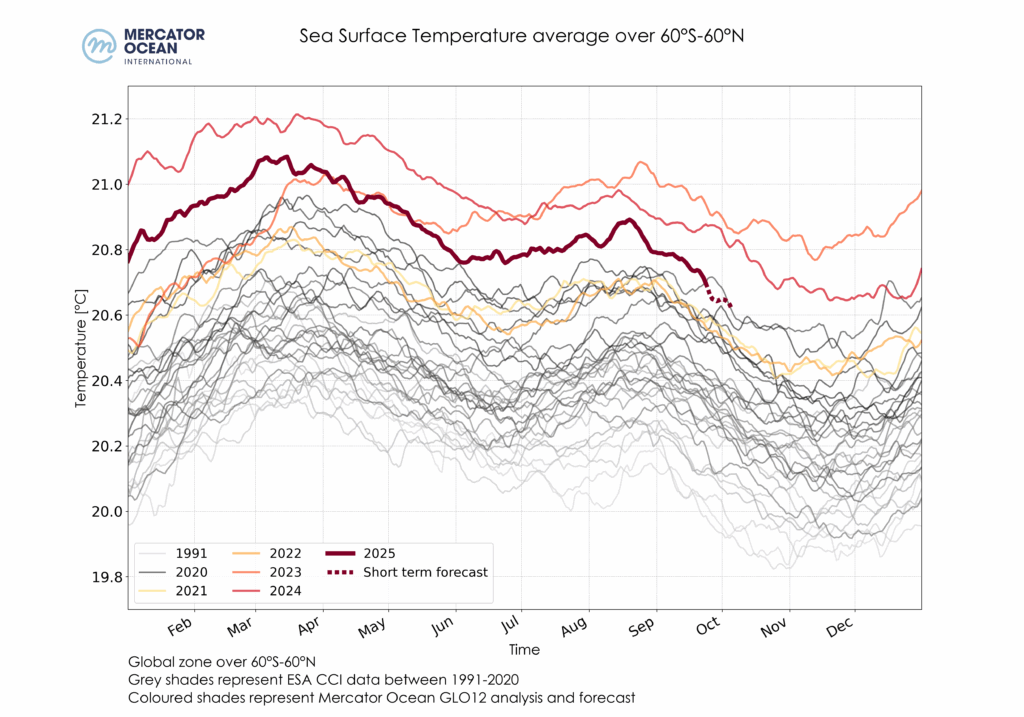
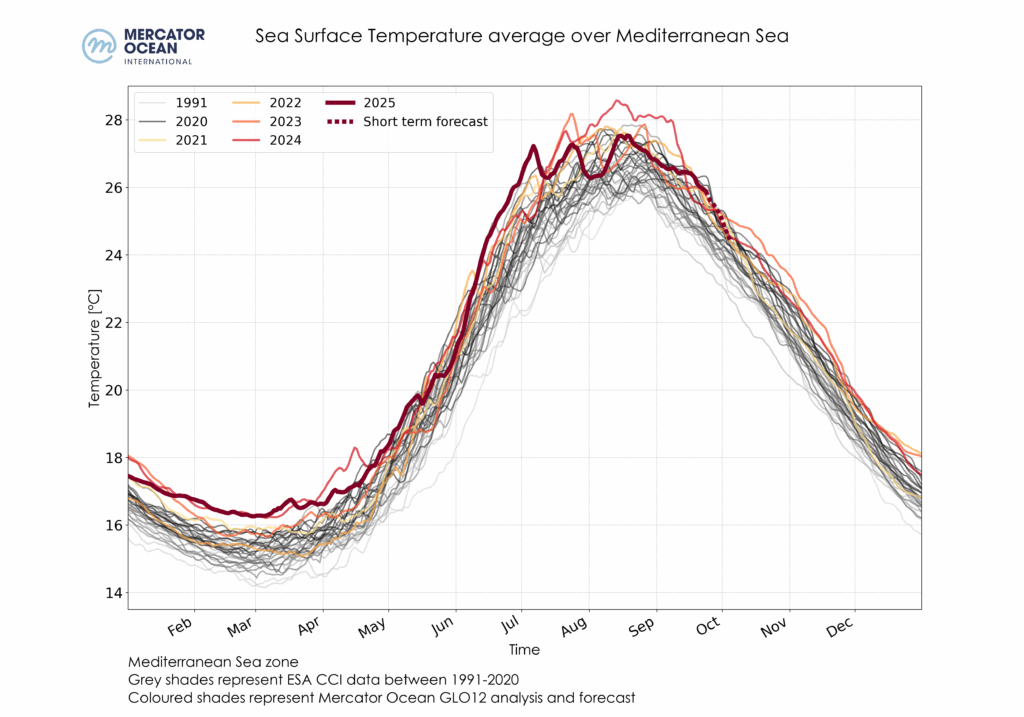
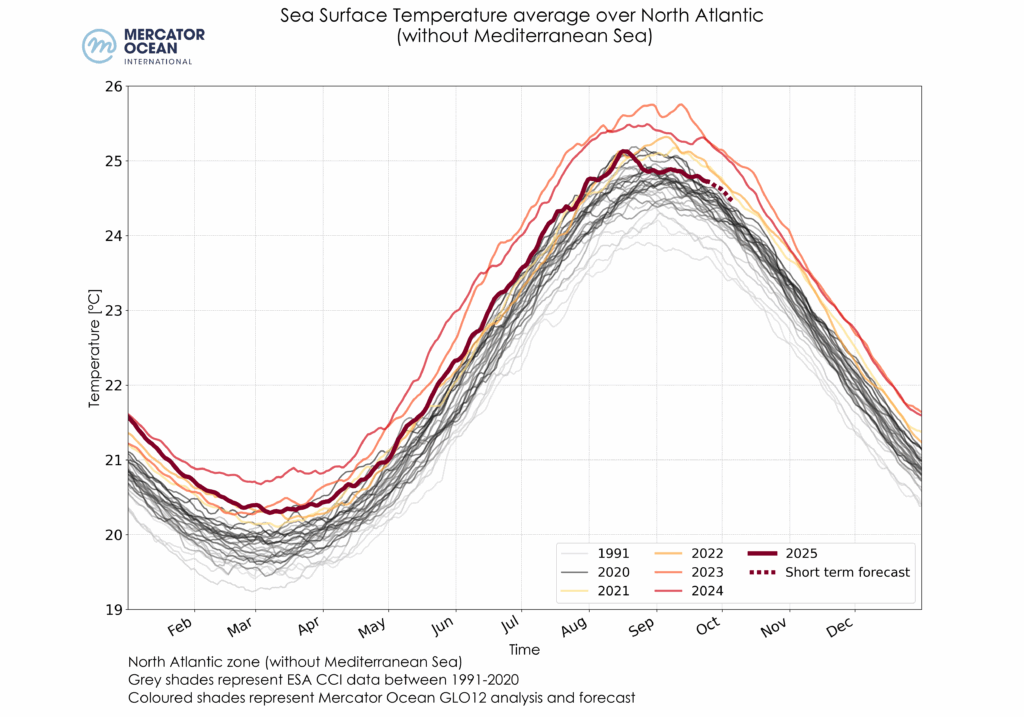
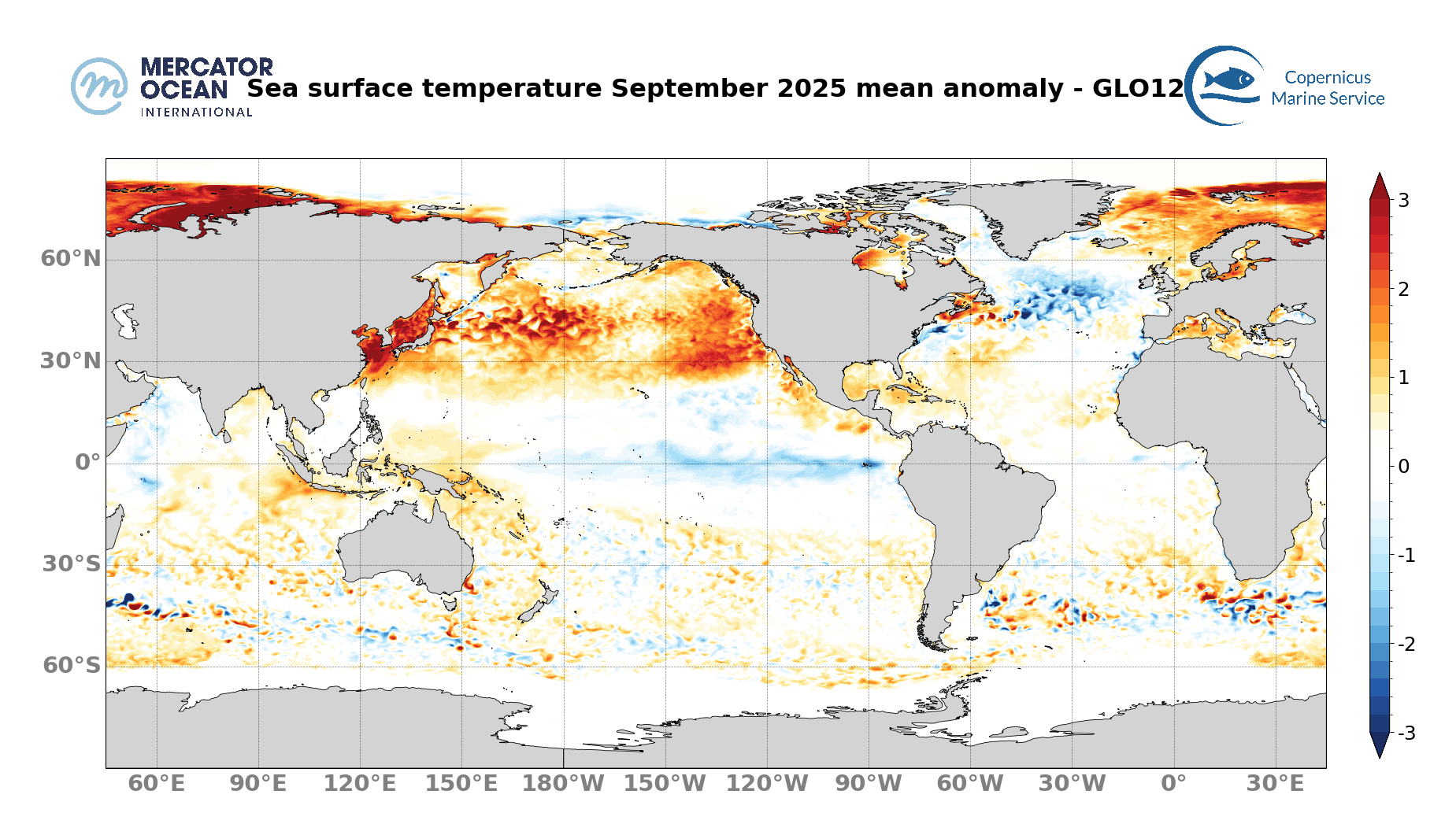
Mercator Ocean International (MOi) oceanographers examine marine heatwaves across the global ocean. They analyse a variety of datasets from observation analyses
(satellite sea surface temperature maps) to model analyses
(assimilating satellite and in situ observations) and model forecasts.¹
Global ocean
European region


September 2025 mean SSTs are above average for 68% of the global ocean (between 60°S and 60°N), with 11% exceeding the average by at least 1°C (Figure 2).
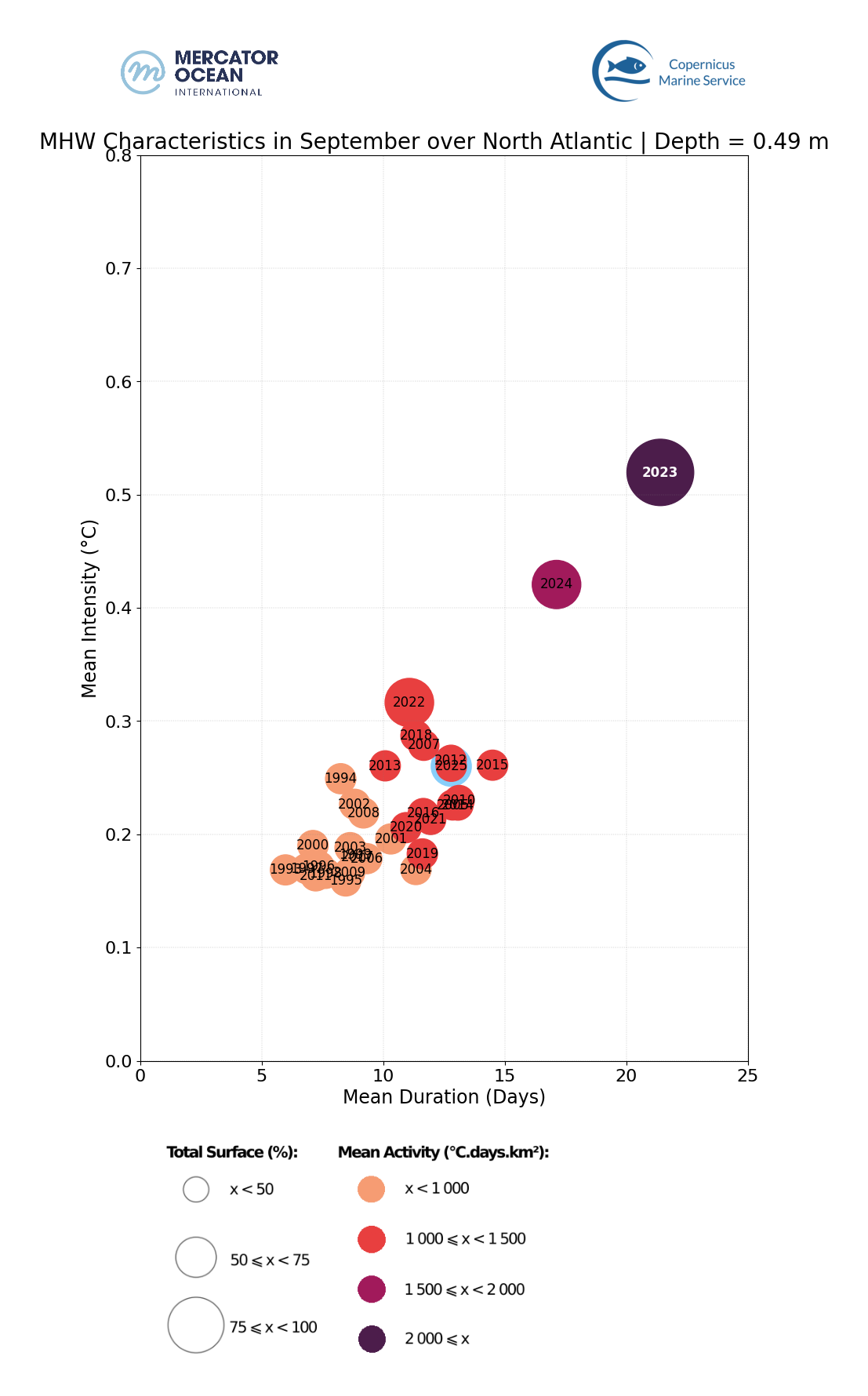
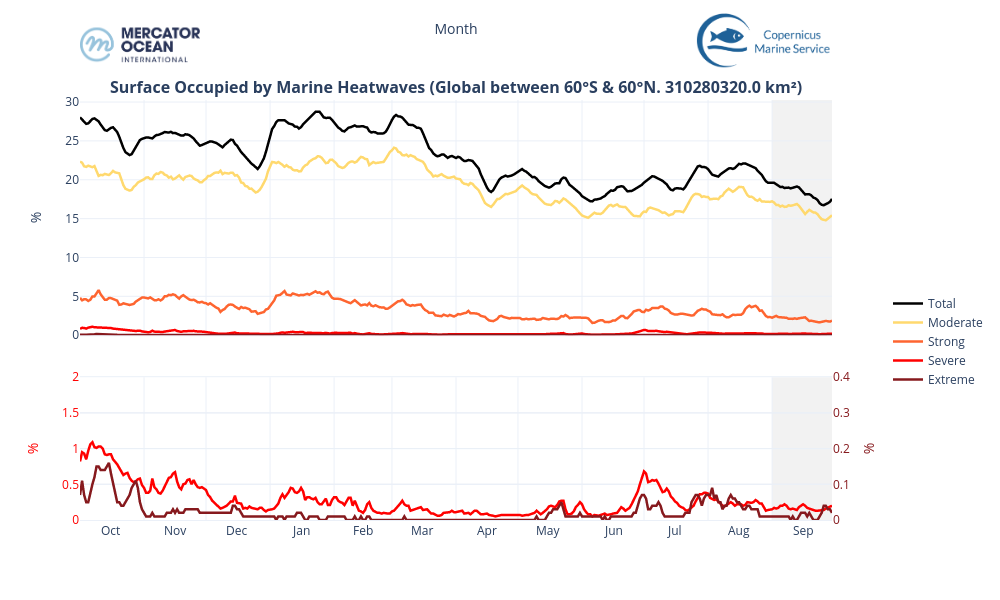
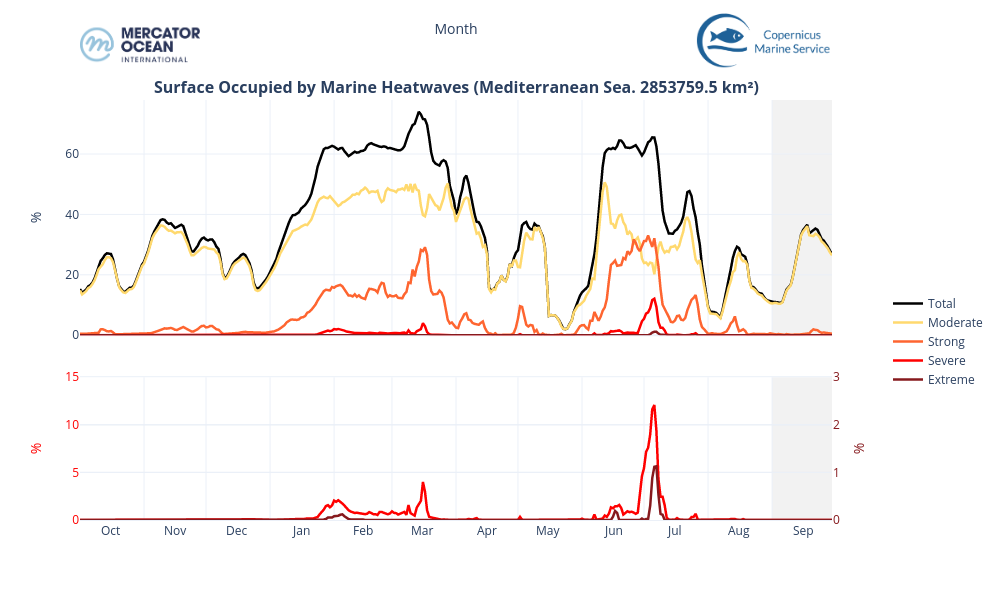
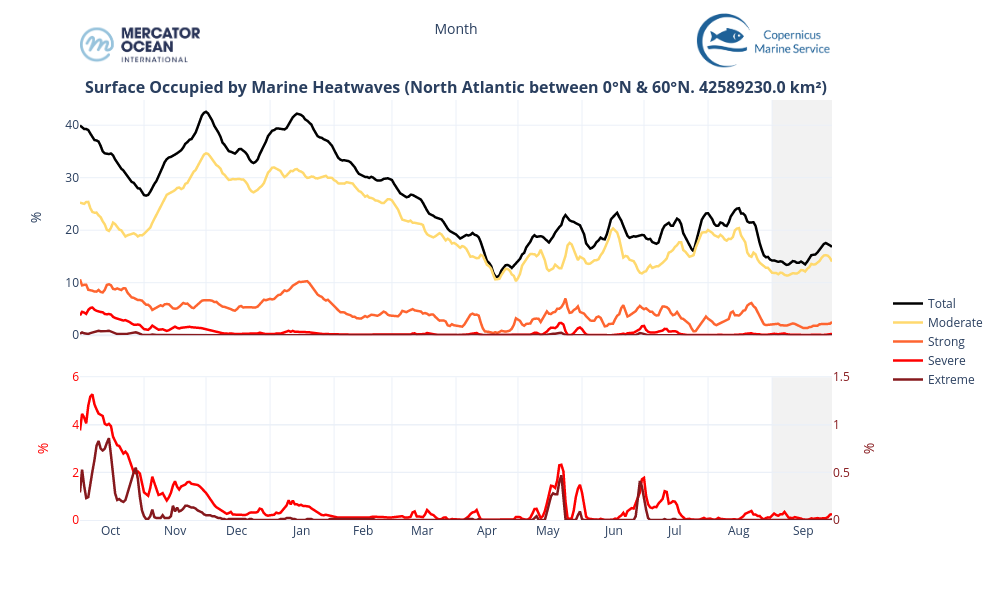
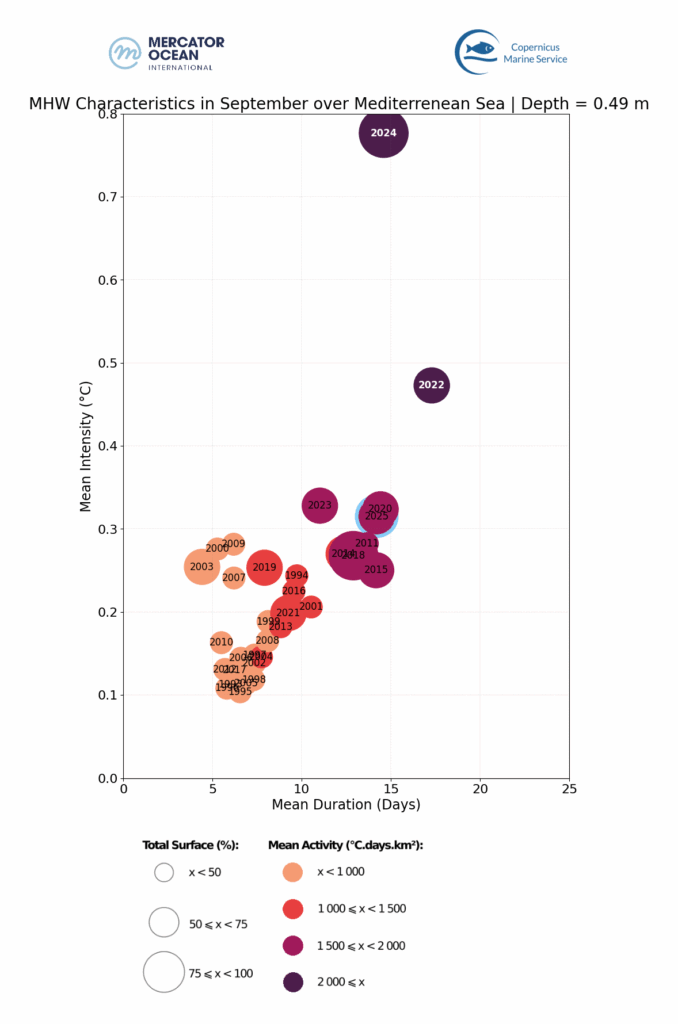
Surface occupied by MHWs in the n the global ocean (between 60°S and 60°N), in the Mediterranean Sea and in the North Atlantic (between 0°N and 60°N) between October 2024 and September 2025 based on daily monitoring. The black solid line represents the total surface of MHW, while the colored lines represent the surface of each MHW category. The gray background highlights the month of September 2025
Global Ocean
Mediterranean Sea
North Atlantic
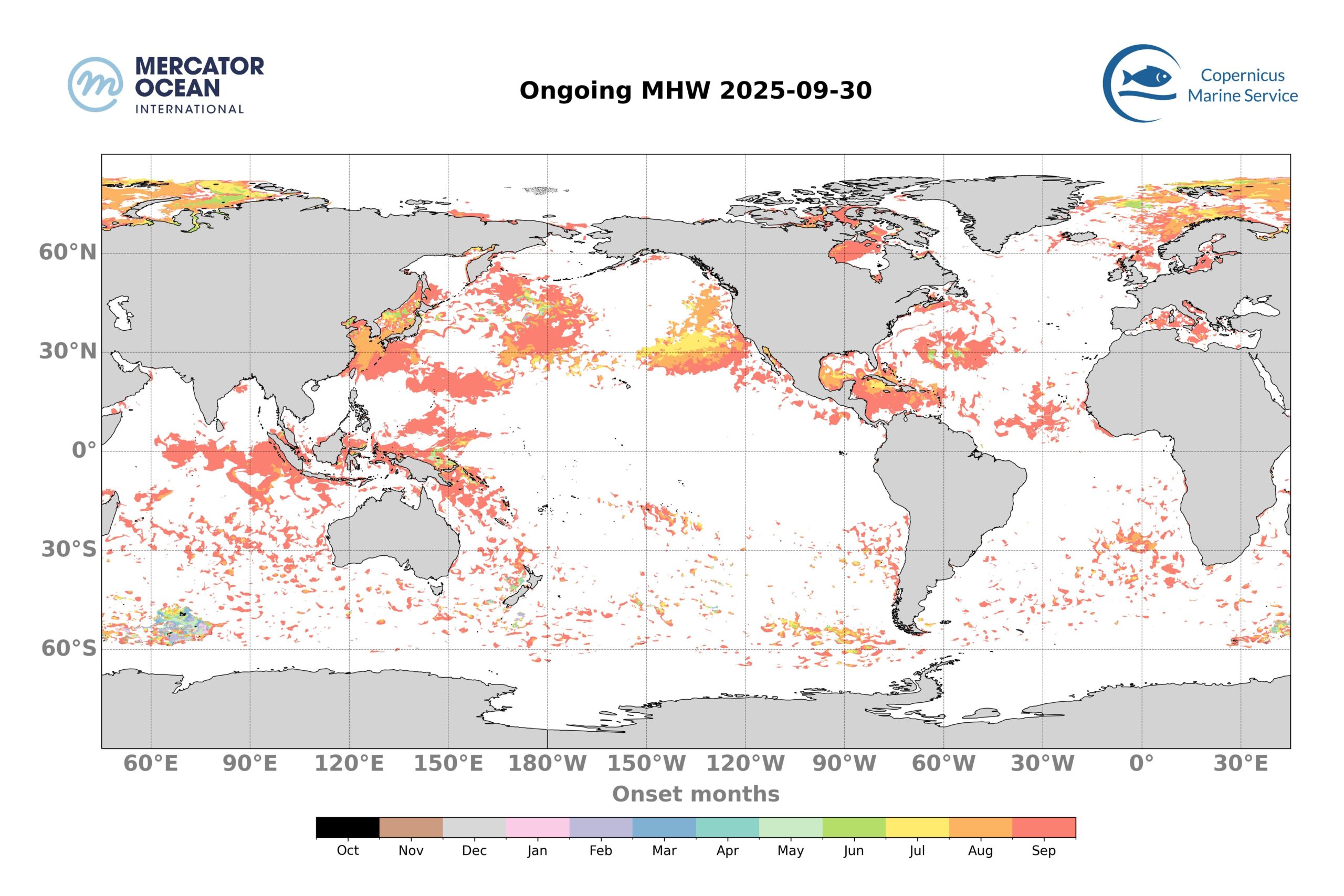
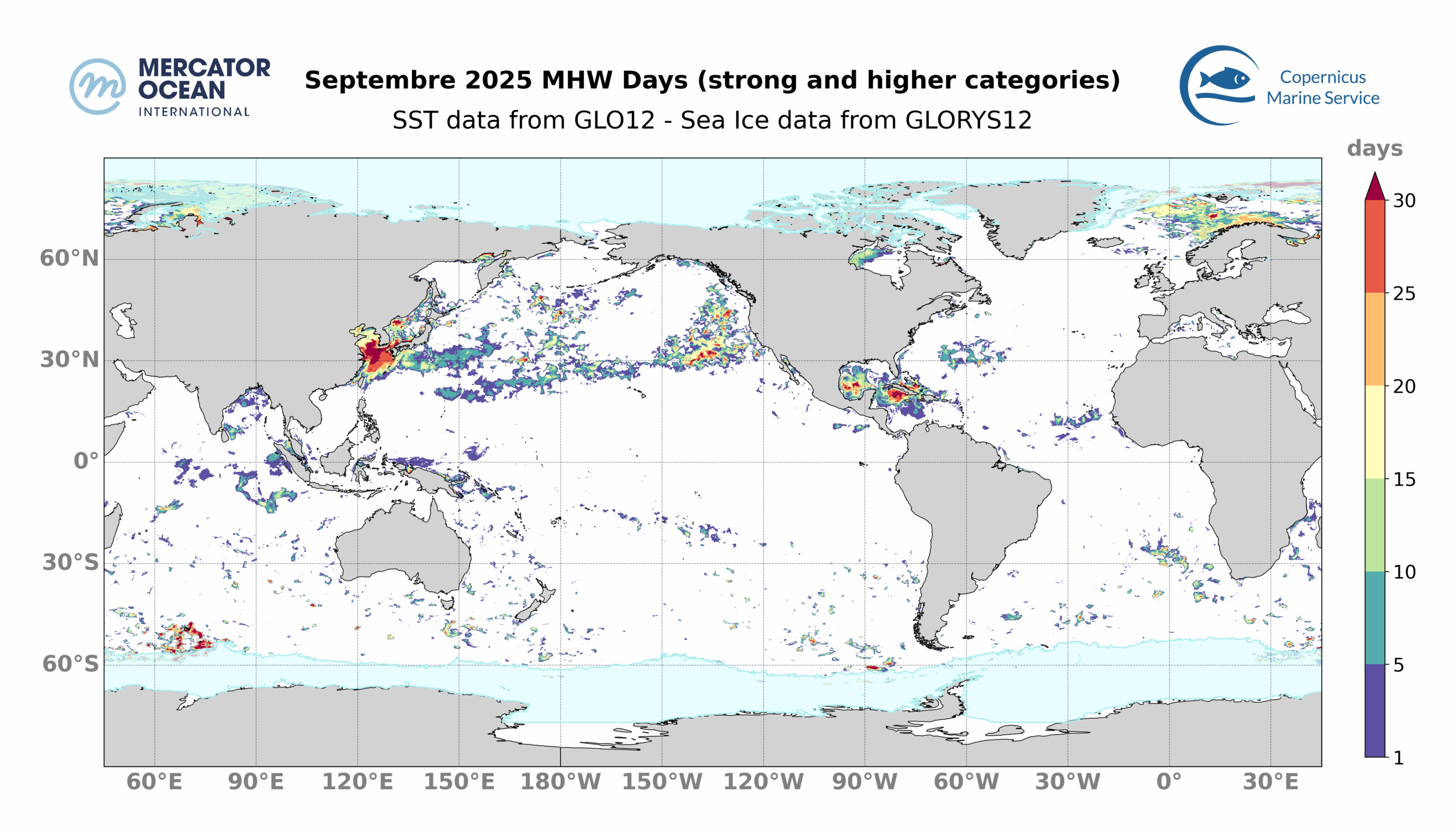
Marine heatwave days are monitored globally to highlight the region often impacted or impacted by long MHWs. Longer and more regular MHWs increase heat stress on marine ecosystems, especially intense MHW (i.e. MHW of strong or higher category). Analysis focuses on MHWs of strong or higher category which occurred in September 2025. Ocean regions in light green correspond to areas where a total of 10 to 15 days of strong or higher MHW were observed during the month of September of 2025.
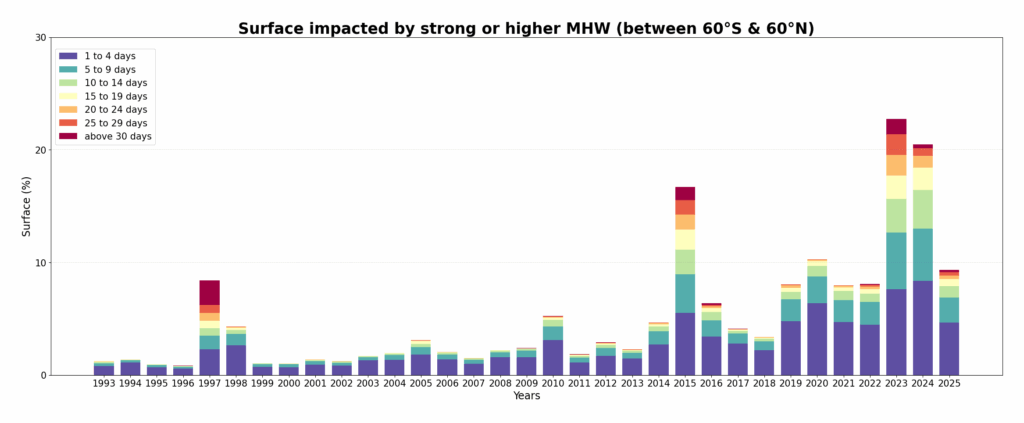
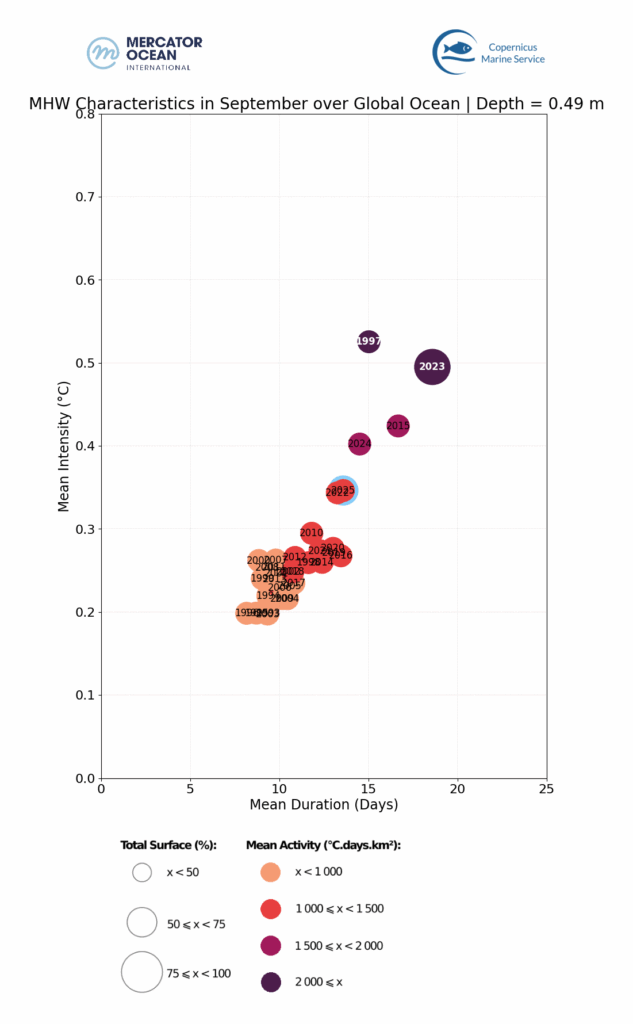
Mercator Ocean International publishes a monthly sea surface temperature bulletin reporting on mean temperature and marine heatwave conditions for the month just passed. It includes:
The results are obtained using the Copernicus Marine Service global analysis and forecasting system together with observation-based products.
Notes: The global analysis system was used to study the ocean surface temperature from 2021 and 2025. To study surface temperature for previous years (1991 to 2020), it was used the ESA CCI data. The other observation-based sea surface temperature products (OSTIA, OI SST and Odyssea) were used for calculating monthly mean and uncertainty values for March 2025.
The results are obtained using the Copernicus Marine Service global systems including the analysis and forecasting system together with the reanalysis product.
Notes: The global analysis system was used to study MHWs for 2024 and 2025. To study MHWs for previous March (1993 to 2023), it was used the reanalysis system. The reanalysis product was used for generating a daily climatology using the 30-year period from 1993 to 2022