

A new global framework for Ocean indicators, led by Dr. Karina von Schuckmann from Mercator Ocean International and developed under the Global Ocean Observing System (GOOS) initiative, aims to translate Ocean science into actionable knowledge, supporting sustainable decision-making and policy.
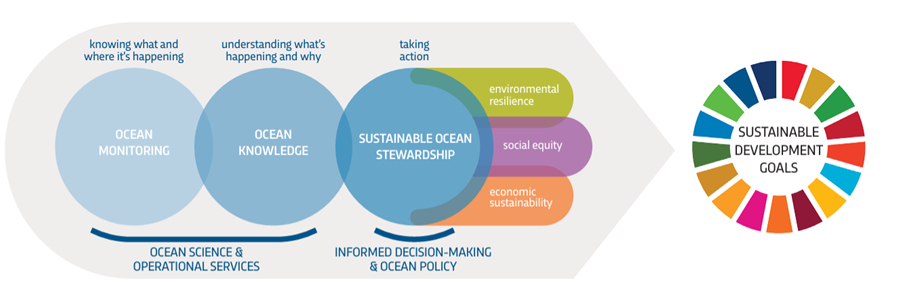
Figure 1. Diagram showing how Ocean science and operational services support informed decision-making and Ocean policy, supporting the Sustainable Development Goals. Adapted from the Copernicus Ocean State Report 9.
Global Ocean Indicators as Actionable Insights for Policy Makers
Ocean indicators are a bridge between science and policy. They synthetise complex observations and model outputs into measurable metrics which describe the Ocean’s state, trends, and variability in understandable and actionable ways. As the global Ocean faces intensifying pressures from climate change, pollution, and biodiversity loss, the need for a shared, science-based foundation for Ocean knowledge is greater than ever.
A new paper, Global Ocean Indicators: Marking Pathways at the Science-Policy Nexus, led by Dr. Karina von Schuckmann from Mercator Ocean International and published in the Marine Policy journal, presents a new comprehensive framework for developing global Ocean indicators. This framework was developed as part of the Global Ocean Observing System (GOOS) initiative, sponsored by the Intergovernmental Oceanographic Commission (IOC) of UNESCO, which established a task team bringing together international and multidisciplinary experts to define a common scientific basis for monitoring Ocean change.
This collaborative effort seeks to improve the accuracy, consistency, and usability of Ocean data to support decision making. The study outlines a coherent approach to ensure indicators are scientifically robust, scalable, and accessible. It identifies six key principles which Ocean indicators should adhere to: verification, significance, scalability, justification, measurability, and accessibility. Additionally, it introduces nine pilot Ocean indicators spanning three domains: physical and climate processes, biogeochemistry, and biodiversity and ecosystems.
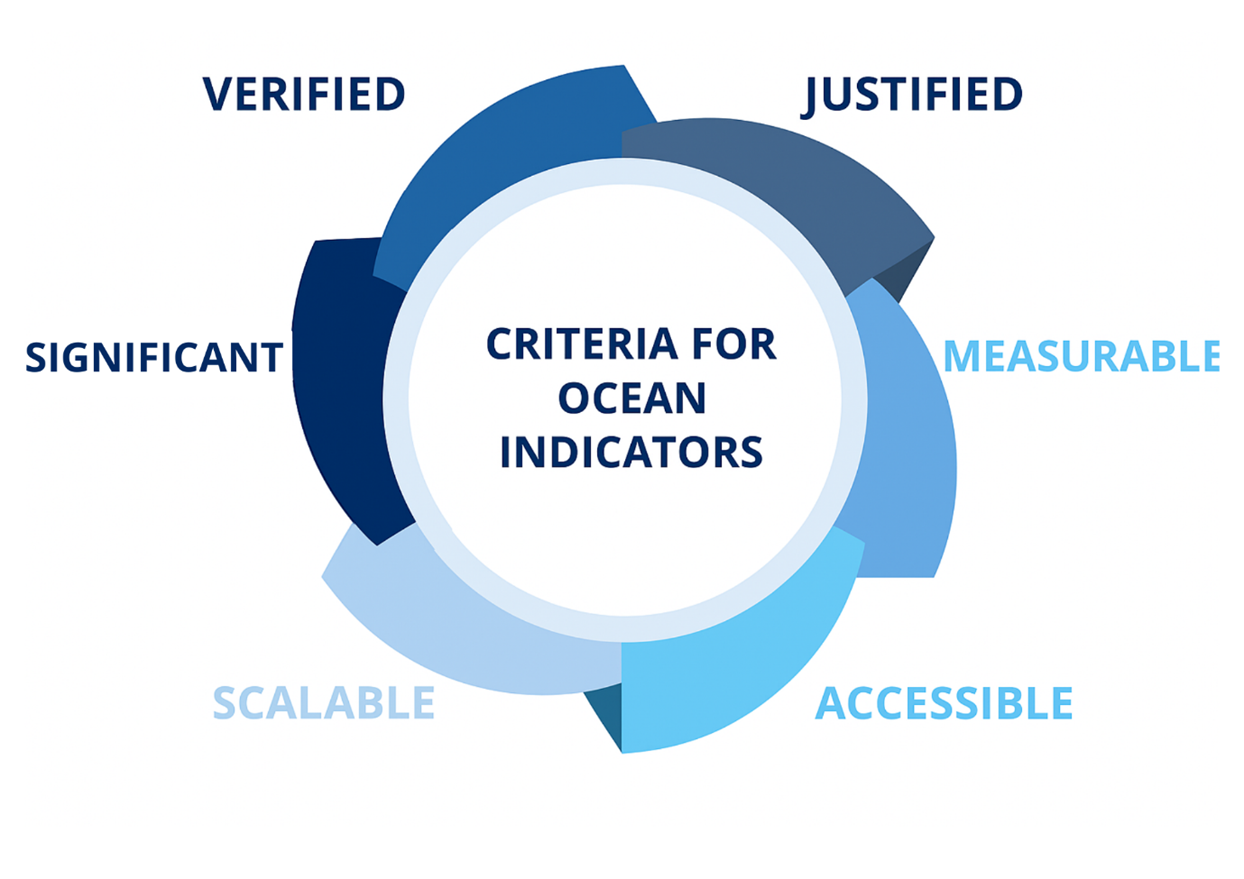
Figure 2. The six criteria for Ocean indicators defined in the study. Source: Von Schuckmann et al., 2025.
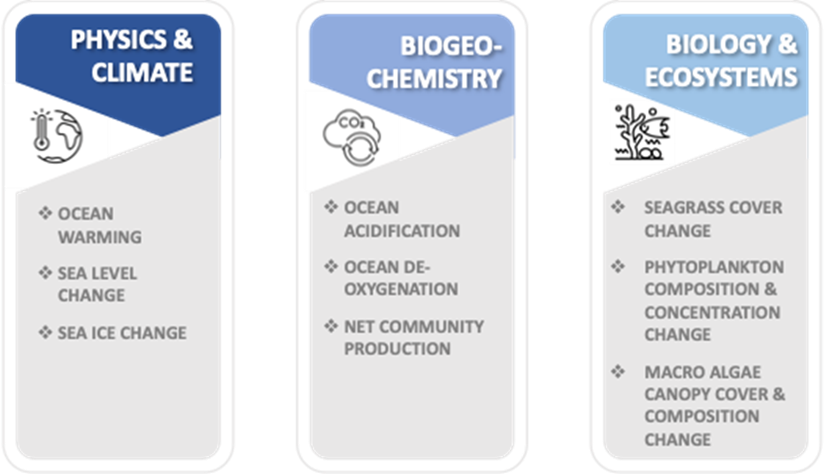
Figure 2. The six criteria for Ocean indicators defined in the study. Source: Von Schuckmann et al., 2025.
Mercator Ocean International: From Operational Modelling to Supporting Global Ocean Governance
Operational oceanography, demonstrated by Ocean indicators, supplies real-time, science-based information which enables effective governance. Mercator Ocean International contributes actively to global Ocean governance through operation of the Copernicus Marine Service on behalf of the European Union to provide data on the physical, biogeochemical, and sea ice domains of the Ocean. A flagship outcome is the annual Copernicus Ocean State Report, which delivers a comprehensive, policy-relevant, science-based assessment of the Ocean’s condition.
Additionally, Mercator Ocean International contributes to numerous initiatives aimed at strengthening international cooperation in Ocean observation, prediction, and governance. For example, it implements EU4OceanObs, a Horizon Europe project focused on strengthening the role of the EU in international Ocean governance and on improving global Ocean observation systems. Through this project, Mercator Ocean International also coordinates the G7 Future of the Seas and Ocean Initiative (FSOI) Coordination Centre, which works with the Global Ocean Observing Centre (GOOS) to advance global Ocean monitoring and developing the monitoring indicators for informed decision-making. Mercator Ocean International connects data modelling to policy processes, contributing to a solid and operational Ocean knowledge system to support sustainable management and climate adaptation.
Towards Common Ocean Knowledge
As global pressures on the Ocean intensify, consistent and transparent reporting mechanisms become increasingly important. Building on scientific consensus and cooperation, the global framework for developing Ocean indicators is a step towards establishing a shared language for describing the state of the Ocean.
This new study establishes a scientifically rigorous and policy-relevant framework for monitoring and interpreting the state of the Ocean and its changes. By translating Ocean data into clear, actionable indicators and supporting international governance frameworks, Mercator Ocean International is helping to strengthen and coordinate global capacity to monitor, model and respond to Ocean change.
Additional Resources
Access the full paper: https://doi.org/10.1016/j.marpol.2025.106922