

The European Digital Twin Ocean
Home ⟩ Ocean Intelligence ⟩ The Digital Twin of the Ocean ⟩ The European Digital Twin of the Ocean
An interactive and dynamic digital representation of the Ocean for better decision making and sustainable action in Europe
What is the European Digital Twin Ocean?
The European Digital Twin Ocean is creating an interactive, science-based digital replica of the Ocean to help policymakers, researchers, businesses and citizens, better understand, protect and sustainably manage marine environments. It brings together Europe’s digital Ocean assets, including national digital twins and European research projects, into one operational, community-driven system.
As part of the EU Mission “Restore Our Ocean and Waters”, the European Digital Twin Ocean supports the European Green Deal and EU Digital Strategy by making Ocean knowledge open, actionable and impactful. It was highlighted at United Nations Ocean Conference 2025 as a major outcome of the new European Ocean Pact.
How is Europe building a Digital Twin Ocean?
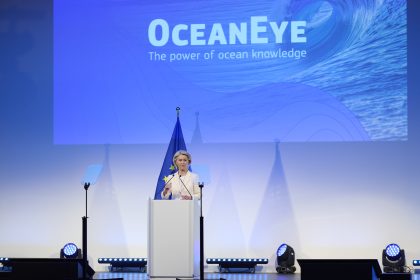
At the United Nations Ocean Conference (UNOC) 2025 in Nice, the European Commission announced the European Digital Twin Ocean as a key pillar of the new EU Ocean Pact.
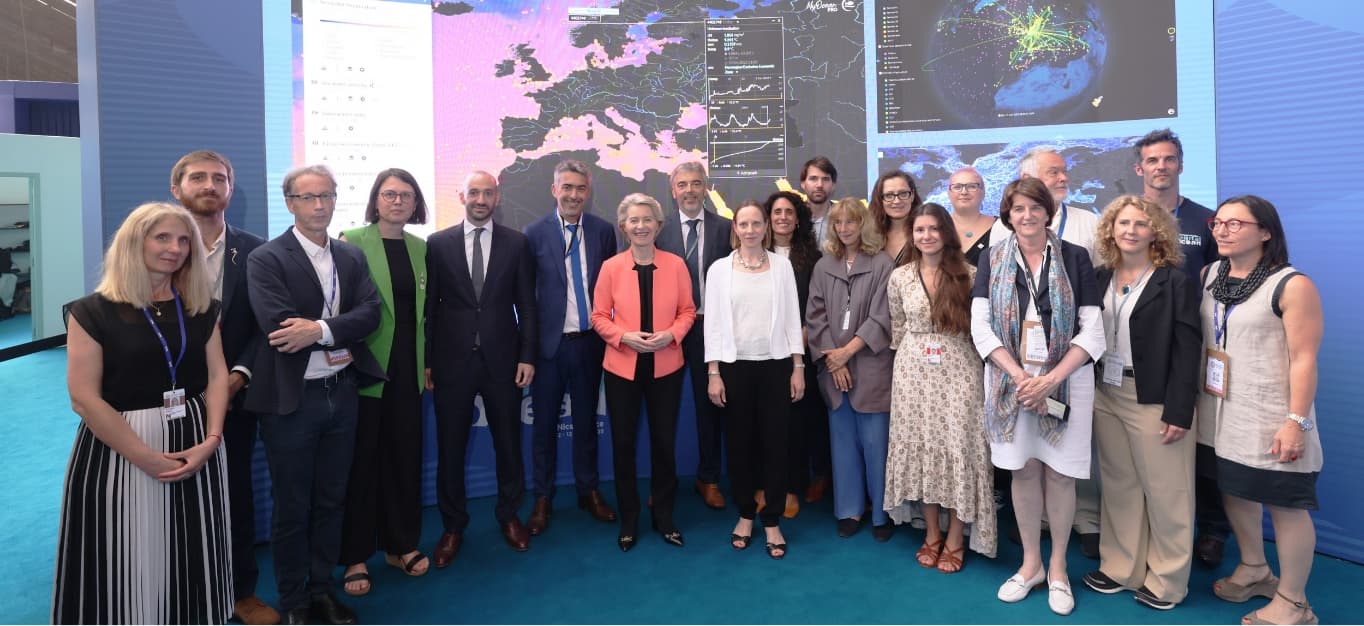
An amazing tool that helps us understand the Ocean
The second announcement from Europe today is the incredible Digital Twin of the Ocean. I announced it three years ago in Brest. Today in Nice at UNOC3, we proudly present the first demonstration version. It is an amazing tool that helps us better understand the Ocean, from pollution to navigation, from risks for our coasts to biodiversity, you name it. And we will not stop here.
URSULA VON DER LEYEN
European Commission President
Launched by the European Commission in 2022, the EU DTO is a flagship initiative of the European Digital Ocean Knowledge System, built on decades of European leadership in operational oceanography.
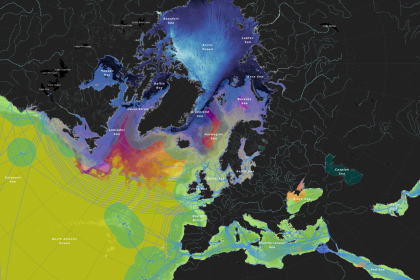
Europe is now entering a new digital era where operational oceanography is powered by high-performance computing, cloud technologies and artificial intelligence. European Digital Twin of the Ocean embodies this evolution by transforming data and models into a living, virtual Ocean able to simulate conditions, test scenarios and inform decisions.
Between 2022 and 2025, the two Horizon Europe projects EDITO-Infra and EDITO-Model Lab developed the first integrated digital environment, combining data from the Copernicus Marine Service, EMODnet and other European observing systems. The new EDITO phase (2025–2028) now scales this platform into a fully operational, user-driven European Digital Twin Ocean.
TheEuropean Digital Twin of the Ocean is designed to be fully compatible with Destination Earth (DestinE), enabling synergy with Europe’s planetary digital twins and supporting major EU priorities including the EU Ocean Pact, the EU Digital Strategy, and the Global Gateway strategy.
Get Involved in the Community
Events 2025–2026
Digital Ocean Week 2026
8 - 12 June 2026, Brussels
A week to explore how AI and the European DTO are transforming Copernicus Marine.
European Ocean Days 2026
2-6 March 2026, Brussels
Discover how the EU Digital Twin Ocean supports European ocean policies by demonstrating decision-making scenarios
EU Digital Ocean Systems 2028-2034
12-13 February 2026, Hamburg
A community-driven forum to co-design the evolution of the Copernicus Marine Service and the EU Digital Twin Ocean.
18th European Space Conference
27 & 28 January 2026, Brussels
How the EU Digital Twin Ocean can strengthens Europe’s Space and Security strategies.
Digital Ocean Forum 2025
27 & 28 November 2025 , Brussels
The European Commission’s flagship co-design event shaping the EU Digital Twin Ocean.
Research & Innovation Days 2025
16 & 17 September 2025, Nice
The European Digital Twin Ocean highlighted at the Commission’s annual event uniting Europe’s research and innovation.
Calls for Projects and Grants
We are offering our community opportunities to contribute to the EU Digital Twin Ocean through calls for projects and EDITO grants, in coordination with National Collaboration Projects.
Mercator Ocean’s leadership in developing the European Digital Twin Ocean
Mission
For more than two decades, Mercator Ocean International has been a driving force in operational oceanography, developing global digital Ocean systems and the scientific capacity to model and predict the marine environment. Under the leadership of the European Commission and together with partners such as the Flanders Marine Institute (VLIZ), Mercator Ocean is now implementing the next-generation, AI-powered European Digital Twin of the Ocean (DTO). Built on mature coordination networks and a fully operational digital Ocean infrastructure, Mercator Ocean is ready to deliver the EU DTO as a fully operational system in close collaboration with partners across Europe. Looking ahead, it will continue to enhance the platform’s capabilities and foster co-creation with Europe’s marine community, ensuring the EU DTO remains a collaborative, user-driven tool for understanding and protecting the ocean.
Future IGO mandate
Mercator Ocean’s mission is fully aligned with the mandate of the future intergovernmental organization (IGO) it is evolving into. The IGO’s purpose is to design, develop and operate world-class Digital Ocean Systems and contributions to a Digital Twin of the Ocean, encompassing marine physics, biogeochemistry and ecosystem sciences and to provide authoritative Digital Ocean Information Services of general interest to Member States and international ocean governance.

The EDITO Project
The EDITO project is a flagship EU initiative, led by Mercator Ocean International and the Flanders Marine Institute (VLIZ) on behalf of the European Commission. It is building the technological infrastructure of the European Digital Twin of the Ocean and fostering co-creation with Europe’s marine community. The project is now entering its second phase of development (2025–2028).
The European Digital Twin of the Ocean
The Digital Ocean Forum
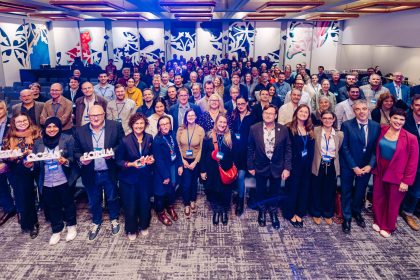
The Digital Ocean Forum (DOF) brings together experts, stakeholders, policymakers, and citizens to co-design and co-create the European Digital Twin Ocean. Initiated by Mercator Ocean, the first Forum took place in Paris in 2022, under the auspices of the European Commission and during the French Presidency of the EU Council.
The Digital Ocean Forum is now organized by the European Commission’s Directorate-General for Research and Innovation (DG RTD), Directorate-General the Directorate-General for Maritime Affairs and Fisheries (DG MARE), Directorate-General for Defence Industry and Space (DG DEFIS) and the Directorate-General for International Partnerships (DG INTPA), with Mercator Ocean International, Flanders Marine Institute and SeaScape Belgium as the implementation partners in the frame of the EDITO programme.
Two Pioneering Horizon Projects
The new phase of the EDITO project (2025–2028) builds on the achievements of two completed EU projects, EDITO-Infra and EDITO-Model Lab (2022–2025), which integrated Copernicus Marine Service and EMODnet data into a unified digital framework for the European Digital Twin Ocean (EU DTO).
EDITO-Infra established the public infrastructure backbone of the EU DTO by upgrading, combining, and integrating key components of European Ocean observing, monitoring, and data programs into a single digital framework.
EDITO-Model Lab was a three-year project developing the next generation of Ocean models, complementary to the Copernicus Marine Service and fully integrated into the EU DTO public infrastructure via EDITO-Infra.