
“if you value your weather forecast, thank an oceanographer.” – Ko Barrett, Deputy Secretary-General
World Meteorological Organization (WMO)
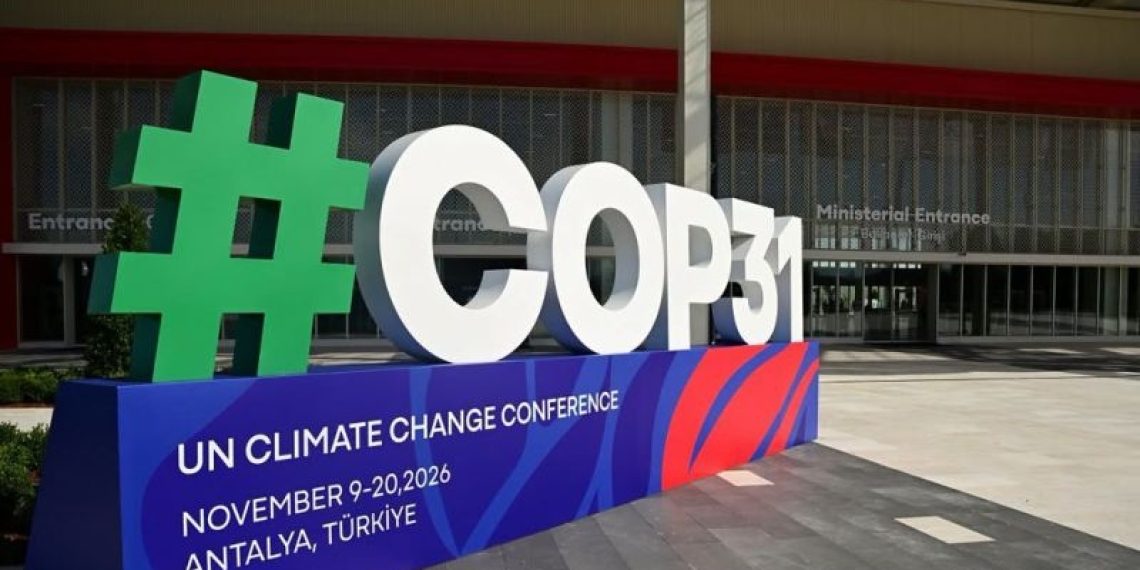
From 9 to 20 November 2026, Antalya, Türkiye hosted the 31st UN Climate Change Conference (COP31). On 17 November, the conference’s Ocean Day, Mercator Ocean International’s Director-General Pierre Bahurel showed how Europe’s digital ocean capabilities serve the OceanEye ambition. Throughout the conference, Special Envoy Dr Karina von Schuckmann also contributed to a series of high-level ocean events.
For Mercator Ocean, the centrepiece was the European Union’s high-level event on OceanEye at the EU Pavilion. There, Director-General Pierre Bahurel showed how Europe’s existing digital ocean capabilities contribute to the OceanEye ambition: the Copernicus Marine Service and the European Digital Twin Ocean, both operated by Mercator Ocean on behalf of the European Commission. On the same day, a new cooperation agreement with India’s INCOIS illustrated how these capabilities connect with operational ocean systems in other parts of the world.
OceanEye: “Without observations, the most advanced digital twin ocean is blind”
Hosted by the European Union, this event focused on the OceanEye International Alliance for the Global Ocean Observing System (GOOS), co-led by the EU and Canada and launched in New York in September during the UN General Assembly.
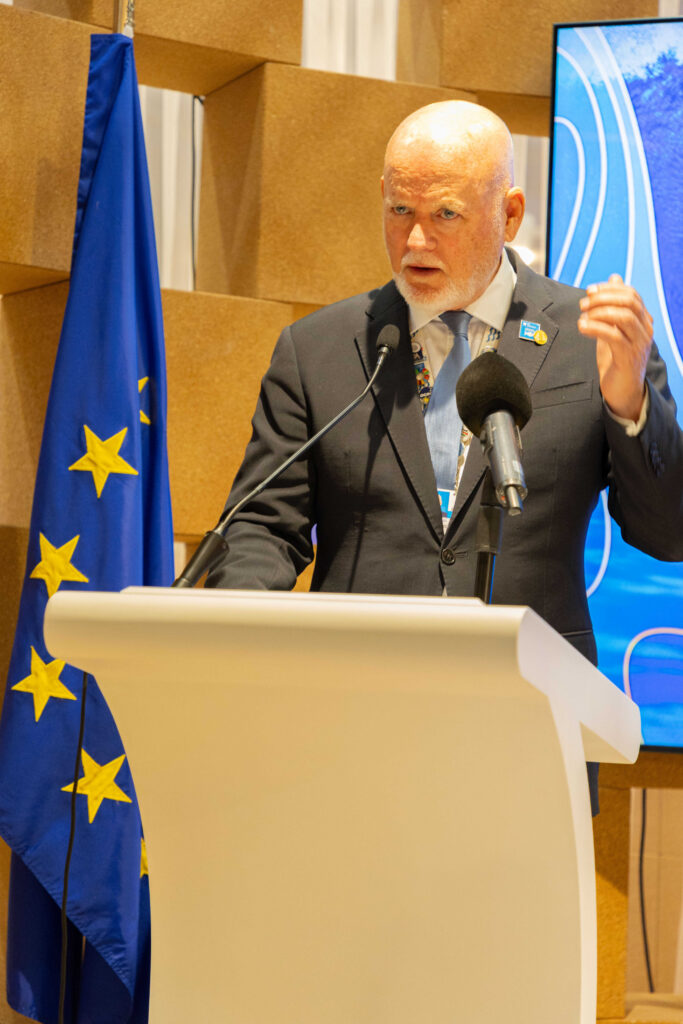
Voices from the European Union, its Member States, the UN system and partner countries in the Americas and Asia came together for the discussion, a reflection of the political and international momentum building around OceanEye. Peter Thomson, the UN Secretary-General’s Special Envoy for the Ocean, summed up what is at stake: “Ocean observation leads to ocean knowledge, which leads directly to ocean action.”
European Commissioner for Fisheries and Oceans Costas Kadis set out why this effort must be shared: “No country can observe the ocean alone. The ocean crosses borders and connects us all. And our response must therefore be collective, coordinated, and global.”
Modelling and interoperable data lakes allowing for ‘what-if’ scenarios
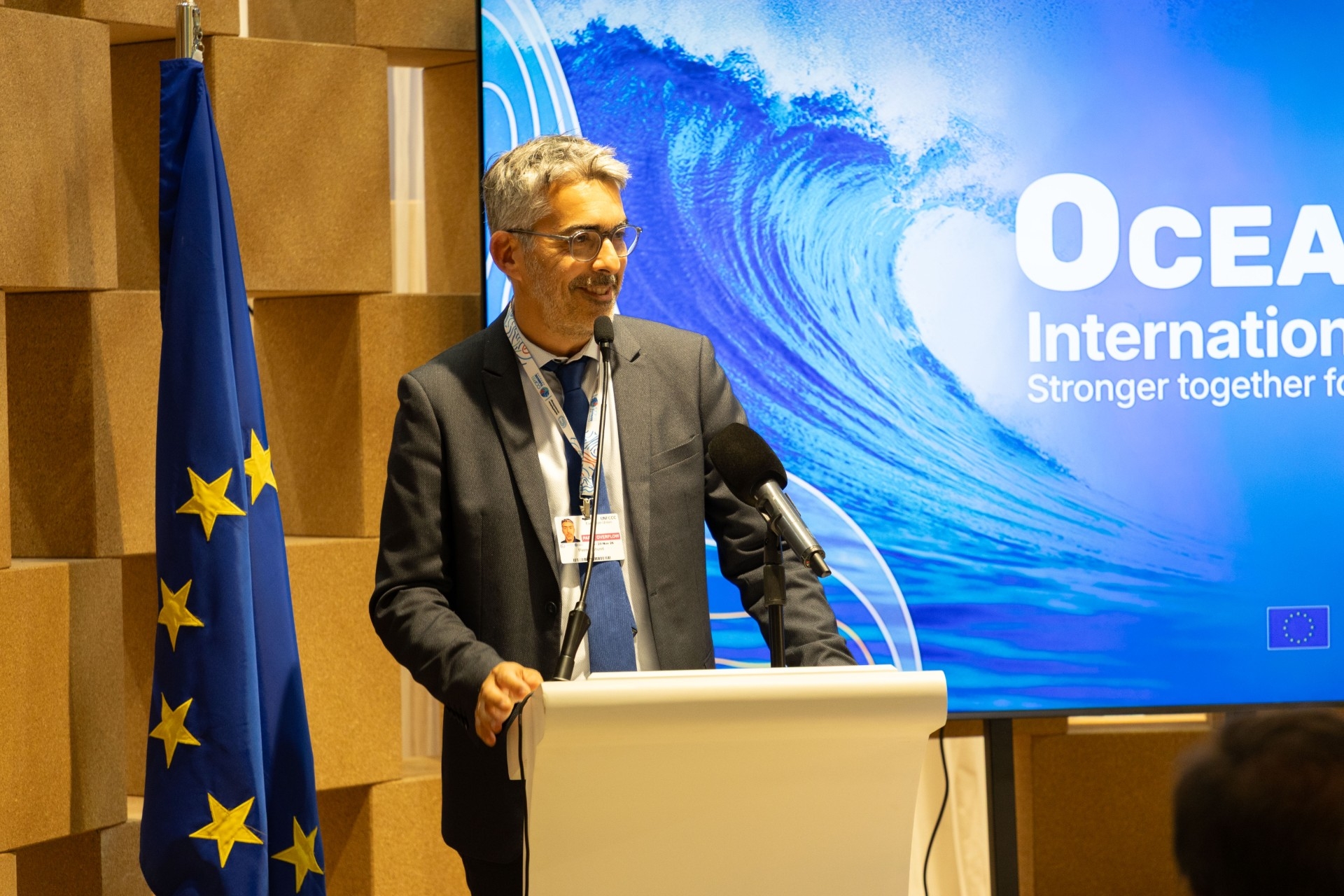
Opening with a concrete illustration, Pierre Bahurel described the scale of the operational systems Mercator Ocean runs for the European Union: a representation of the global ocean through 30 variables, from currents and salinity to CO₂, at around 10 billion grid points updated every two minutes. Through Copernicus Marine and the European Digital Twin Ocean, models and satellite and in situ observations are combined to describe the ocean today, understand past trends, predict its evolution and, increasingly, explore actionable “what-if” scenarios.
Pierre Bahurel was equally clear about what makes this possible:
“Without observations, the most advanced digital twin is blind. This is why GOOS is so critical. This is why OceanEye matters.”
Strategic capability
OceanEye, he explained, goes one step further. Rather than observations, digital systems and services developing separately, the European Commission is building one connected, dynamic operational system with the European Digital Twin Ocean, as President von der Leyen has underlined, at its heart. In such a system, observations, advanced modelling (combining physics and AI), digital twins and services interact dynamically. Services become more responsive. Governments can anticipate and explore options. And, observing networks can be optimised, with investments better targeted and their impact demonstrated. For climate adaptation, ocean protection, maritime safety and security, and the blue economy, this is becoming a strategic capability.
Pierre Bahurel also placed this European effort in its global context. Major ocean prediction systems around the world, built through decades of international cooperation, are embracing the same digital transformation.
“We do not need one single digital twin for the world’s ocean. We need a global digital ocean space, connecting trusted operational capabilities across continents.”
Europe, he added, is bringing its Digital Twin Ocean to deliver against this ambition as an open operational capability, ready to connect, cooperate and grow stronger through collaboration.
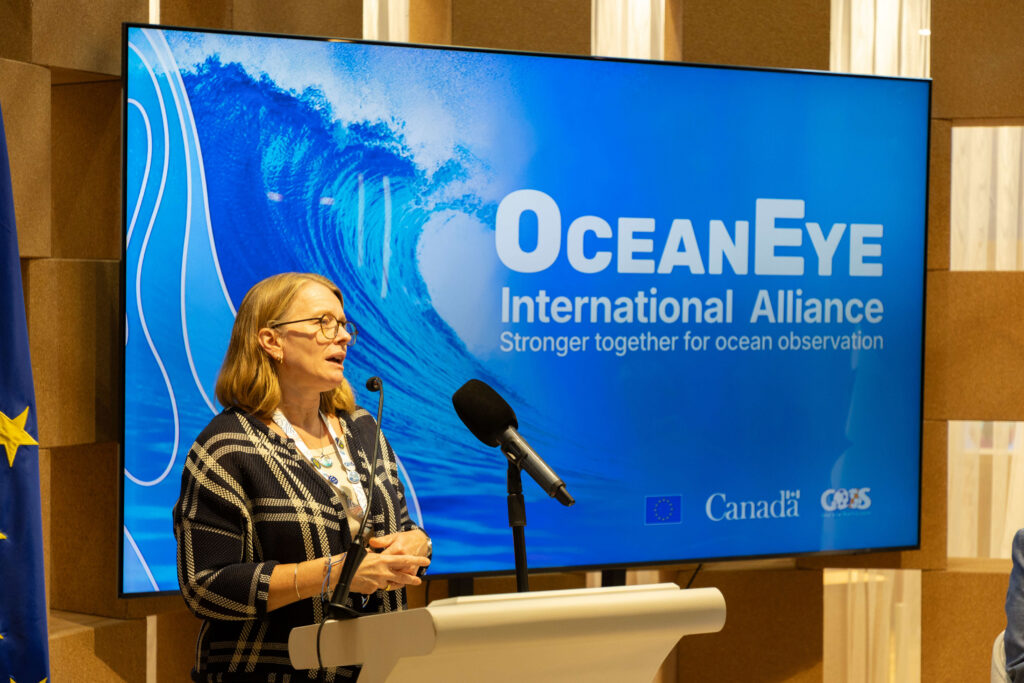
The international dimension was echoed by other speakers. Dr Joanna Post, Director of the Global Ocean Observing System at IOC-UNESCO, warned that without a functioning in situ ocean observing system, countries are “running blind” in understanding the climate system. “Ocean observing and GOOS must be recognized as critical infrastructure for policy, for people, and for planet,” she said.
Ko Barrett, Deputy Secretary-General of the World Meteorological Organization (WMO), reminded the audience of the importance of ocean information for essential weather and climate services, noting: “if you value your weather forecast, thank an oceanographer.”
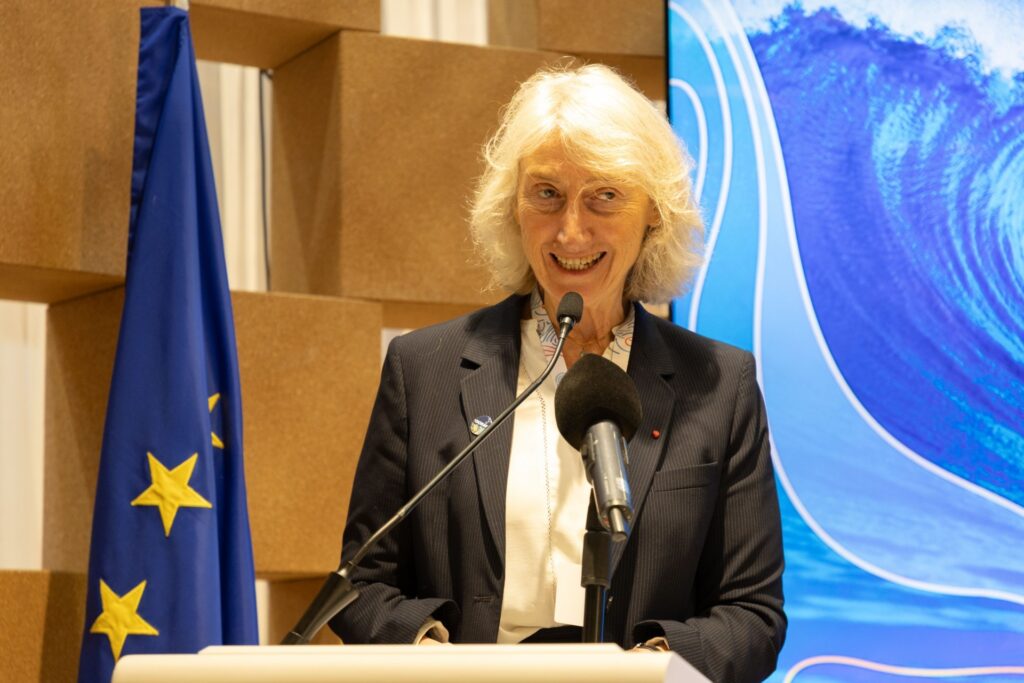
Speaking for Canada, co-lead of the OceanEye International Alliance, Canada’s Ocean Envoy Diana Fox Carney saw in the day’s announcements “an encouraging recognition that ocean observation is not just a scientific endeavour, but a foundation for responding to many of the challenges before us.” She also looked ahead to the Our Ocean Conference she will chair in Halifax in May 2027.
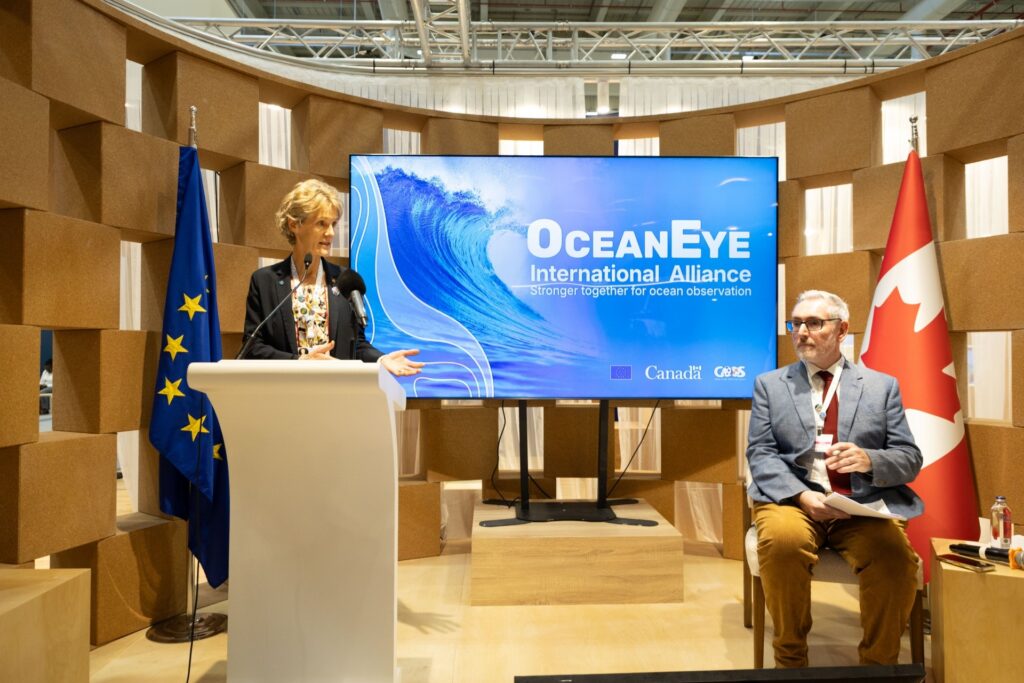
Catherine Chabaud, French Minister Delegate for the Sea and Fisheries, reaffirmed France’s strong support for the OceanEye International Alliance and highlighted the role of Mercator Ocean International, “a key European and French-based operator of the Copernicus Marine Service, and a major contributor to the European digital twin ocean.” Its transformation into an intergovernmental organisation, she said, is “essential to strengthen its international goals, and ensure the long-term development of operational oceanography and forecasting.”
Mercator Ocean and INCOIS sign a cooperation agreement
On the same day, in the presence of European Commissioner for Fisheries and Oceans Costas Kadis, Mercator Ocean and India’s Indian National Centre for Ocean Information Services (INCOIS) signed a new cooperation agreement. Building on decades of shared scientific work and deep mutual trust, the agreement deepens cooperation across science, data and systems, connecting Europe’s Digital Twin Ocean capabilities with India’s ocean prediction infrastructure. As Pierre Bahurel put it, the aim is “not to make them identical, but to make each of them stronger through cooperation.”
For INCOIS Director Dr T. M. Balakrishnan Nair, the benefits reach well beyond research: “This is not just about ocean science, but about translating science for the benefit of the society, the industry and the coastal communities.” The collaboration is also a direct contribution to the mission of the OceanEye International Alliance: connecting trusted national and regional digital ocean systems across borders.
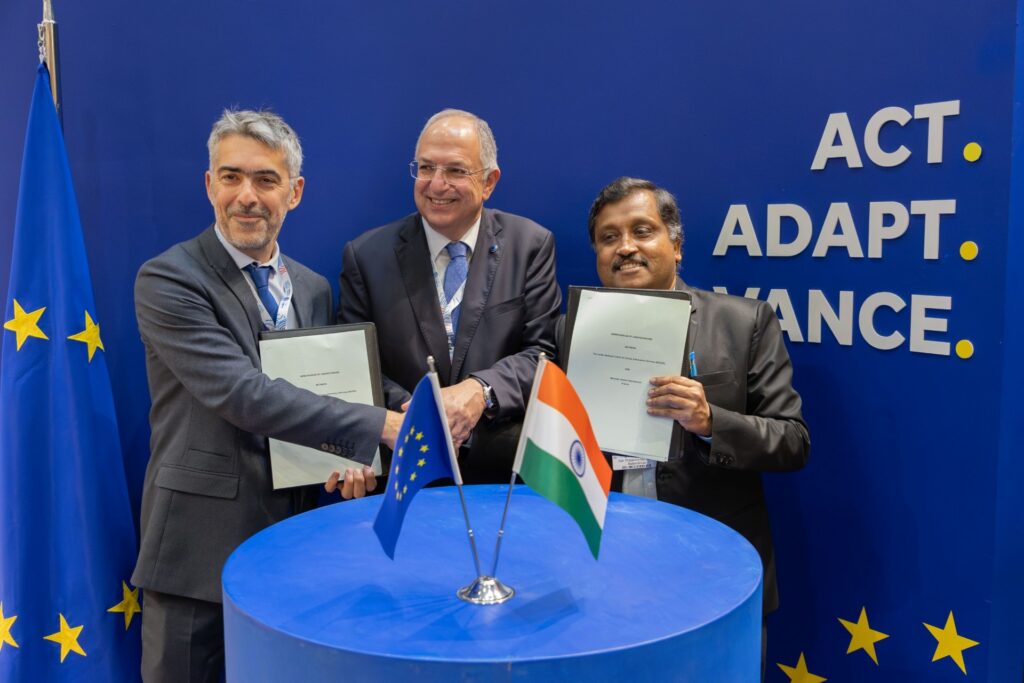
©European Union
During his remarks, Dr Nair announced: “I’m very happy to declare that India is officially joining the OceanEye initiative.”
The ocean is our sentinel for planetary warming
Recognised internationally for her leadership in ocean climate monitoring and as a lead author of the IPCC’s Seventh Assessment Report, Dr Karina von Schuckmann represented Mercator Ocean as its Special Envoy for COP31. Alongside Pierre Bahurel’s interventions, she carried the latest ocean science into discussions on climate adaptation, observation and policy.
About COP, Karina said, “The ocean is central for the planet and humanity, and I hope that this global dialogue will ensure a full recognition of the ocean in this international policy context. A global climate dialogue that fails to fully recognise the ocean’s central role cannot deliver a truly comprehensive and effective response to the climate crisis.”
11 November – “Fighting Climate-Induced Ecosystem Decline with Innovation and Technology”
Blue Zone, Side Event Room 3 (Zerzevan), 15:00–16:30 — WIPO GREEN side event marking the launch of the World Intellectual Property Organization’s (WIPO) Green Technology Book
Karina presented how the European Digital Twin Ocean will enhance ocean forecasting capabilities and enable the exploration of “what if” scenarios, supporting climate change adaptation, mitigation and better-informed decision-making. The event launched the fifth edition of WIPO’s Green Technology Book, Solutions for Restoring Climate-Impacted Ecosystems, which highlights how innovation and technology can help monitor, restore and strengthen the resilience of ecosystems affected by climate change. EDITO, the European Digital Twin Ocean platform, is featured in the book.
17 November – “From Ocean Data to Climate Action: Digital Twins for Resilient Blue Economies”
Blue Zone, UN Türkiye Pavilion – hosted by the METU Climate Change and Sustainable Development Centre (ODTÜ İklim)
Among many other high-level events, Karina joined a high-level discussion on how ocean data and digital twin technologies can support climate action and resilient blue economies. Moderated by Prof. Dr Ahmet Yozgatlıgil, Rector of Middle East Technical University (METU), the panel also brought together Prof. Dr Johan Rockström, Director of the Potsdam Institute for Climate Impact Research; Dr Joanna Post, IOC-UNESCO; Fatih Turan, Director General of Environmental Management at Türkiye’s Ministry of Environment, Urbanisation and Climate Change; and Prof. Dr Barış Salihoglu, Director of METU CLIMATE and the METU Institute of Marine Sciences.
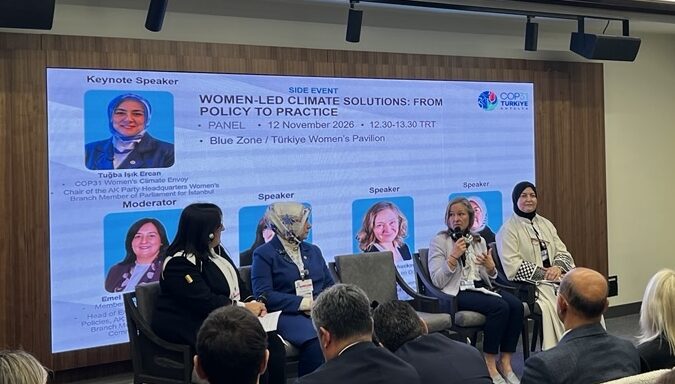
Karina underlined how international cooperation is key to connecting digital ocean initiatives worldwide. It fosters interoperability and enables countries and regions to develop solutions that meet their own needs and capacities. The goal is to build a global network of connected digital ocean systems. Mercator Ocean continues to work closely with national oceanographic institutions globally, sharing data, models and best practice to advance ocean intelligence, science and capabilities.
Looking ahead
What was set out in Antalya now moves into practice. The new INCOIS and Mercator Ocean cooperation agreement is the next step in putting this work into action by connecting European and Indian Ocean capabilities in operational oceanography and digital twinning. India’s pledge to double its ocean observing network in the Indian Ocean and advance the development of digital twins will help show where those new observations add the most value.
With the OceanEye International Alliance growing and its digital foundations already operational through Copernicus Marine and EDITO, Europe is building what Pierre Bahurel called a shared digital ocean space, one where we “turn observations into intelligence, intelligence into action, and cooperation into trust.”