

Press Release, Toulouse, France, 4 September 2025 – August 2025 saw globally elevated Sea Surface Temperatures (SST), ranking as the 3rd warmest August ever recorded, according to the latest ocean temperature bulletin released by Mercator Ocean International, operator of the EU’s Copernicus Marine Service. This comprehensive report analyses ocean temperature trends, changes and updates at global and regional levels, providing critical insights to the scientific, environmental, and climate monitoring communities worldwide.
In August 2025, marine heatwaves have markedly been present in the eastern north Pacific during August 2025 showing a continued intensification in the region since the last 5 years at this time of the year.
Other parts such as the Mediterranean and North Atlantic have shown some relief in August in terms of marine heatwaves following the extreme anomalies observed earlier this summer and results from atmospheric and oceanic processes such as wind burst or ocean vertical mixing.
“Processes such as upwelling, where cooler, deeper waters are brought to the surface can locally moderate surface temperatures but does not offset the broader reality of long–term ocean warming than extends beyond just the surface and affects the full water column. It is important to note that despite a lower occurrence of extremes, these regions remain however warmer at the surface than the long-term average.” said Simon van Gennip, oceanographer at Mercator Ocean.
Sea Surface Temperature Anomalies
Global ocean
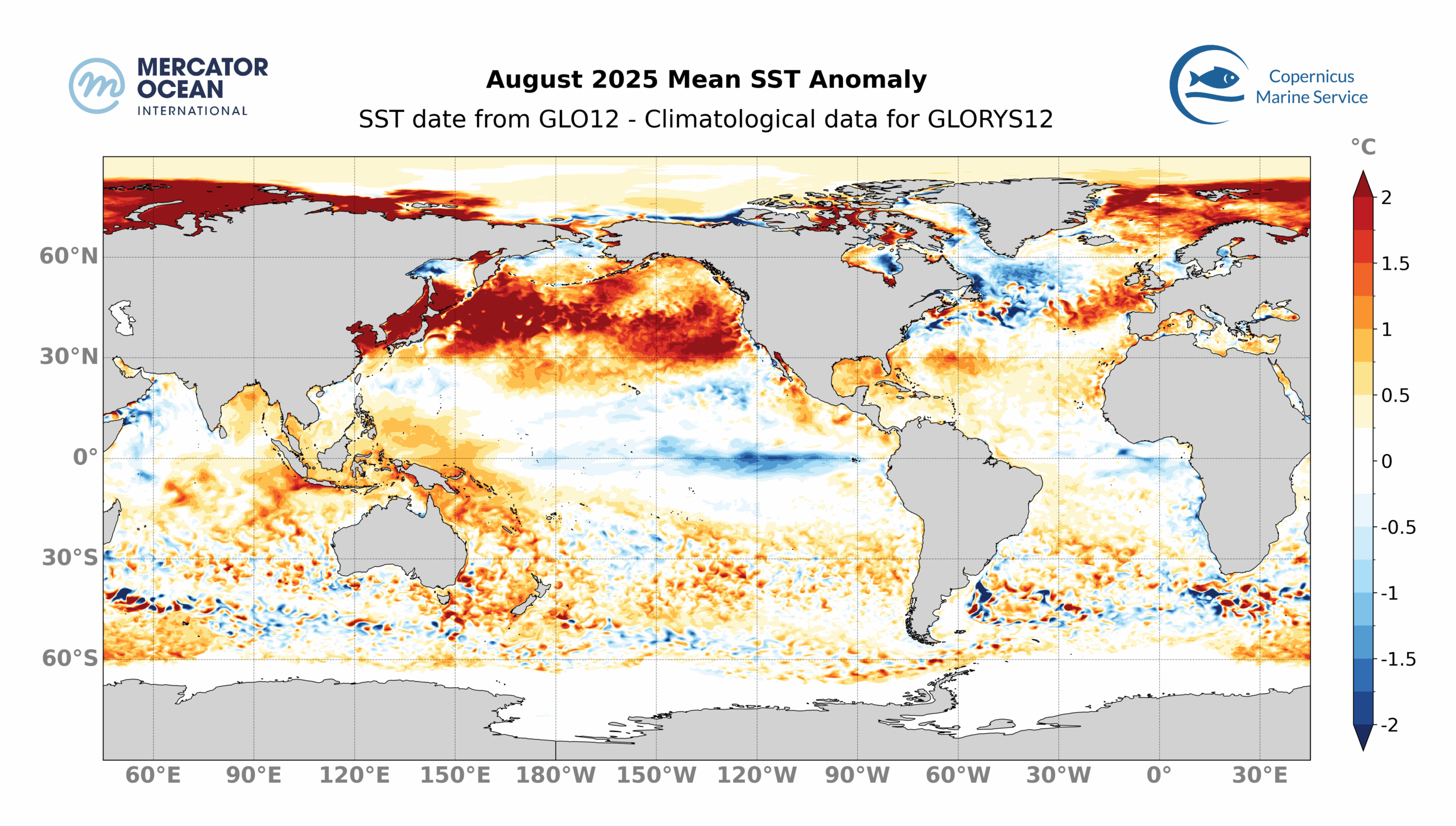
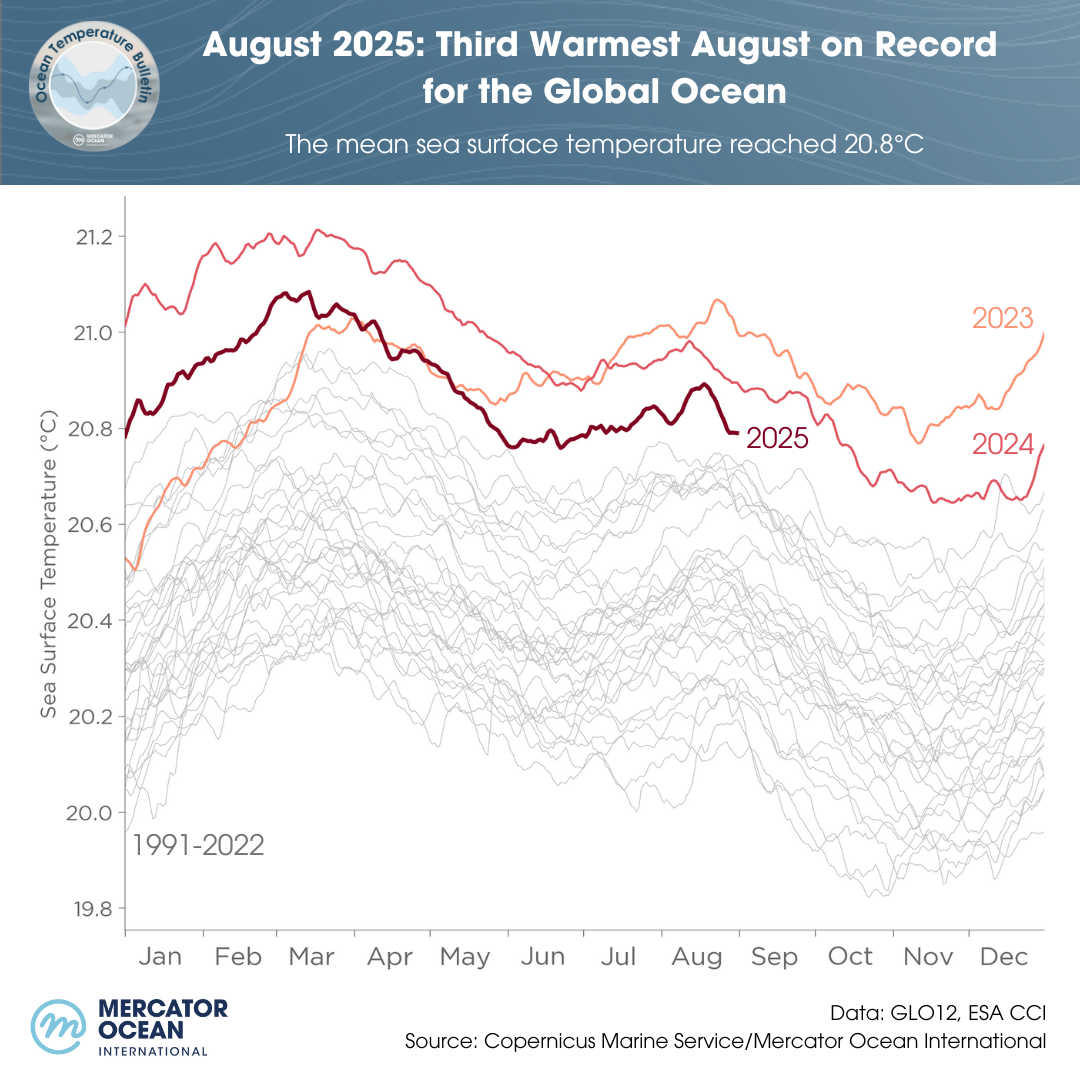
- August 2025 was the 3rd warmest August on record, with a mean Sea Surface Temperature (SST) of 20.85 ± 0.07 °C — surpassed only by 2024 (20.94 ± 0.05 °C) and 2023 (21.01 ± 0.06 °C).
August 2025 mean SSTs were above average for 70% of the global ocean (between 60°S and 60°N), with 12% exceeding the average by at least 1°C
Europe
- For the North Atlantic, August 2025 was the 6th warmest August with a mean SST of 24.89°C (± 0.08).
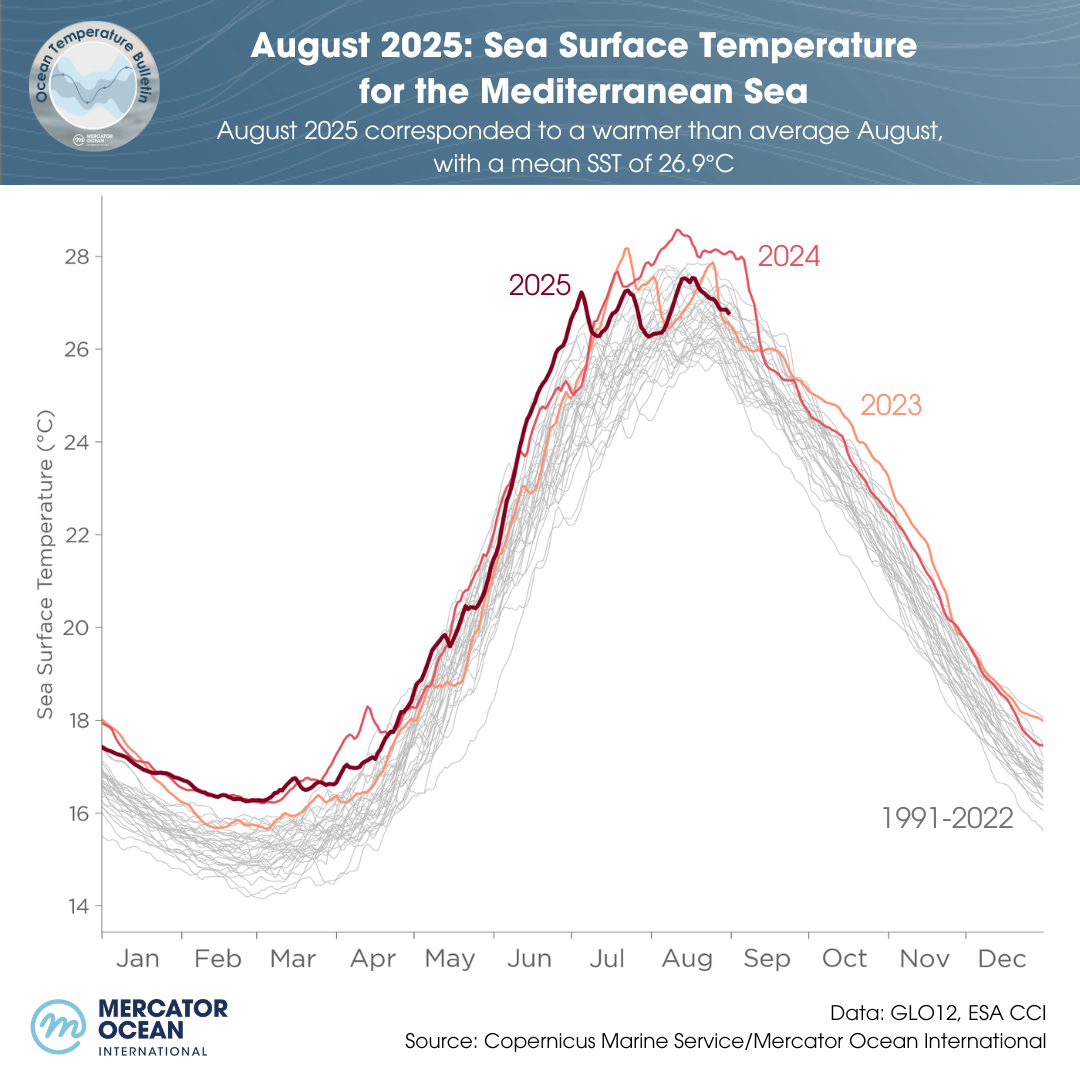
- 77% of the Mediterranean Sea showed above-average SSTs, but unlike June and July, most of the basin remained near normal temperature, with only 8% of the the basin with mean SSTs larger than 1 °C above the long term average (against 67% and 64% for june and july respectively).
Marine Heatwaves (MHWs)
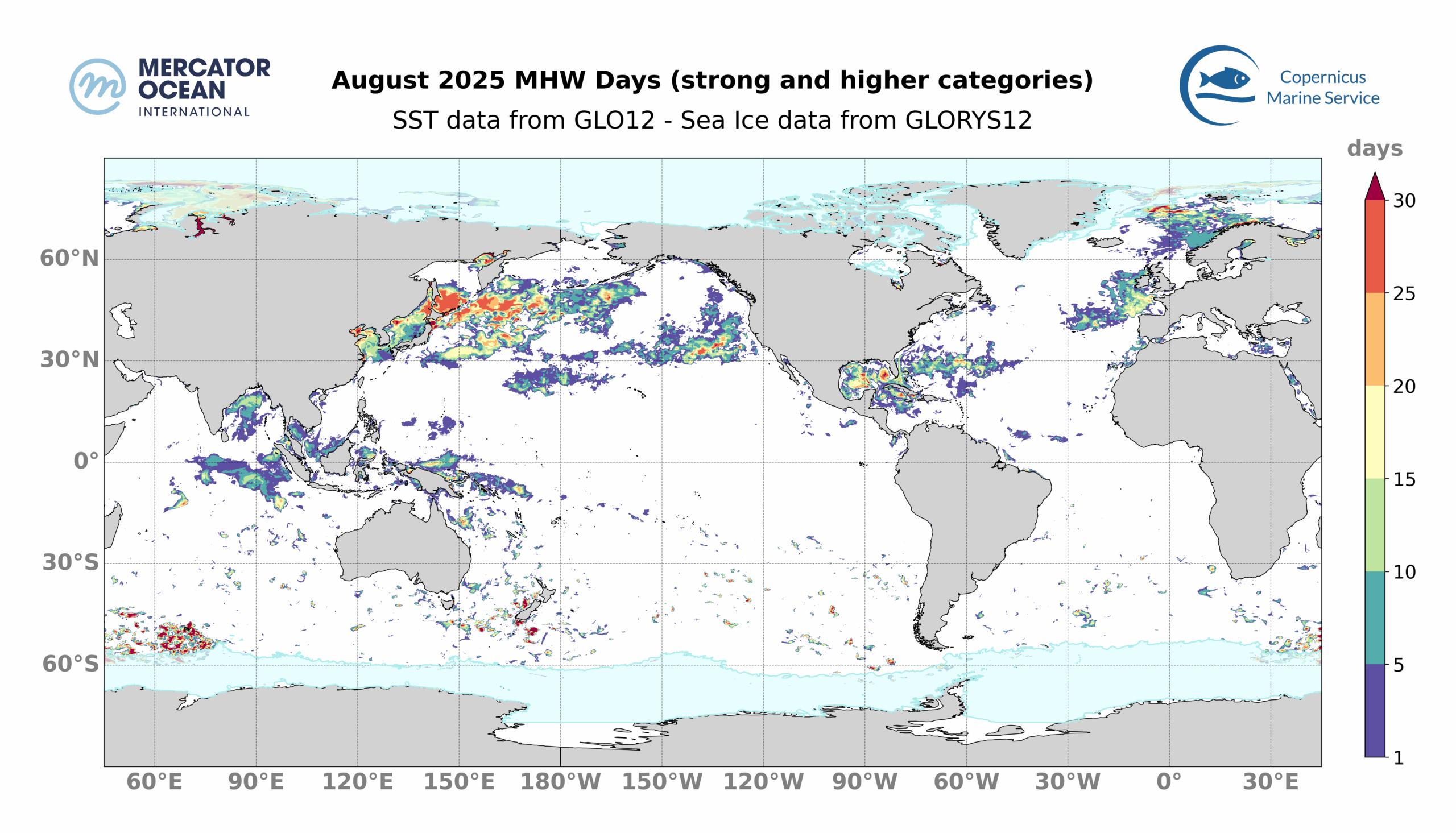
Global Ocean: 13% of the surface of the ocean was impacted by strong, or higher, MHW conditions for at least 1 day during August 2025.
- It was the 4th widest extent after 2015, 2024 and 2023 (15%, 23% and 25%, respectively).
- On a global scale, August 2025 is the 5th most extreme August month in terms of Marine Heatwaves after 2015, 2024, 1997 and 2023.
- The eastern North Pacific Ocean, the northern and western European region and the Gulf of Mexico were particularly impacted with large parts of those regions in strong or higher MHW conditions for at least half of the month.
Mediterranean Sea: Mediterranean Sea: the total MHW surface increased from 8% to 16% of the basin, with a peak at 29% by mid-August.
- In the Mediterranean Sea, August 2025 was not an extreme month for MHWs (in terms of surface, intensity and duration) with events remaining local and mostly of moderate level, especially when compared with Augusts of recent years.
North Atlantic: the total MHW surface fluctuated between 15% and 23% during the month of August 2025 with events consisting mostly of moderate and strong categories.
- 18% of the North Atlantic (between 0°N and 60°N) was impacted by strong, or higher, Marine Heatwave conditions for at least 1 day, which is the 3rd widest extent after 2024 and 2023 (45% and 61%, respectively).
About Mercator Ocean & Copernicus Marine

Mercator Ocean International
Mercator Ocean International is a world leader in digital oceanography, providing trusted ocean analysis, forecasting, and intelligence to advance science, policy, and societal needs. Founded in 1995 and headquartered in Toulouse, France, the organisation employs 120 staff and is led by Director General Pierre Bahurel. As a European organization registered in France, Mercator Ocean International operates the Copernicus Marine Service on behalf of the European Union and is recognised as a global ocean prediction centre. Currently transforming into an intergovernmental organization, it also co-develops the European Digital Twin of the Ocean with European partners and hosts many EU blue diplomacy initiatives including the G7 Future of the Seas and Oceans Initiative Coordination Centre. More information on https://www.mercator-ocean.eu/