

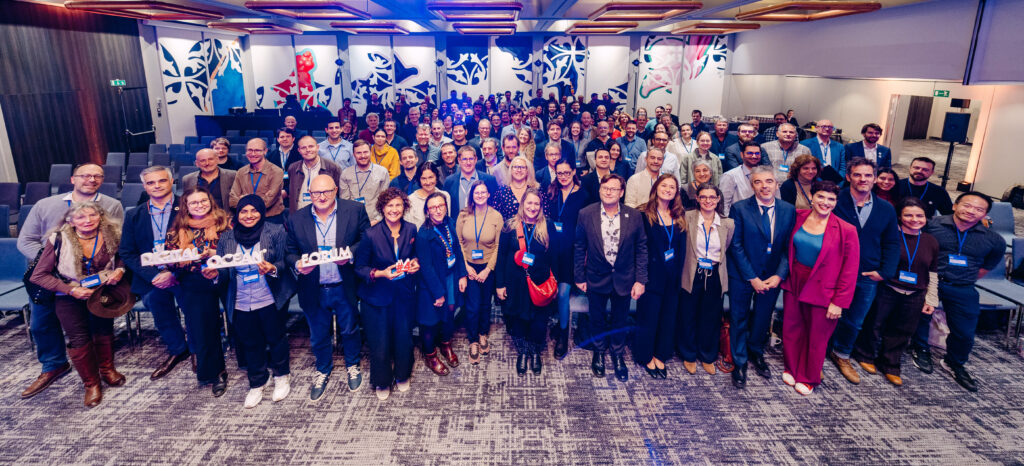
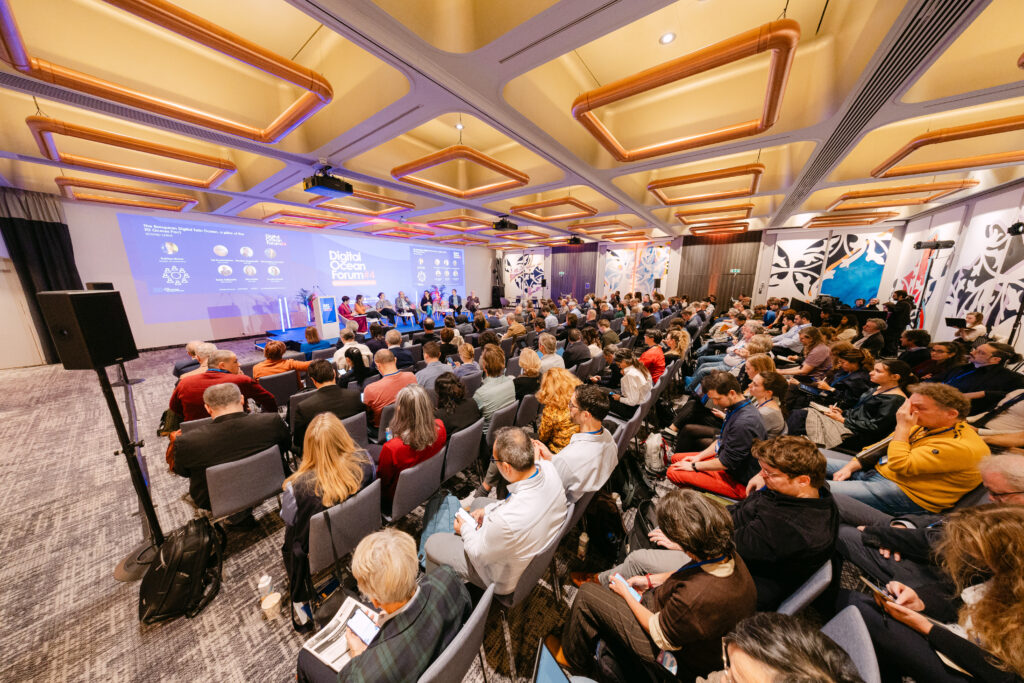
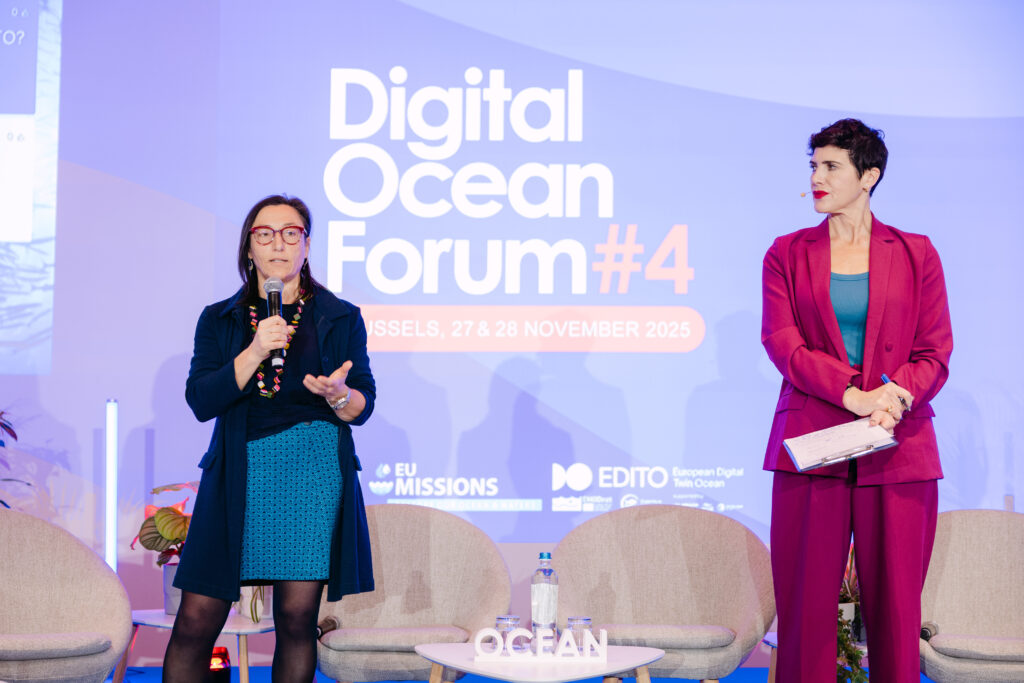
On 27 and 28 November, the European Ocean community gathered in Brussels at the Digital Ocean Forum 2025 to mark the launch of the second phase in the development of the European Digital Twin Ocean, EDITO2 (2025-2028). Alongside European Commission representatives and co-development partners, Mercator Ocean participated in the many panel discussions and breakout sessions organised across the two days, delivering presentations and responding to the feedback of early-users and curious participants.
A truly collaborative effort
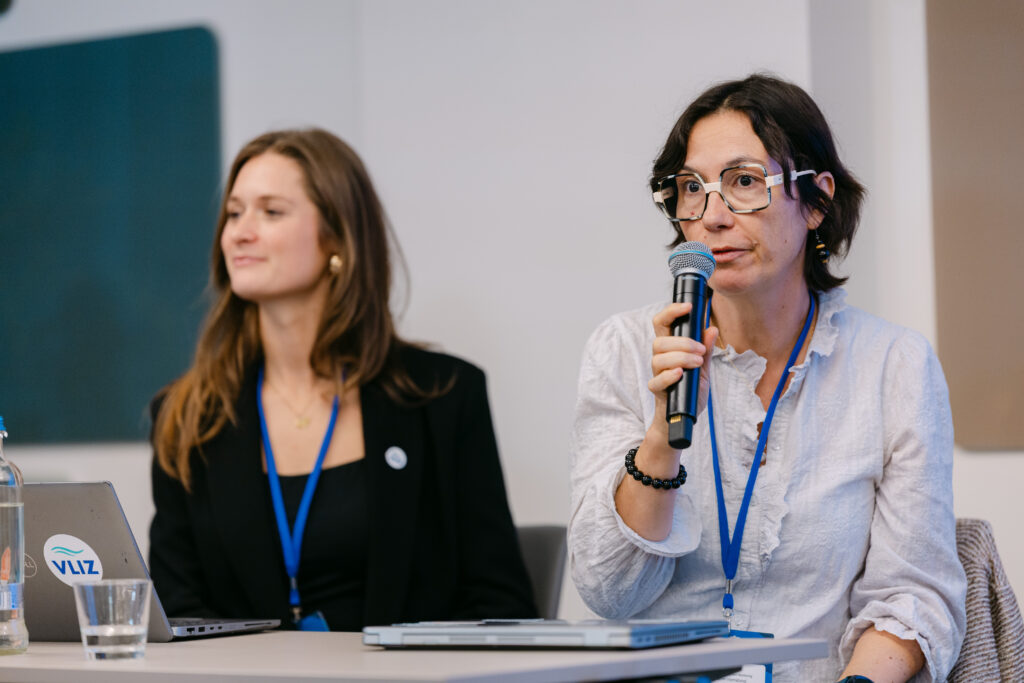
“Co-design” was the concept that resonated loud and wide at the nhow Hotel spaces in Brussels, enriched by the presence of researchers, institutions, innovators and policymakers, who came together to discuss the milestones achieved , exchange feedback and look together at the future timeline guiding the development of the European Digital Twin Ocean.
Mercator Ocean International was represented by 12 speakers across the programme who explored key dimensions of the European Digital Twin Ocean.
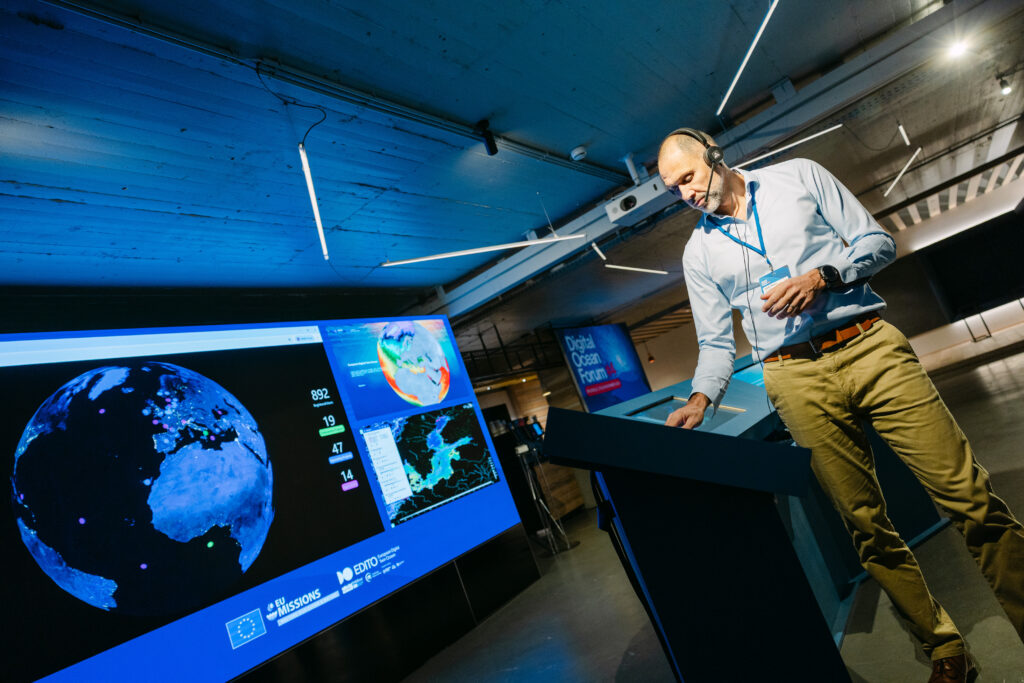
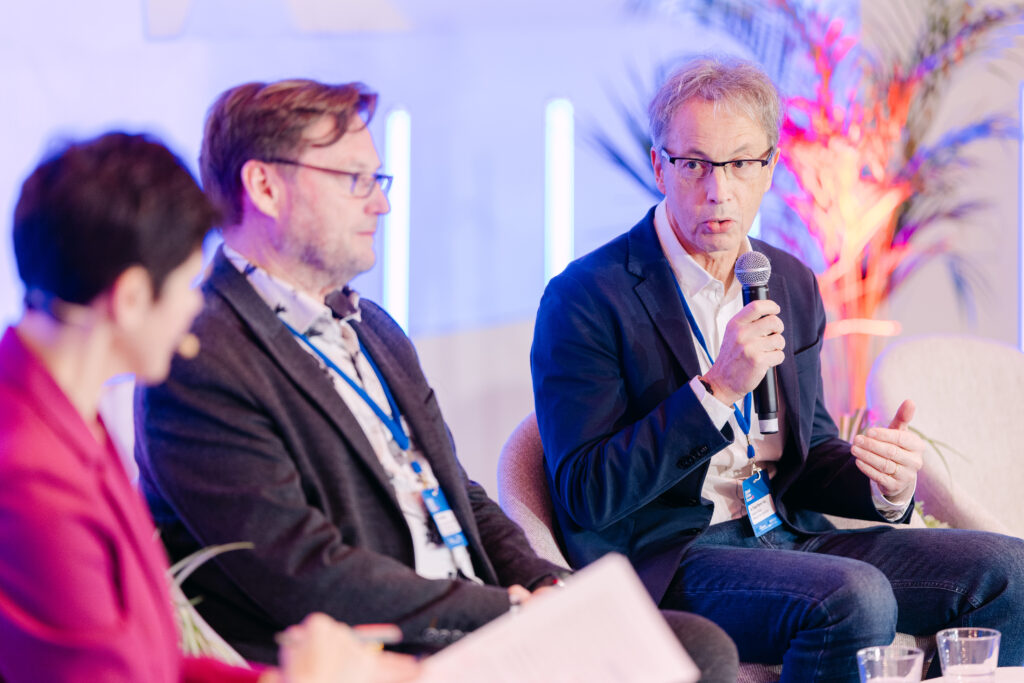
The event opened with keynote speeches from Kestutis Sadauskas, Deputy Director-General at DG MARE, James Morrison, Director for a Healthy Planet at DG RTD, and Elisabeth Hamdouch, Deputy Head of Unit for Copernicus (DG DEFIS). Building on these high-level perspectives, the subsequent presentations provided a comprehensive view of the European Digital Twin Ocean’s evolution. They demonstrated how the DTO platform can support real-world decision-making thanks to the integration of Copernicus Marine and EMODnet data through a high-level demonstration of the platform, while also introducing the EDITO2 phase and outlining the technological roadmap that will guide its next steps.
A roundtable featuring policy officers from six different European Commission Directorates-General further expanded the discussion, examining the transversal policy dimension of EDITO and its relevance to broader initiatives such as the EU Ocean Pact and the Global Gateway initiative. Participants were then offered hands-on guidance on navigating the EDITO Platform, along with insights into upcoming engagement opportunities for Europe’s marine community.
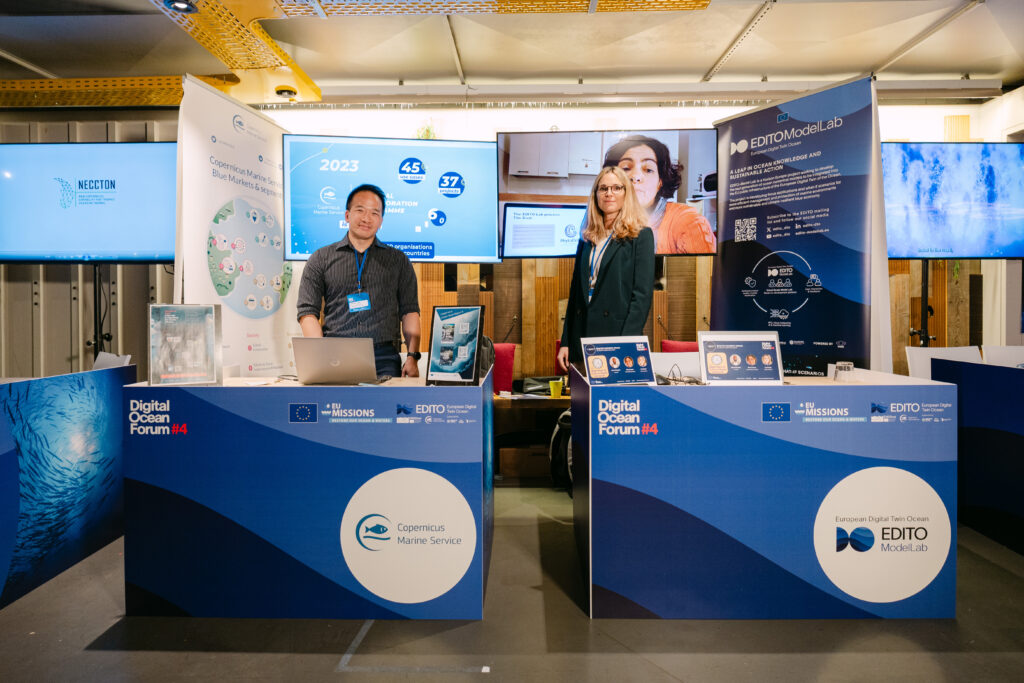
The event space also featured a rich exhibition area showcasing the organisations and initiatives powering the European Digital Twin Ocean with their data, expertise and knowledge. A wide range of Horizon Europe projects driving ocean research and digital twin development were represented, including ACCIBERG (NERSC), BioDTOFlow, NECCTON, CoCliCo, Blue-Cloud 2026, Iliad – Digital Twins of the Ocean, EditoModelLab, Ideation, and the SEAtwins Cluster, alongside the European Tracking Network and the Sustainable Blue Economy Partnership. In addition, six funded projects demonstrating the potential of Digital Twins for the Ocean hosted dedicated booths: DTO4OWE, DTOTrack, ROMEO, CORRASBlue, AQUASPECT, and DIVE.
New opportunities unfold with the launch of EDITO2
With EDITO2, a wide range of new opportunities is emerging. This new phase brings a €14 million investment, fresh funding schemes, deeper cooperation with existing initiatives, and a suite of new technological advancements.
With EDITO2 come new datasets, advanced tools, and enhanced computing power. At the same time, engagement with Horizon Europe initiatives and national Digital Twin Ocean (DTO) projects, including NECCTON, will foster greater collaboration and interoperability. Complementing these efforts, €2 million in grants has been allocated to integrate community-driven data, models, and applications into the EDITO platform, strengthening the foundation for a shared, open, and innovative digital ocean environment.
From coastal risks and marine biodiversity, to pollution reduction and enhanced observation systems, the European Digital Twin Ocean is already supporting real-world decision-making through scenario-based simulations: What if a coastal city faces increased storm surge?; or what if pollution sources shift under changing currents? Current simulations already available on the platform include the Turtle Drift Tracker, Coastal Risk Projections and a Plastic Pollution Tracker, but the platform is set to grow in quantity and quality as the European community comes together to co-design and contribute to future developments.
The Digital Ocean Forum 2025 was organized by the European Commission’s Directorate-General for Research and Innovation (DG RTD), Directorate-General for Maritime Affairs and Fisheries (DG MARE), Directorate-General for Defence Industry and Space (DG DEFIS) and the Directorate-General for International Partnerships (DG INTPA), with Mercator Ocean International, Flanders Marine Institute and SeaScape Belgium as the implementation partners in the frame of the EDITO project.