


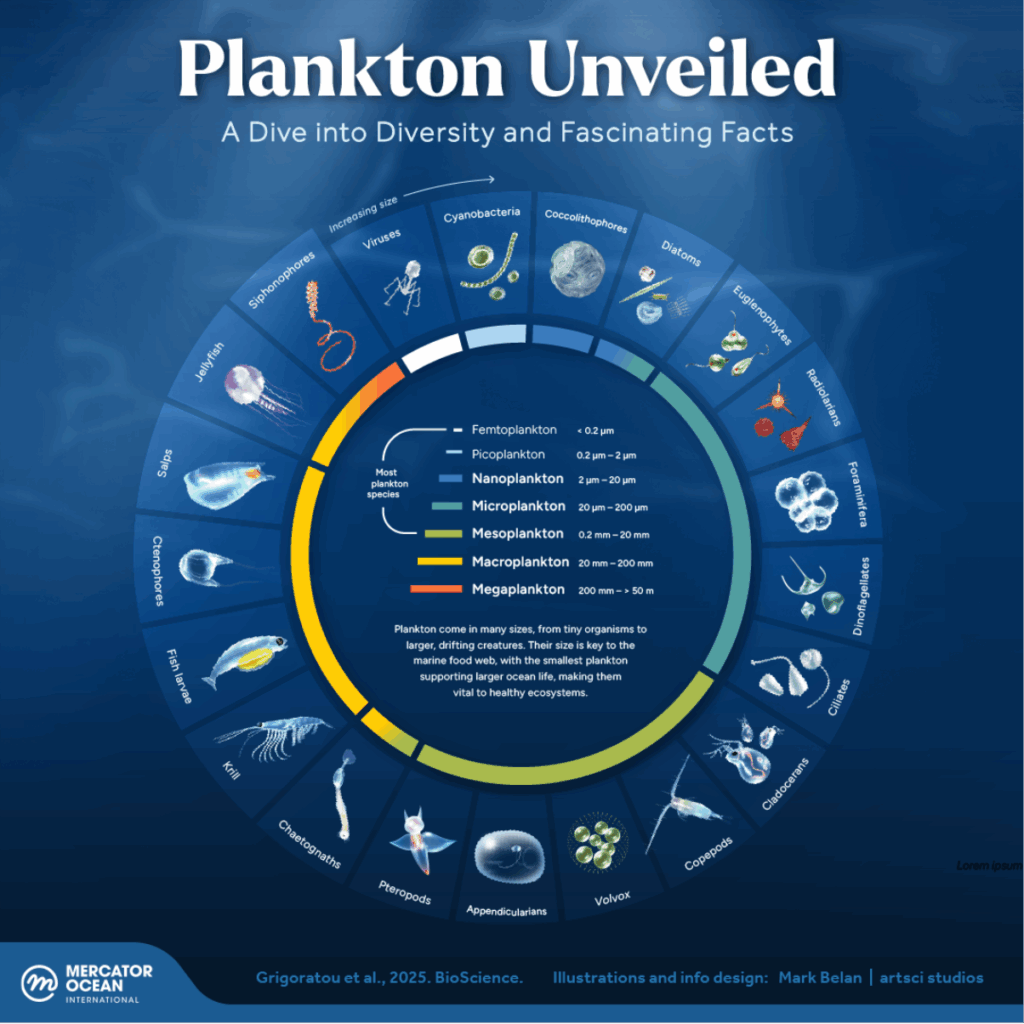
Figure 1. Illustrations of the different types of plankton.
Plankton Unveiled
Plankton may be tiny and often invisible to the naked eye, but their impact on our planet and humanity is immeasurable. A new paper, coordinated by Dr. Maria Grigoratou and Lillian Diarra from Mercator Ocean International, and authored by a global team of 47 experts from 21 countries, reveals the critical roles of these microscopic organisms across ecological, climatic, economic, and cultural spheres.
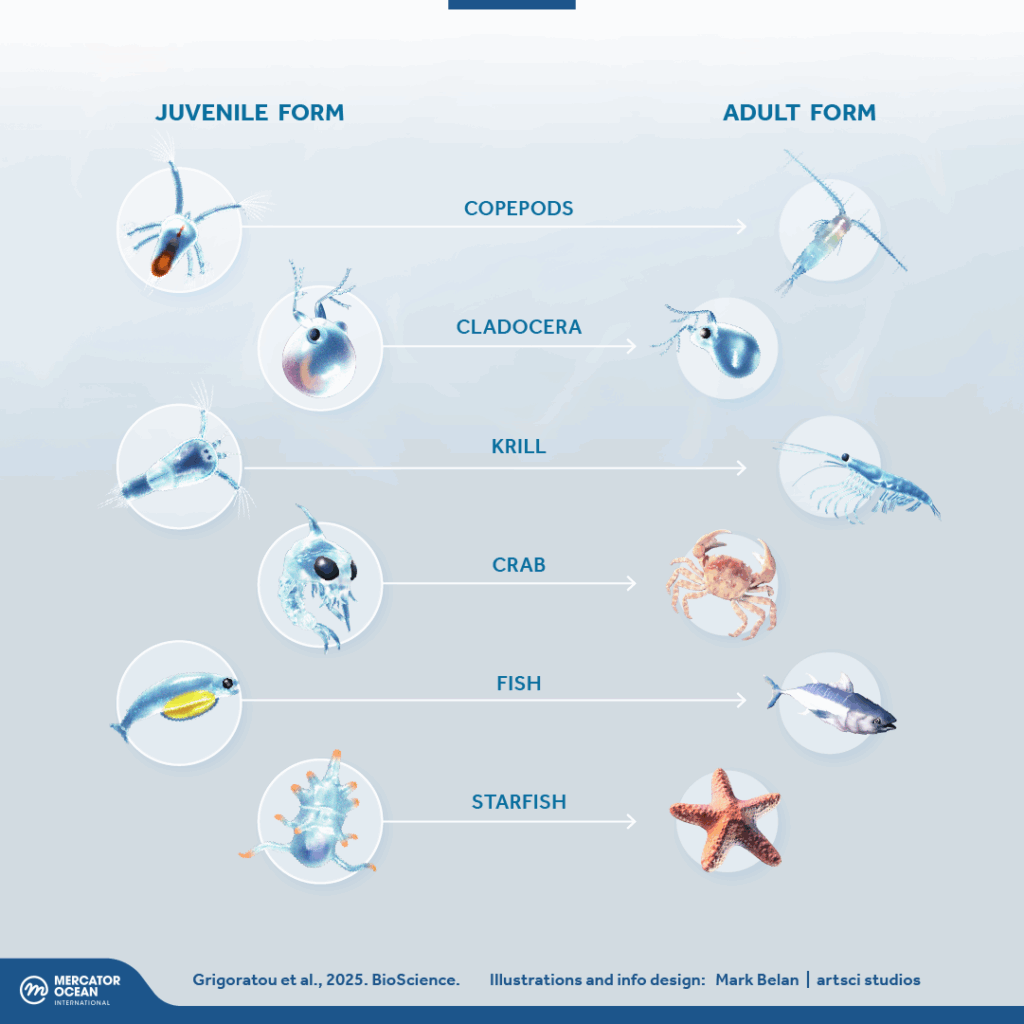
Figure 2. Full life cycle of plankton.
This comprehensive study explores the value of plankton through six distinct themes of human interest: Biogeochemistry, Ecology, Climate, Evolution of Science, Economy, Culture, and Recreation and Well-being, presented for the first time within the innovative Life Framework of Values. This conceptual model, adopted by the Intergovernmental Science-Policy Platform on Biodiversity and Ecosystem Services (IPBES), examines how people live with, from, in, and as nature, highlighting the complex interplay between natural systems and human well-being and decision-making. Alongside these themes, the paper features visually engaging infographics designed by scientific illustrator Mark Belan and reveals how plankton sustain aquatic ecosystems, influence climate regulation, inspire scientific breakthroughs, and contribute broadly to human well-being and economies worldwide.
This article not only deepens our understanding of plankton’s diverse functions but also highlights the urgency of safeguarding these foundational organisms amid global environmental change. Through this collaborative, interdisciplinary effort, Mercator Ocean International and its partners offer an essential resource for scientists, policymakers, and the public alike, inviting us all to appreciate and protect the unseen yet vital world of plankton.
From biogeochemistry to culture: how plankton shape our lives on Earth
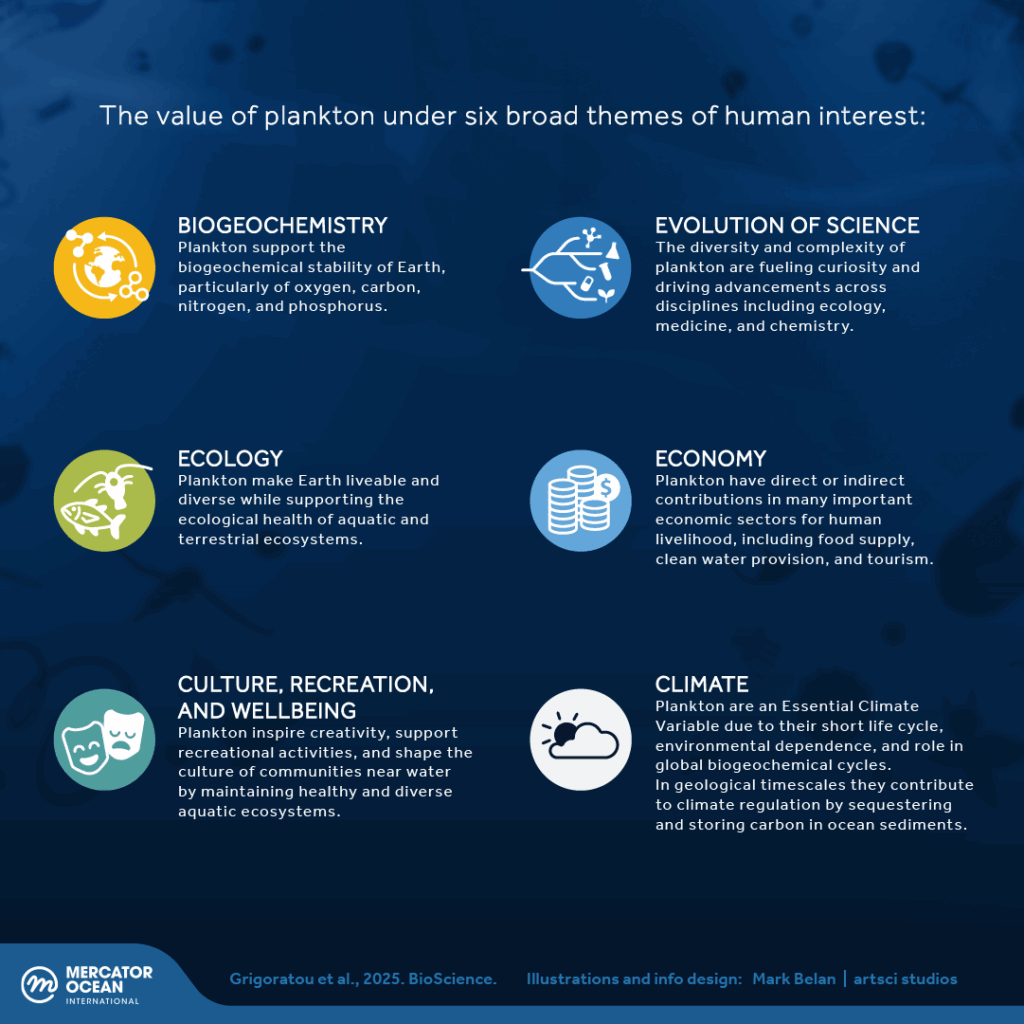
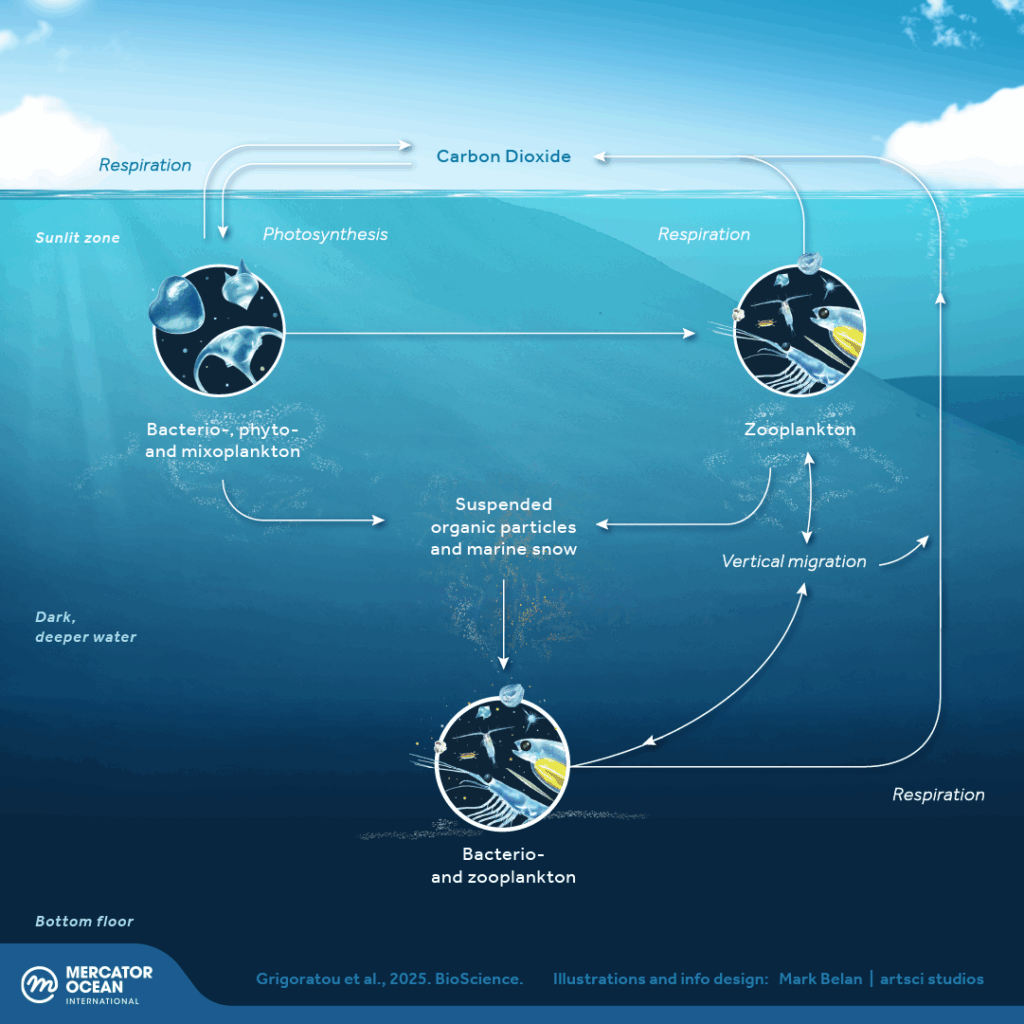
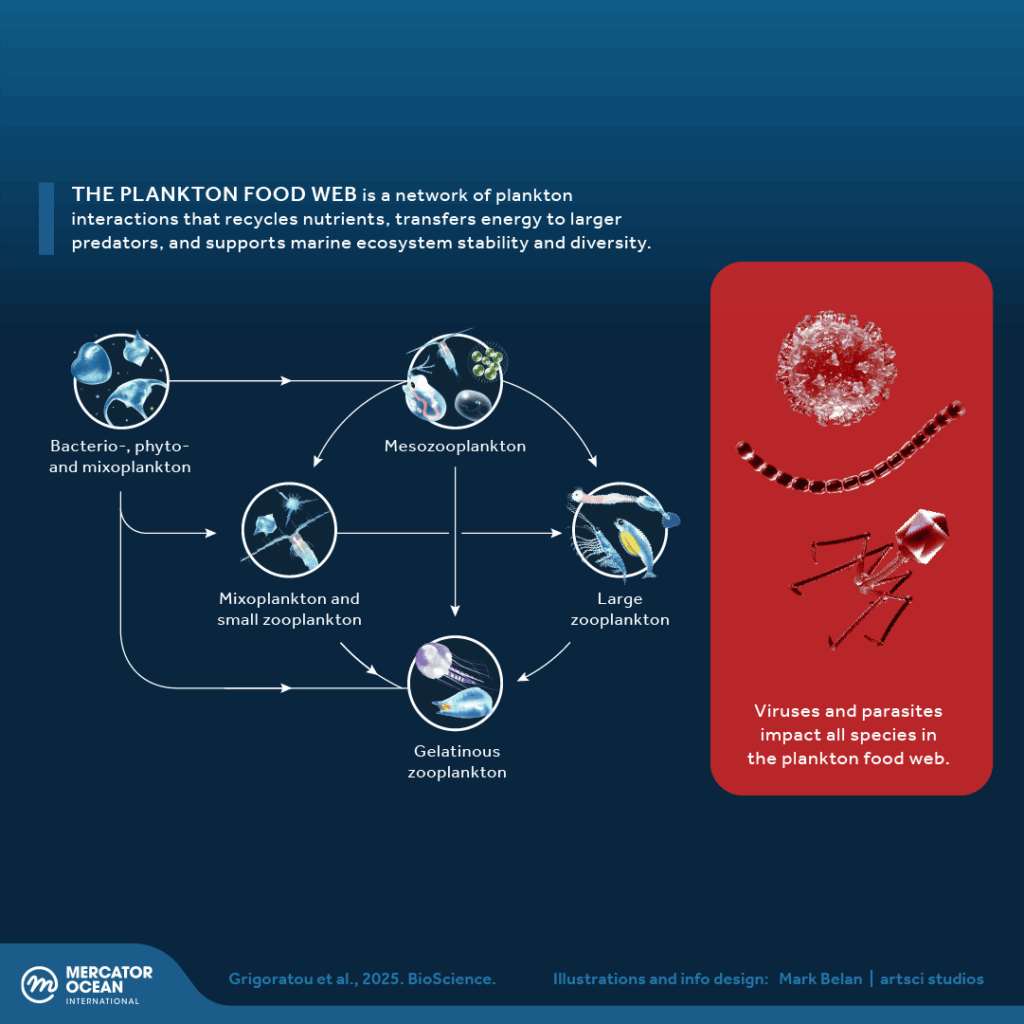
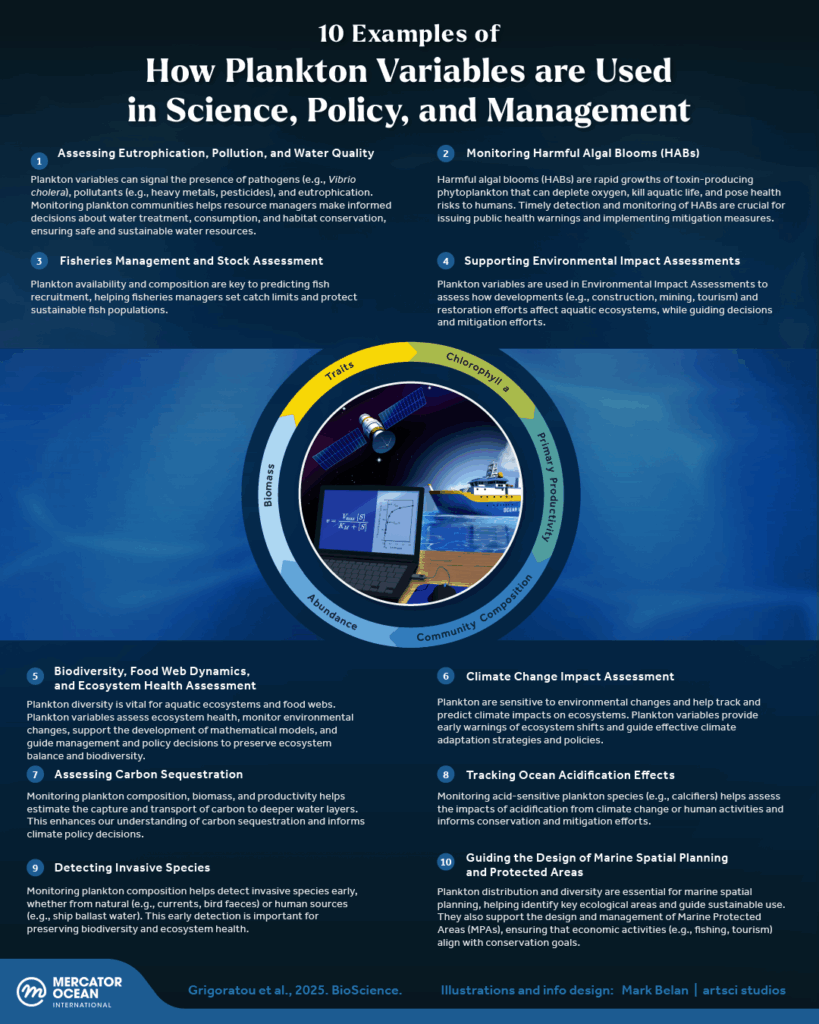
Figure 3. A gallery of information reflecting the value of Plankton.
Thousands of species of plankton populating our planet play countless functions, indirectly providing benefits to human societies. Through natural processes like nutrient transfers and photosynthesis, plankton represent the building blocks of aquatic ecosystems, sustaining life underwater.
Plankton depend heavily on the physical conditions of their environment, especially temperature, and are therefore highly responsive to climate change. Because of their fast life cycles and important role in the global carbon cycle, they are officially recognised as an Essential Ocean and Climate Variables. Climate-driven changes, such as warming, reduced sea ice, shifts in Ocean circulation, and acidification, can affect plankton communities both directly and indirectly. This makes their presence a valuable indicator for scientists studying how some ecosystems are responding to a changing climate.
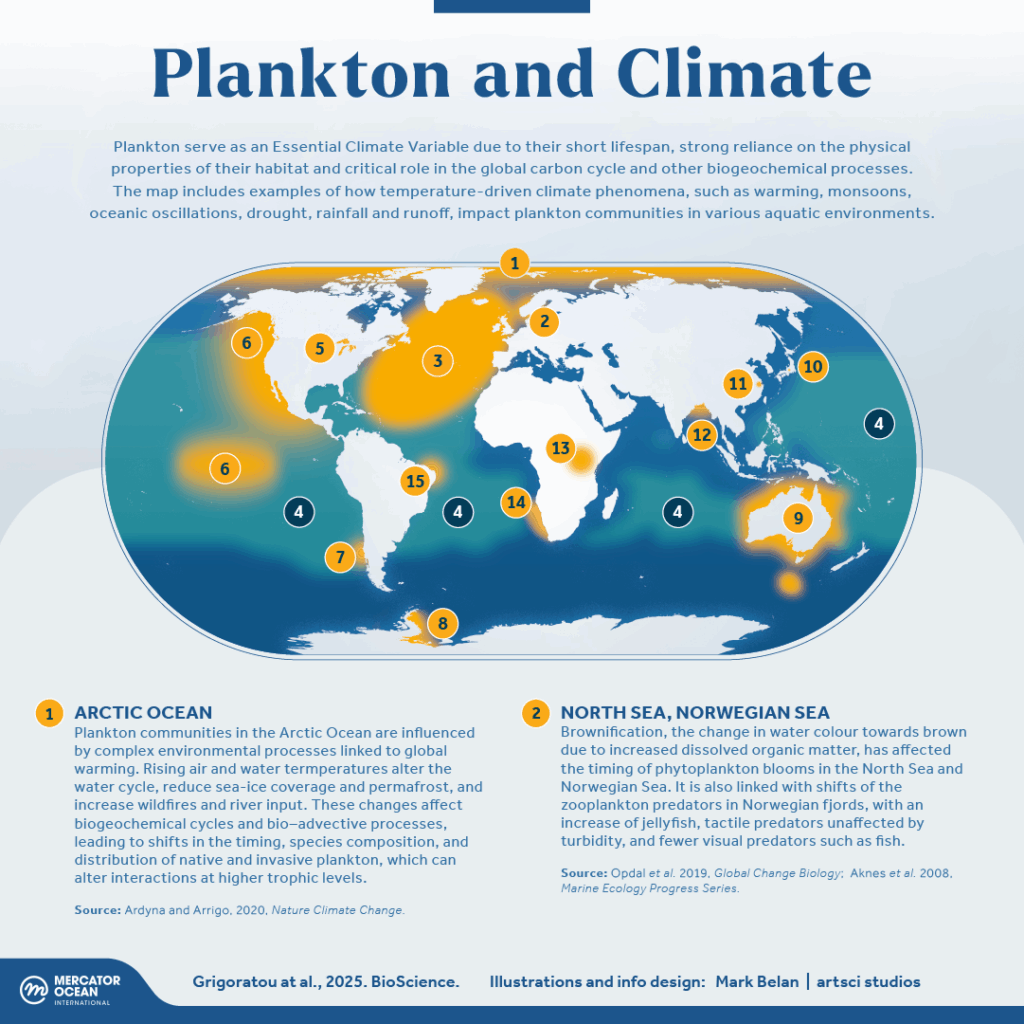
Figure 4. Plankton and climate.
In addition, plankton and their behaviour have played a role in the evolution of science. Plankton data has inspired scientific theories in various disciplines, from biological sciences to mathematics and socioeconomics. They continue to provide models for new theories and support advancements in medicine, from allergology to cancer research.
Their contribution to human well-being also extends to the economic and creative sectors. They are used in food supplements, cosmetics, medicine, and have inspired architects and artists in their projects.
Plankton variables, such as chlorophyll-a and primary productivity, which provide information on the distribution of plankton, play a growing role in policymaking and conservation efforts across the globe. This data is used to inform the designation of marine protected areas and to support Environmental Impact Assessments (EIAs) related to blue economy activities such as tourism and aquaculture. By integrating plankton data into these frameworks, policymakers can make more informed decisions to protect marine ecosystems.
“Plankton is the foundation of all aquatic ecosystems, sustaining life both in the water and on land. These organisms are incredibly diverse, complex, and beautiful and play a crucial role in shaping our planet. Yet their significance often goes unnoticed. As a group of plankton experts and enthusiasts, we aimed to create a go-to resource for anyone curious about plankton and its profound impact on human life.
From regulating climate and supporting food webs to driving scientific discoveries, influencing economies, and enhancing human well-being, this article provides a holistic perspective on the many ways plankton diversity shapes our world. We hope it inspires a deeper appreciation for these microscopic yet essential organisms and their role in sustaining life on Earth.”
Dr. Maria Grigoratou, lead author, previously G7 FSOI scientific officer at Mercator Ocean, currently Executive Secretary at the European Polar Board.
Seeing the unseen: deepening our awareness of plankton
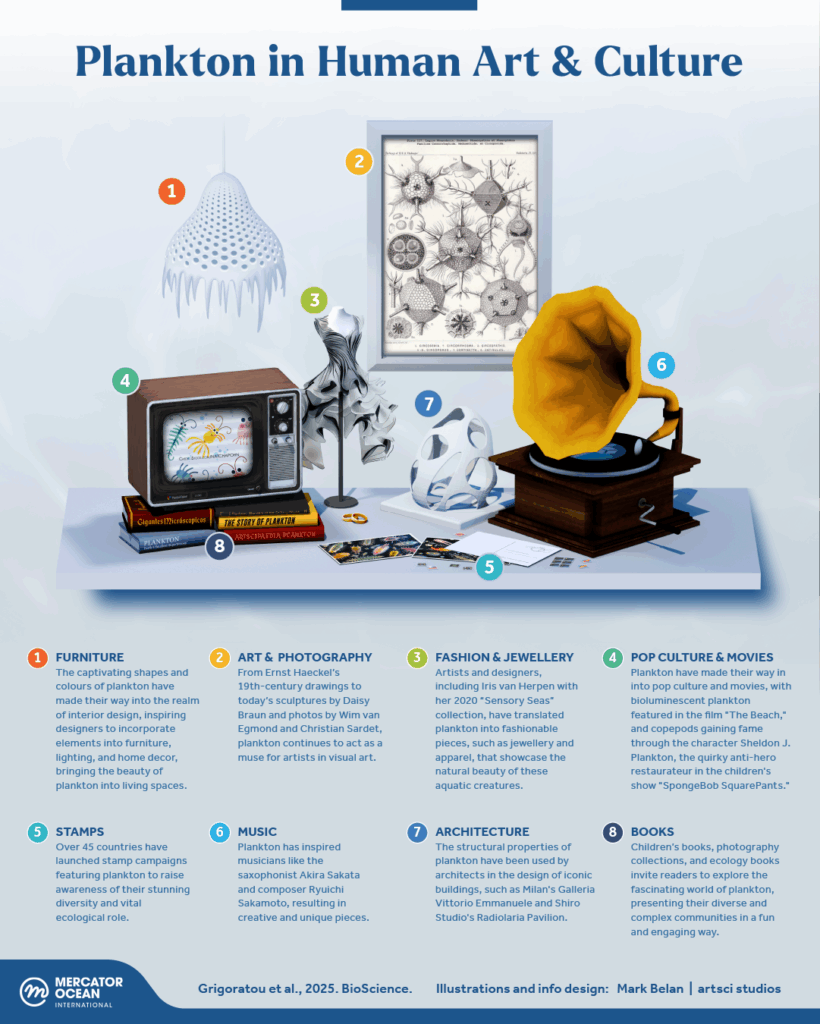
Figure 5. Plankton in human art & culture.
Although thousands of plankton species have been observed and studied, new species continue to be discovered and much remains to be understood about these organisms. In the concluding section of the article, the authors provide four essential actions for enhancing our understanding of the value of plankton.
These include 1) the expansion of research through tools such as satellites and modelling methods, 2) the harmonization of data and standards for data sharing and interoperability, 3) enhanced multidisciplinary collaborations and 4) advocacy for science education and plankton literacy, involving artists, citizen scientists, and educators in community-driven initiatives.
In this context, Mercator Ocean delivers comprehensive Ocean analysis and forecasting, supporting efforts to map and monitor plankton on a global scale.
Additionally, Mercator Ocean International leads the European coordination of the G7 Future of the Seas and Oceans Initiative (FSOI), where a key priority is enhancing marine life observation and forecasting through advanced technologies. The organization also plays a leading role in projects such as NECCTON and BioEcoOcean , which focus on advancing marine biology monitoring efforts covering plankton and other marine organisms.
Read the full paper and discover more about the fascinating world of plankton: immeasurable value of plankton to humanity | BioScience | Oxford Academic
More information
Scientific illustrator : copyright Mark Belan
The EU projects EU4OceanObs2.0, BioEcoOcean, NECCTON, C-BLUES, SEA-Quester, OceanICU, and the EU Next Generation María Zambrano program contributed to the development of the paper.
The EU4OceanObs initiative aims to catalyse and strengthen essential partnerships between European and international infrastructures and programmes across the Ocean observing value chain to increase Ocean observing, data sharing, and use of Ocean data for societal benefit. Since November 2020, Mercator Ocean International has been responsible for implementing the EU4OceanObs initiative on behalf of the European Commission. The project entered its second phase (2023–2027) under a contribution agreement between the European Commission’s Directorate-General for Research and Innovation and Mercator Ocean International.