
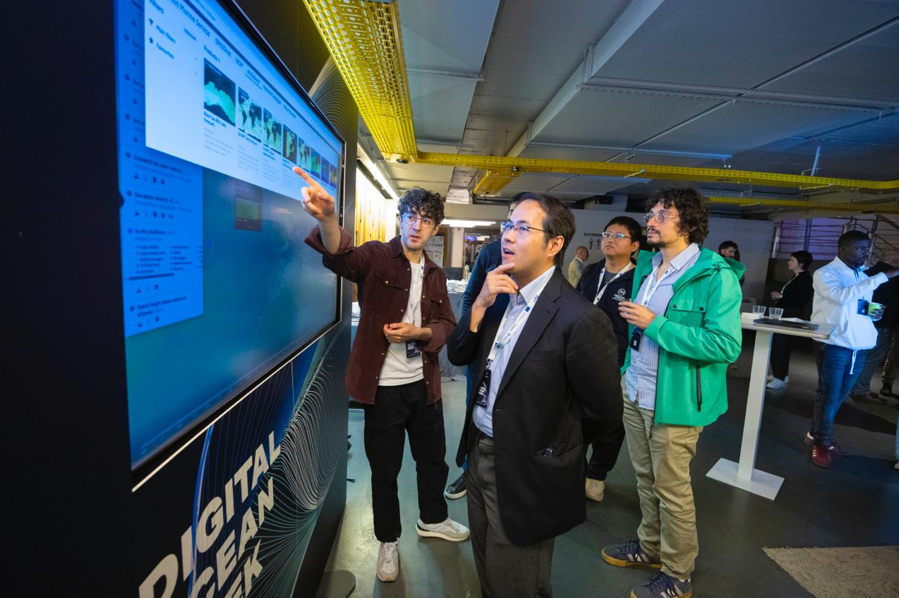
Artificial intelligence is reshaping ocean science and services. During Digital Ocean Week, the first AI Ocean Forum explored how new tools, shared standards and stronger collaboration can support a more integrated, operational and trusted European Digital Ocean System.
First AI Ocean Forum: a community event
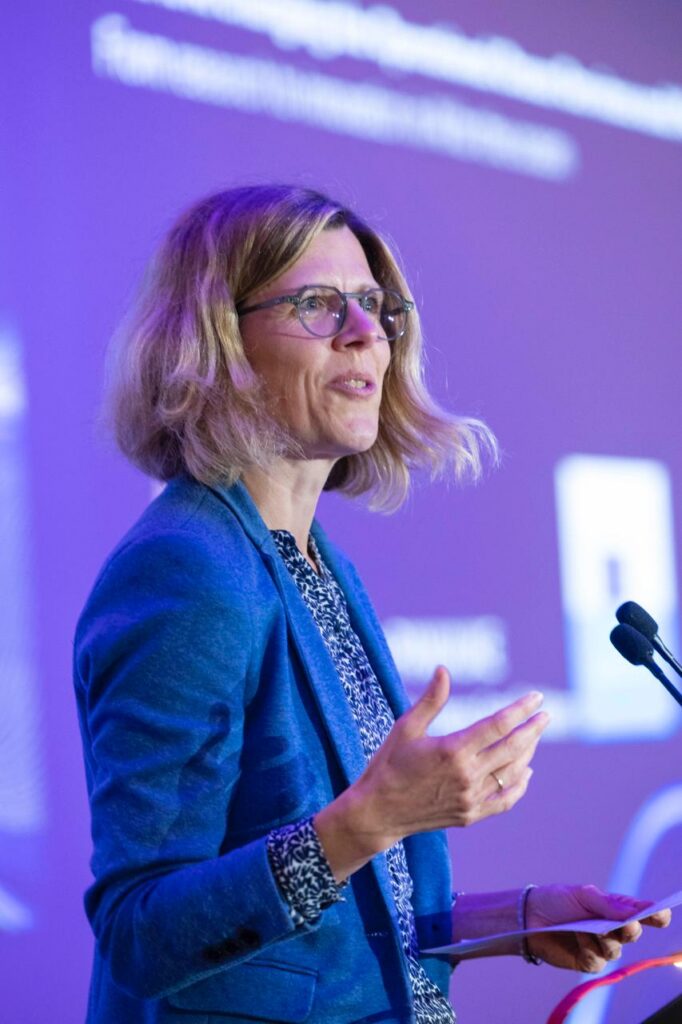
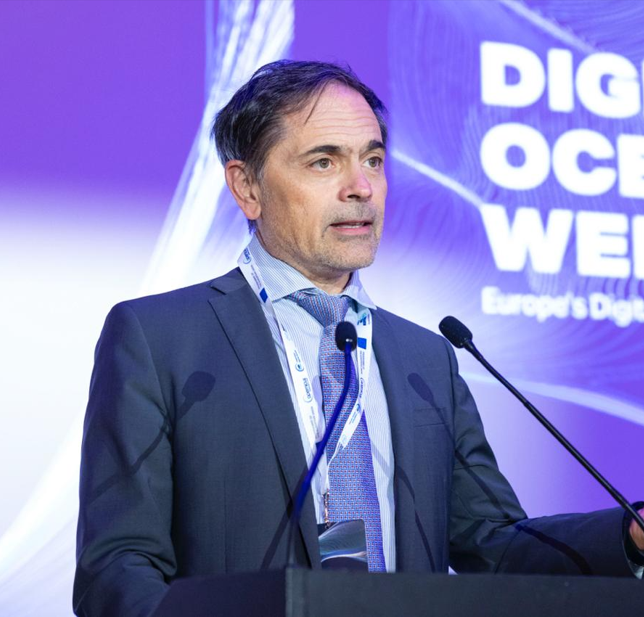
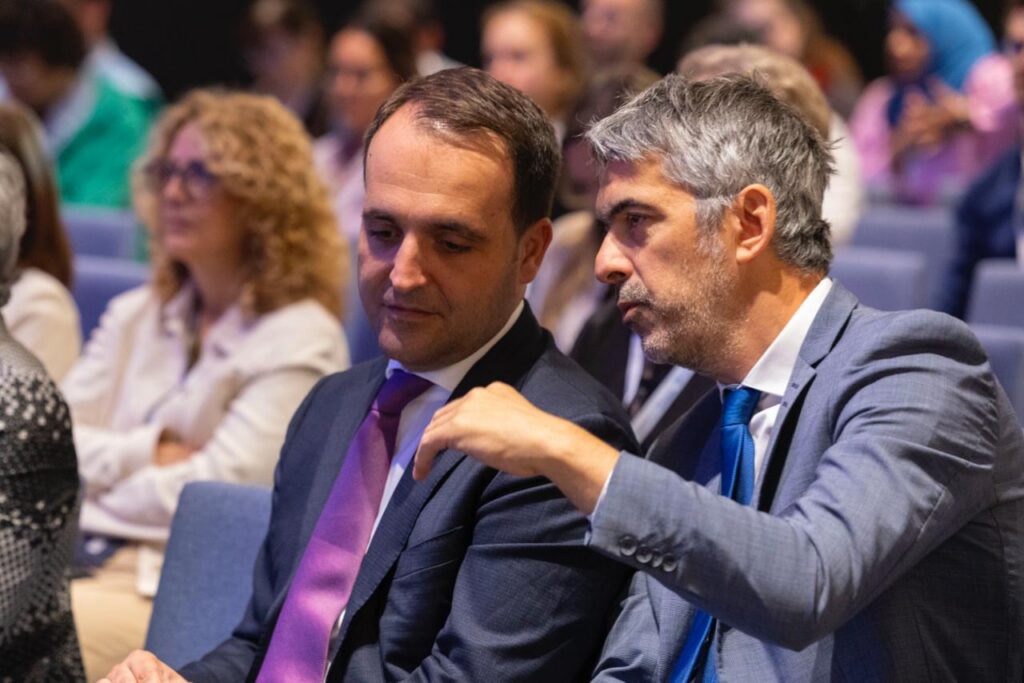
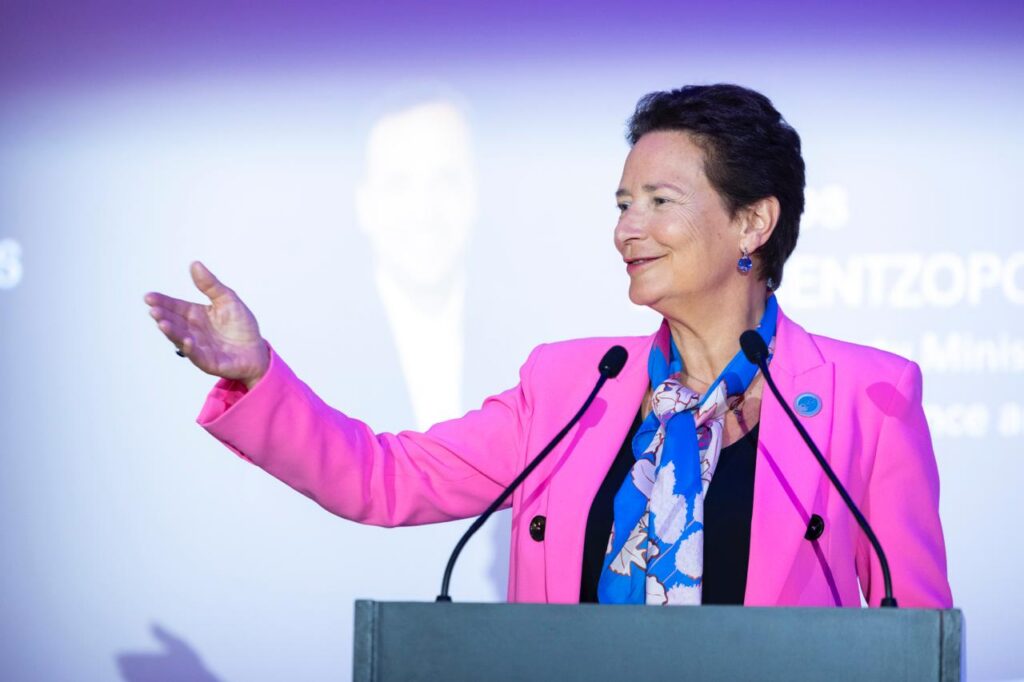
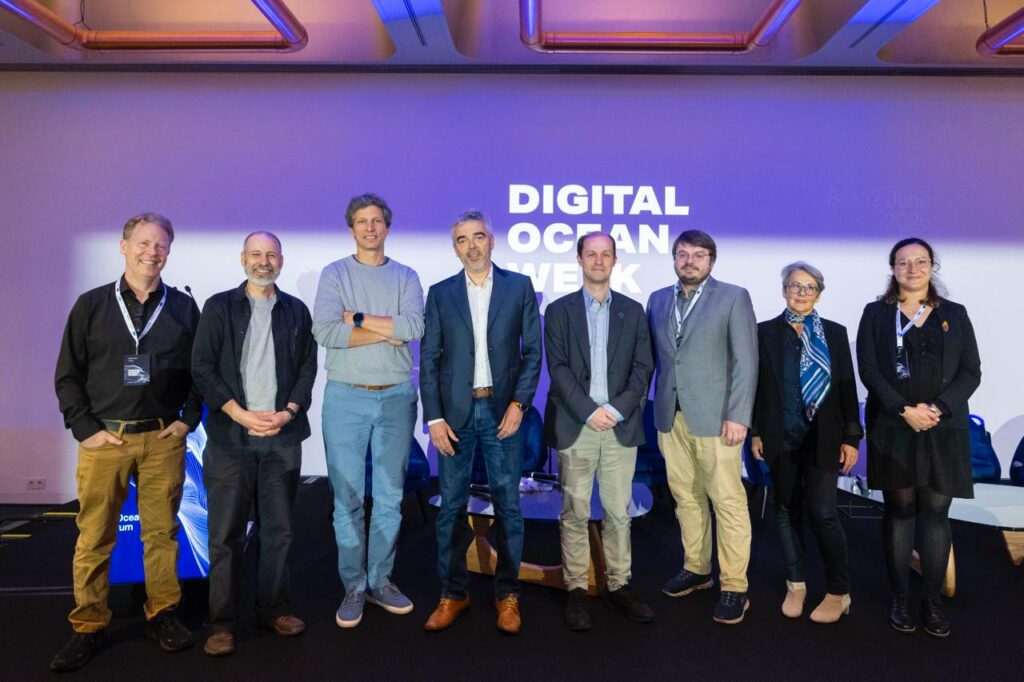
Held on 11–12 June as part of the first Digital Ocean Week, the AI Ocean Forum brought together policymakers, scientists, industry representatives and technology specialists to explore how artificial intelligence is transforming ocean observation, forecasting and decision-making.
Organised by Mercator Ocean International at the intersection of science, technology and policy, the Forum created a space for exchange between the European Commission, the marine community and public- and private-sector AI actors. Its purpose was clear: build stronger cooperation across a growing ecosystem and help move promising AI innovation towards useful, operational ocean services.
The Forum built on the discussions held throughout Digital Ocean Week, including the European Ocean Pact, the 9th Copernicus Marine General Assembly and the launch of OceanEye. It explored how AI can strengthen the European Digital Ocean System that will support OceanEye’s ambition for more coordinated and actionable ocean intelligence.
Bridging technology, policy and community
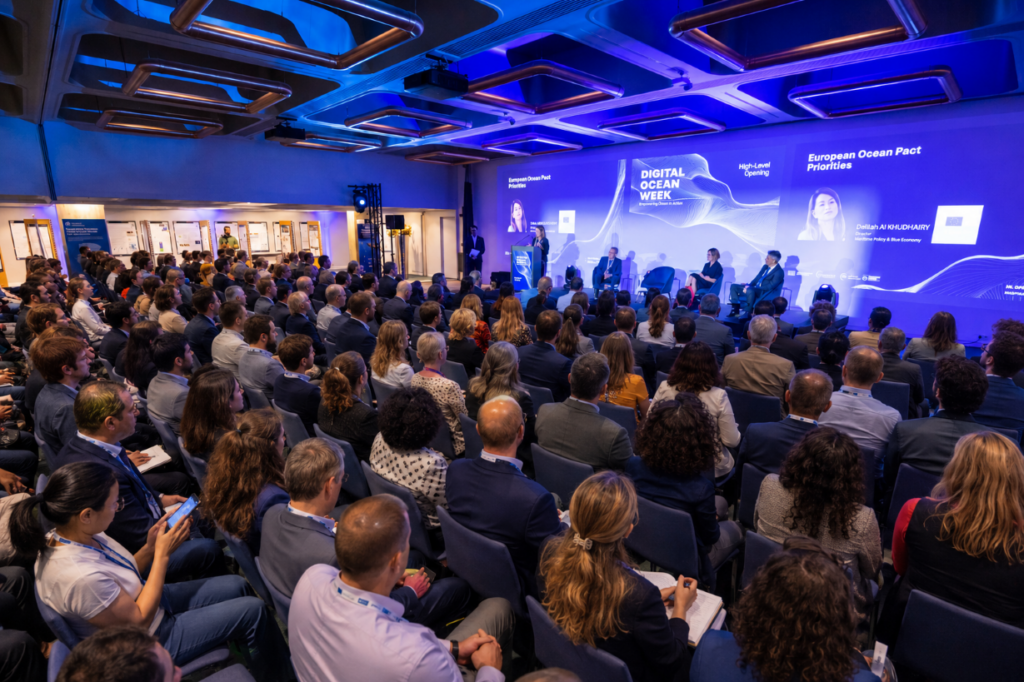
The Forum reflected a shared understanding that advancing ocean intelligence requires more than technological progress. It also requires cooperation among research, operational services, public authorities, digital infrastructure providers, startups and users.
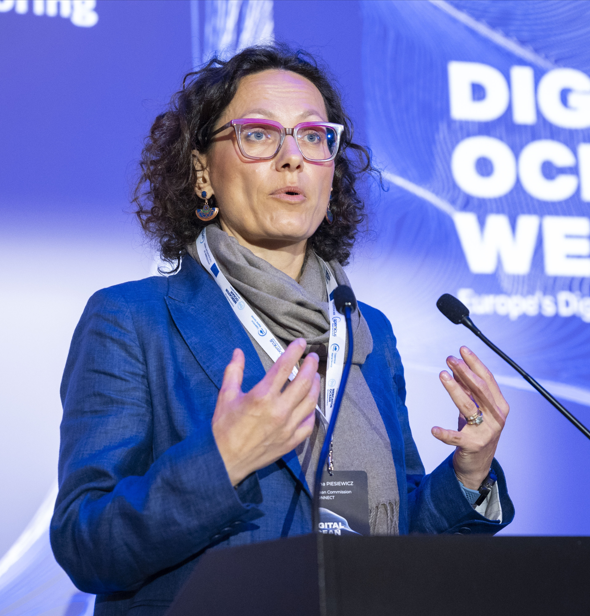
Discussions with European Commission representatives underlined the importance of developing AI systems that are operational, scalable and trustworthy. The Forum encouraged dialogue across disciplines and sectors, recognising that AI tools will create the greatest value when they respond to real user needs and can be integrated into established observation, modelling and service-delivery systems.
This federative approach allows communities to contribute to—and benefit from—shared tools, frameworks and methodologies. It also helps connect innovation with applications in ocean monitoring, climate adaptation, risk management and public decision-making.
Mercator Ocean’s AI tools powering ocean science and services
During the Forum Mercator Ocean’s suite of AI tools and frameworks was presented, illustrating how artificial intelligence can complement and strengthen physics-based ocean modelling.
- GLONET is a global AI-based forecasting system that can generate a 10-day ocean forecast in seconds, rather than close to an hour for an equivalent physical model. It uses around 1 Wh of energy, compared with approximately 25 kWh for the comparable physical-model run. GLONET2 extends these capabilities through longer-range forecasts and higher-resolution regional applications.
- OceanBench is an open framework for benchmarking AI ocean-forecasting models. It combines shared datasets, science-based evaluation protocols and transparent comparisons, supporting consistent, physically meaningful and reproducible assessment across different approaches.
- OceanLens supports higher-resolution forecasting for regional and local applications, moving from global scales towards coastal applications. It illustrates AI’s capacity to improve the scalability of high-resolution ocean modelling.
- BG4Sea is a demonstration system for AI-enabled seasonal forecasting of marine ecosystems. By extending biogeochemical forecasting beyond short-range horizons, it can support anticipation of changing marine conditions and associated risks.
- AI Ocean Agents, developed within the European Digital Twin Ocean and the Copernicus Marine Service, illustrate new ways for users to interact with ocean information. These conversational tools can help users identify relevant products, interpret forecasts and apply ocean intelligence in practical decision-making contexts.
Across these demonstrations, one message was consistent : AI is not intended to replace scientific ocean models or observations. It can enhance them, improving speed, scalability and accessibility while remaining grounded in established science and operational systems.
The AI Gallery: connecting innovation across the ecosystem
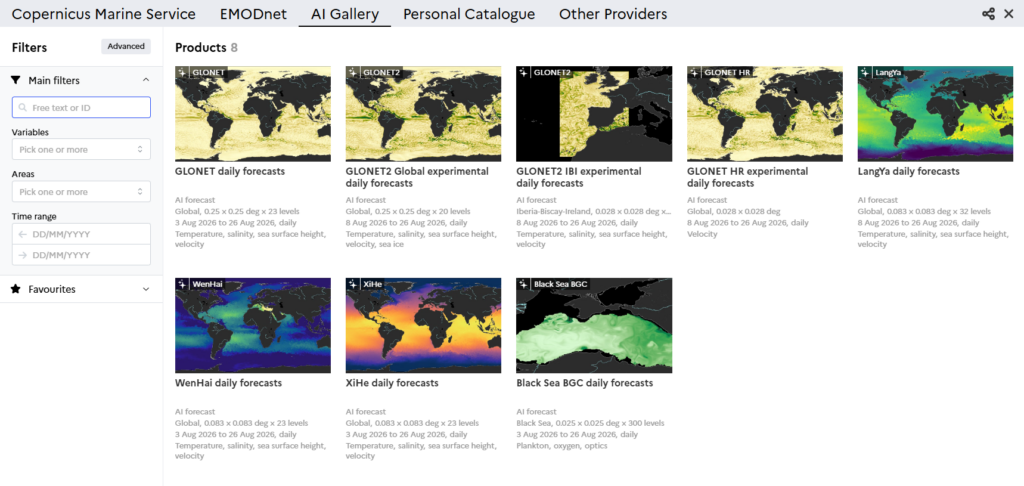
These tools and frameworks are brought together in the AI Gallery, a Mercator Ocean service powered by EDITO. The Gallery provides a shared environment to showcase next-generation oceanographic systems developed across the European Digital Twin Ocean community.
By giving visibility to solutions in a common space, it supports knowledge-sharing, collaboration and the uptake of innovative approaches across the ecosystem.
Trusted AI: from policy to practice
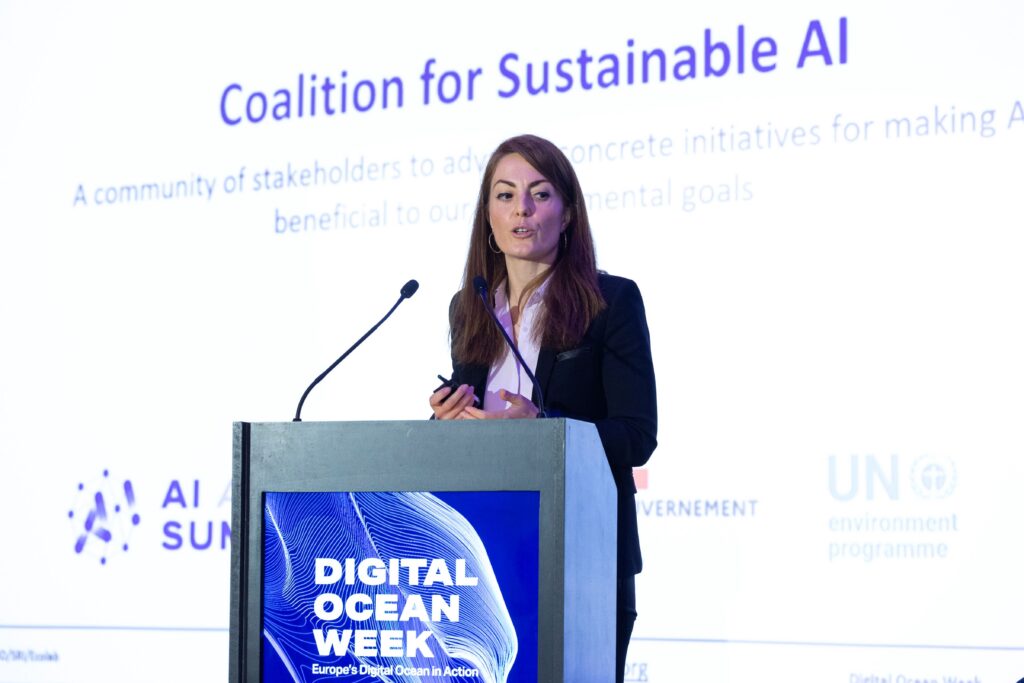
Beyond technical demonstrations, the Forum made trust a central condition for the future of Ocean AI. This comes at a pivotal moment: the EU AI Act establishes a risk-based framework to foster trustworthy AI in Europe, with requirements that may include robust risk management, high-quality data, traceability, transparency, human oversight, accuracy and cybersecurity for high-risk systems.
For ocean applications, trustworthy AI means that outputs must be scientifically meaningful, reproducible and transparent enough to be evaluated and used responsibly. This is why OceanBench matters: it provides the shared data, protocols and scientific benchmarks that allow different AI forecasting models to be assessed fairly and consistently.
Mercator Ocean is therefore contributing to the standards needed for an operational Ocean AI ecosystem at the same time Europe is building its wider framework for trustworthy AI. This work helps translate European principles into practical methods for ocean forecasting and services: transparent evaluation, sound scientific validation and performance that can be tested across models and use cases.
Towards an AI Ocean roadmap to 2030
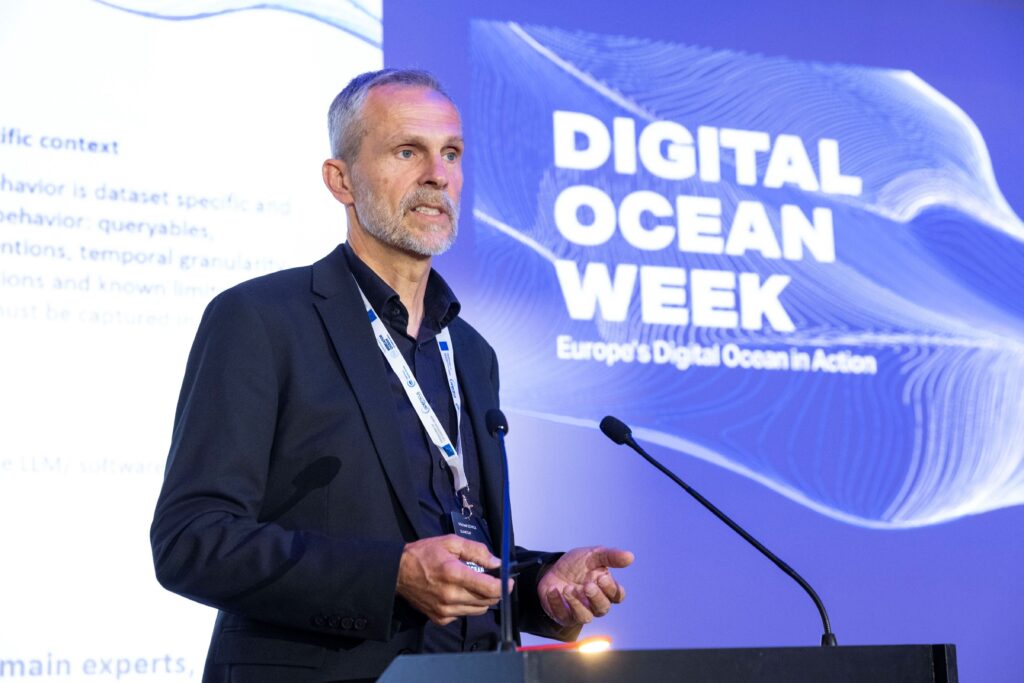
By convening a diverse range of actors, the AI Ocean Forum illustrated the growing maturity of the European Ocean AI ecosystem and the increasing interconnection between research, operations and innovation communities.
It reflected a collective effort to define shared directions for the field, advancing models and tools, strengthening evaluation practices and fostering collaboration across sectors.
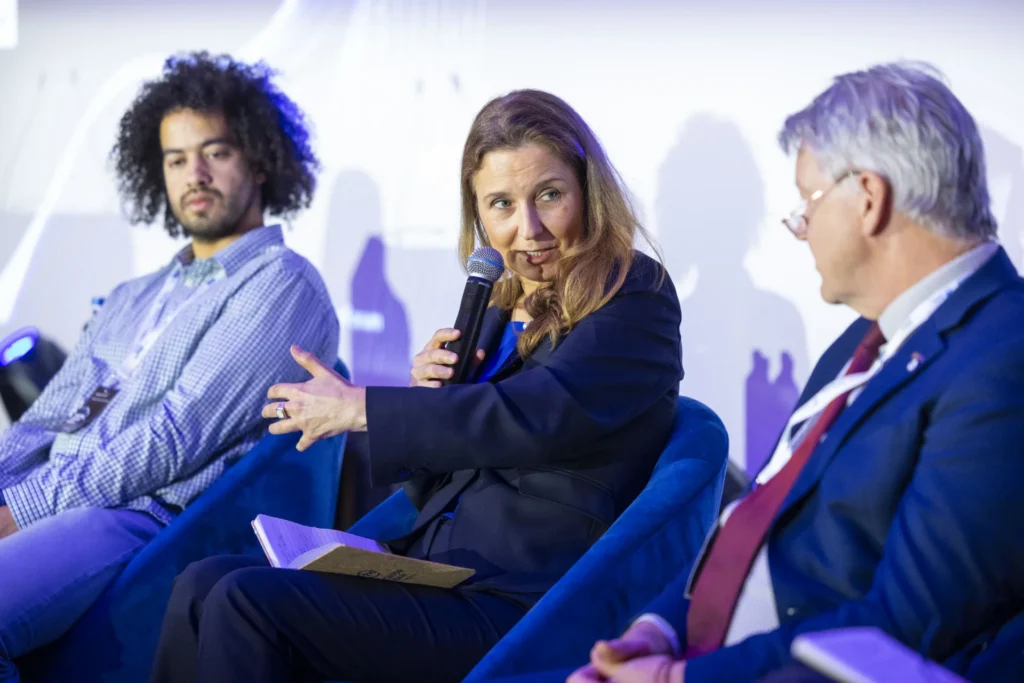
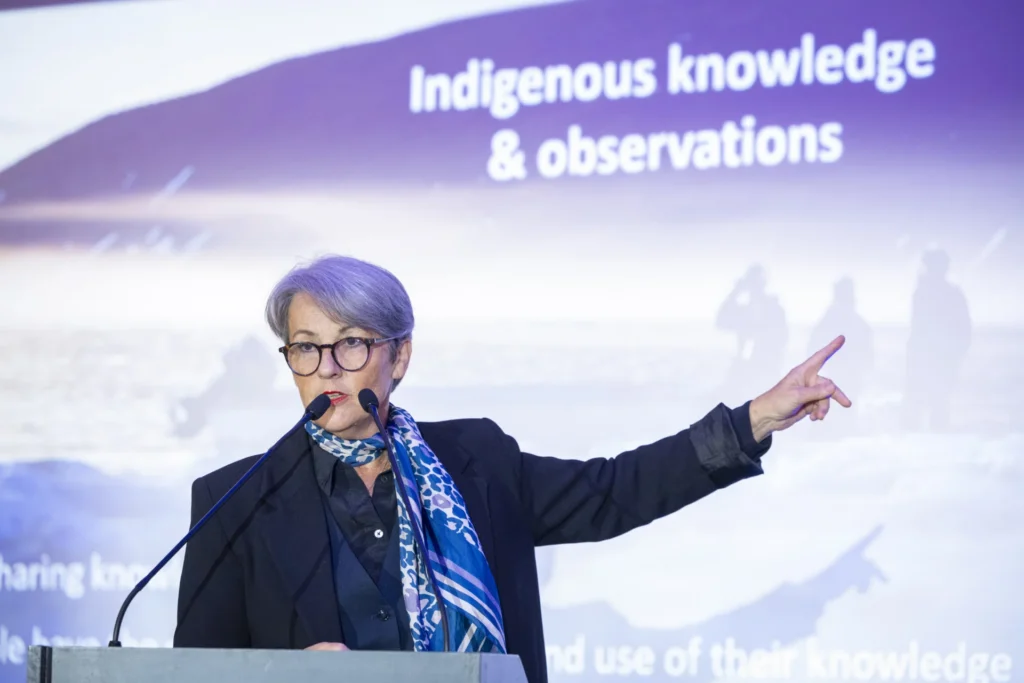
Looking ahead, discussions at the 2030 roadmap roundtable, closing the week, highlighted the pace at which Ocean AI is evolving. While technical progress is accelerating, through agentic tools, improving model performance and early operational deployments, the next phase will depend equally on people, effective governance and collaboration.
Key challenges remain around sustainable funding, effective deployment and the use of AI tools, as well as ensuring the visibility and proper attribution of scientific expertise in an increasingly AI-driven environment. Training and upskilling were also identified as critical priorities to support the next generation of professionals. Delivering on the 2030 roadmap will therefore require sustained and structured cooperation across the entire Ocean AI community, and Mercator Ocean is ready to collaborate with its partners to make it a reality.
A closer look to the Week
- Read Part 1: Digital Ocean Week, Europe’s Digital Ocean in action
- Read Part 2: Shaping the Future of Copernicus Marine
- Read Part 3: OceanEye, from Vision to Implementation
Photos, replays and additional resources
- Watch the AI Ocean Forum replays and access photo gallery
- Read the Reuters’s feature about AI for Ocean
- Learn more about the EU AI Act
Mercator Ocean International warmly thanks all speakers, participants and partners for their contributions to the first Digital Ocean Week. Their expertise and engagement will help carry this collective momentum forward as Europe continues to build its Digital Ocean.