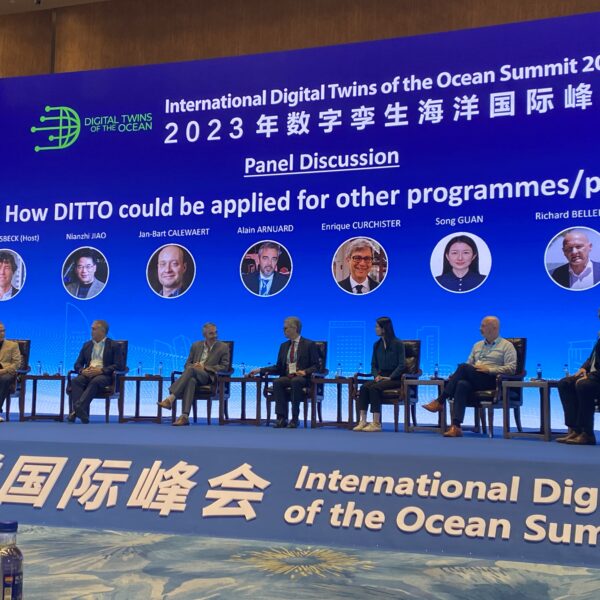
International Digital Twins of the Ocean Summit 2023

Digital twins of the ocean will enhance our capacity to make informed operations, management and policy decisions that influence the processes and systems they mirror, enabling impactful communication that brings data to life. Through complex integration of data, models, analytics, and rules, digital twins resort to cutting-edge cloud services, supercomputing, artificial intelligence, made accessible through […]

Following Mercator Ocean’s Special Envoy for COP28, Dr. Karina von Schuckmann

In order to follow and provide inputs and expertise in key Blue events at COP28, Mercator Ocean International (MOi) dispatched world-renown oceanographer Karina von Schuckmann as its Special Envoy at COP28. Known for her expertise in Ocean climate monitoring and contributions as a lead author of high-level reports including the Intergovernmental Panel on Climate Change […]

Following Mercator Ocean’s Special Envoy for COP28, Dr. Karina von Schuckmann

In order to follow and provide inputs and expertise in key Blue events at COP28, Mercator Ocean International (MOi) dispatched world-renown oceanographer Karina von Schuckmann as its Special Envoy at COP28. Known for her expertise in Ocean climate monitoring and contributions as a lead author of high-level reports including the Intergovernmental Panel on Climate Change […]

El Niño Update November 2023

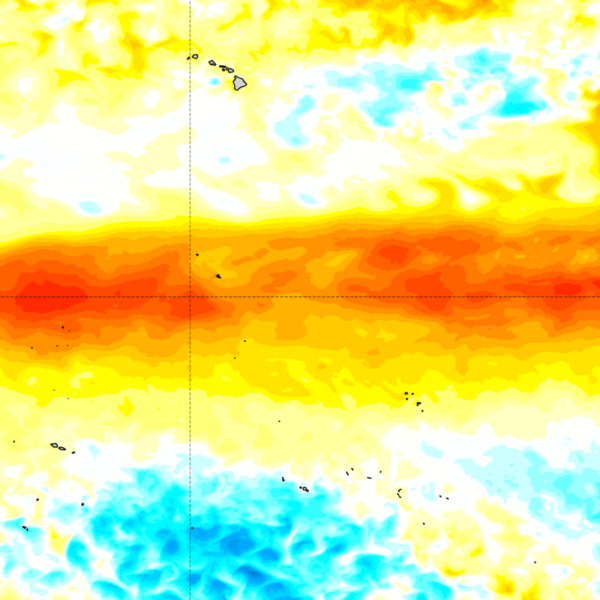
An El Niño event has been underway since spring 2023. Conditions have been gaining strength, and as of mid-November, these are still observed in the tropical Pacific Ocean. The evolution of El Niño remains uncertain, but it is likely that it will shortly peak and end in the coming Northern Hemisphere spring. This bulletin details […]

The Arctic and Coastal Hubs join the Copernicus family

The Copernicus Arctic and Coastal Hubs have been launched at the occasion of the EU Space Week on 6-8 November 2023 in Seville, Spain. The two hubs will respectively represent open entry points aggregating Copernicus data on the Arctic Region and European coastal areas. The thematic hubs will help identify new user needs, foster digital […]

A new method combining biogeochemical-Argo floats and numerical models broadens our comprehension of the Ocean

Gauging the biochemistry of the Ocean is crucial to understanding how climate change affects the health of these precious resources. However, as the numerical models used for the task become more complex, evaluating their accuracy becomes increasingly challenging. A fruitful collaboration between Mercator Ocean International (MOi), the Laboratoire d’Océanographie de Villefranche sur Mer and the […]

One Planet Polar Summit: the Paris Call for Glaciers and Poles

The One Planet Polar Summit was held in Paris from November 8 to 10 as part of the Paris Peace Forum. It marks a decisive step towards protecting the polar and glacial regions, i.e. the cryosphere. Initiated by French President Emmanuel Macron and organised by Olivier Poivre d’Arvor, Ambassador for the Poles and Maritime Issues, […]

The Academy of Sciences Awards Karina von Schuckmann, Oceanographer at MOi

On October 17 and November 21, the Academy of Sciences presented all the awards and medals it had granted in 2023. Karina von Schuckmann, an oceanographer specialised in ocean-climate monitoring in the scientific direction of Mercator Ocean International, was honored with the prestigious 2023 Gérard Mégie Award from the Academy of Sciences. Quantifying Earth’s Energy […]

Towards a truly interdisciplinary Ocean observing and forecasting system with EuroSea

On 19-21 September 2023, the headquarters of UNESCO’s Intergovernmental Oceanographic Commission (IOC) in Paris hosted the EuroSea Final General Assembly and the EuroSea Symposium on Ocean Observing and Forecasting. Both events brought together policymakers, scientists, and industry leaders to present the achievements of the EuroSea project and foster discussions on a sustainable system for Ocean […]

New study shows Earth energy imbalance

The Earth climate system is out of energy balance as a result of human-induced climate change. Heat has accumulated continuously over the past decades, warming the ocean, the land, the cryosphere, and the atmosphere. A new study, ‘Heat stored in the Earth system 1960-2020: where does the energy go?’ shows that the Earth Energy Imbalance […]